
By Xavier Rivera· ·1 min read
Artemis II beams back first high-res far-side Moon photos
NASA's Artemis II mission has delivered the highest-quality images ever of the Moon's far side, captured from 81 miles up. The breakthrough sharpens landing plans for Artemis III and reveals hidden geology vital for future bases.
Source:Ars Technica
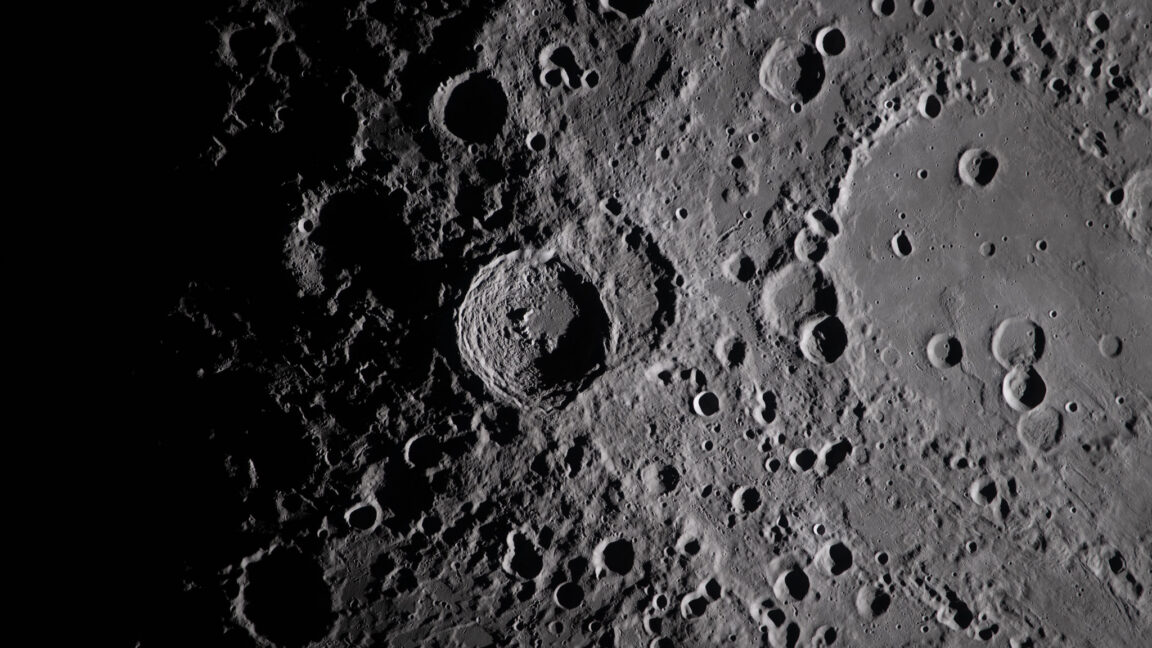
NASA's Artemis II spacecraft has transmitted the clearest images yet of the Moon's far side, revealing craters and terrain in unprecedented detail from just 81 miles above the surface.
The mission, which launched uncrewed in late 2025 as a precursor to crewed flights, used advanced wide-angle and narrow-field cameras to capture the rugged South Pole-Aitken basin and other features invisible from Earth. These photos surpass the grainy shots from China's Chang'e-4 lander in 2019, thanks to Artemis's high-resolution optics and stable orbital path.
The far side's isolation from Earth-based telescopes has long frustrated scientists, hiding potential water ice deposits and ancient volcanic remnants key to understanding the Moon's formation. Artemis II's data now feeds directly into site selection for Artemis III's 2027 crewed landing, prioritizing safe zones amid treacherous boulders and slopes.
This visual bounty accelerates NASA's push toward sustainable lunar presence, informing habitat designs and resource extraction strategies. Competitors like SpaceX's Starship and India's Chandrayaan missions gain benchmarks, while the images fuel public excitement for humanity's return.
Next up: Artemis II's Earth-Moon-Sun alignment shots, arriving soon, will test deep-space navigation critical for Mars ambitions. Expect these photos to redefine lunar cartography and ignite the next era of exploration.
The mission, which launched uncrewed in late 2025 as a precursor to crewed flights, used advanced wide-angle and narrow-field cameras to capture the rugged South Pole-Aitken basin and other features invisible from Earth. These photos surpass the grainy shots from China's Chang'e-4 lander in 2019, thanks to Artemis's high-resolution optics and stable orbital path.
The far side's isolation from Earth-based telescopes has long frustrated scientists, hiding potential water ice deposits and ancient volcanic remnants key to understanding the Moon's formation. Artemis II's data now feeds directly into site selection for Artemis III's 2027 crewed landing, prioritizing safe zones amid treacherous boulders and slopes.
This visual bounty accelerates NASA's push toward sustainable lunar presence, informing habitat designs and resource extraction strategies. Competitors like SpaceX's Starship and India's Chandrayaan missions gain benchmarks, while the images fuel public excitement for humanity's return.
Next up: Artemis II's Earth-Moon-Sun alignment shots, arriving soon, will test deep-space navigation critical for Mars ambitions. Expect these photos to redefine lunar cartography and ignite the next era of exploration.
NASAArtemisMoonSpace Exploration