
By Xavier Rivera· ·1.5 min read
Apple Studio Display XDR FDA-Approved for Medical Scans
Apple's Studio Display XDR has received FDA approval as a DICOM-compliant monitor for viewing X-rays, MRIs, and other medical scans. This certification unlocks its use in clinical settings, challenging expensive specialized displays and expanding Apple's footprint in healthcare.
Source:AppleInsider
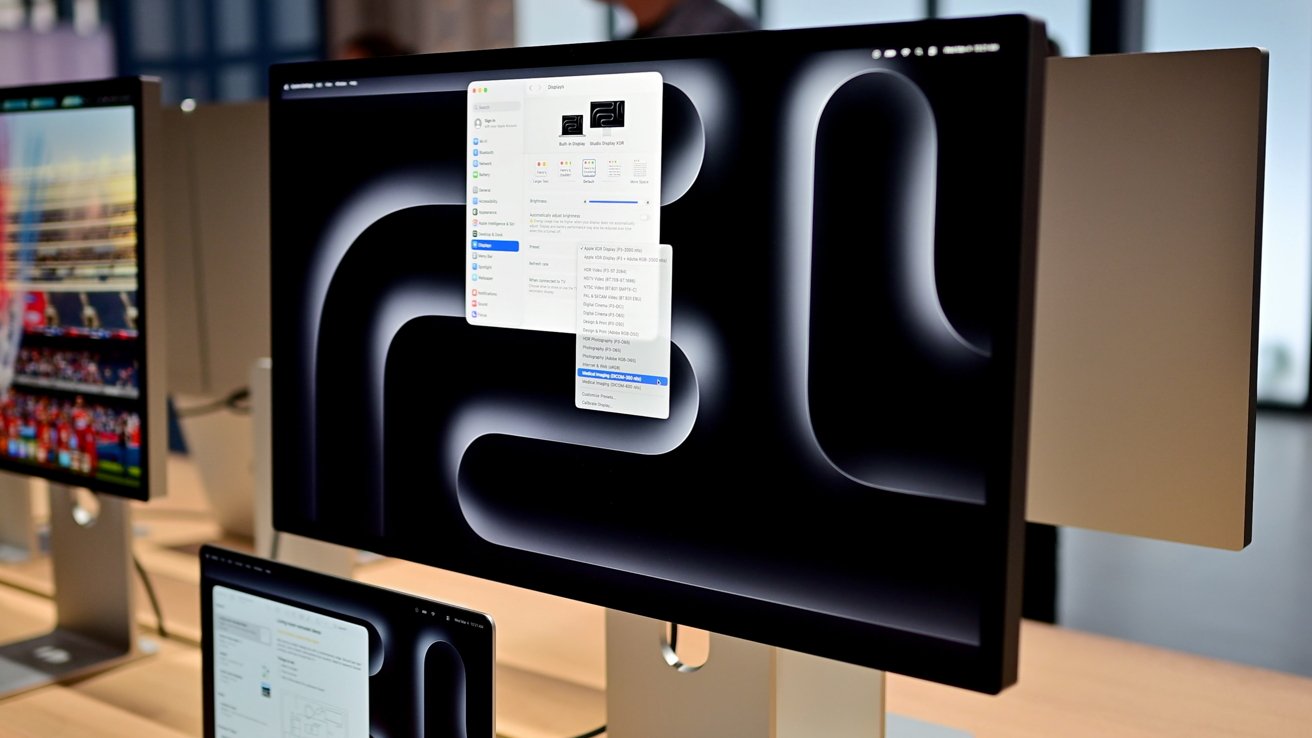
Apple's Studio Display XDR, the 27-inch Retina panel with ProMotion and nano-texture glass options, just cleared a major hurdle: FDA approval as a DICOM-compliant medical imaging display. Doctors can now legally view X-rays, MRIs, and CT scans on this consumer-prosumer monitor, thanks to its certified Medical Imaging Calibrator.
DICOM, the Digital Imaging and Communications in Medicine standard, demands precise grayscale rendering and luminance for accurate diagnostics. Specialized DICOM monitors from Barco or Eizo cost $5,000 to $20,000 and tie buyers to clunky medical ecosystems. At $1,599 base price, Apple's display undercuts them while delivering 600 nits sustained brightness and 1,000 nits peak—on par with pro medical rigs.
Apple teased this capability at the Studio Display's March 2024 launch, positioning it as a Pro Display XDR successor in a more compact form. The FDA nod, announced April 2025, activates the calibrator for clinical use, ensuring compliance with Class II medical device regs.
This blurs lines between creative studios and hospital radiology suites. Radiologists frustrated by outdated CRT-era displays or overpriced alternatives gain a sleek, Thunderbolt-equipped option with True Tone and adaptive sync. It signals Apple's push into regulated pro markets beyond entertainment.
Competitors like Dell and LG already flirt with DICOM modes, but FDA clearance elevates Apple. Expect integrations with PACS systems and hospital pilots soon. If adoption sticks, it could commoditize high-end medical displays, pressuring incumbents and accelerating consumer tech's medical migration.
DICOM, the Digital Imaging and Communications in Medicine standard, demands precise grayscale rendering and luminance for accurate diagnostics. Specialized DICOM monitors from Barco or Eizo cost $5,000 to $20,000 and tie buyers to clunky medical ecosystems. At $1,599 base price, Apple's display undercuts them while delivering 600 nits sustained brightness and 1,000 nits peak—on par with pro medical rigs.
Apple teased this capability at the Studio Display's March 2024 launch, positioning it as a Pro Display XDR successor in a more compact form. The FDA nod, announced April 2025, activates the calibrator for clinical use, ensuring compliance with Class II medical device regs.
This blurs lines between creative studios and hospital radiology suites. Radiologists frustrated by outdated CRT-era displays or overpriced alternatives gain a sleek, Thunderbolt-equipped option with True Tone and adaptive sync. It signals Apple's push into regulated pro markets beyond entertainment.
Competitors like Dell and LG already flirt with DICOM modes, but FDA clearance elevates Apple. Expect integrations with PACS systems and hospital pilots soon. If adoption sticks, it could commoditize high-end medical displays, pressuring incumbents and accelerating consumer tech's medical migration.
AppleHardwareHealthcare