The Circuitry
THE CIRCUITRYYour one-stop source for all tech news
HOMETODAYNEWSFEEDEVENTS
BOOKMARKS
RSS
© 2026 The Circuitry
About UsSourcesContactCorrectionsPrivacy
  • Today
  • Feed
  • Events
  • Saved
Scroll for more
Verification
VERIFIEDConfidence: HIGH
Source identified
Claims cross-referenced
No discrepancies found
Sourcing
1source

via pcmag.com

From The CircuitryWhy The Circuitry

Verified tech news, cross-checked.

Every story is checked against independent sources before it posts — no rumors dressed up as fact.

How we verify →
Home/Energy/HughesNet Loses Over Half Its Satellite Subscribers to Starlink
VERIFIEDBy Xavier Rivera· ·1.5 min read

HughesNet Loses Over Half Its Satellite Subscribers to Starlink

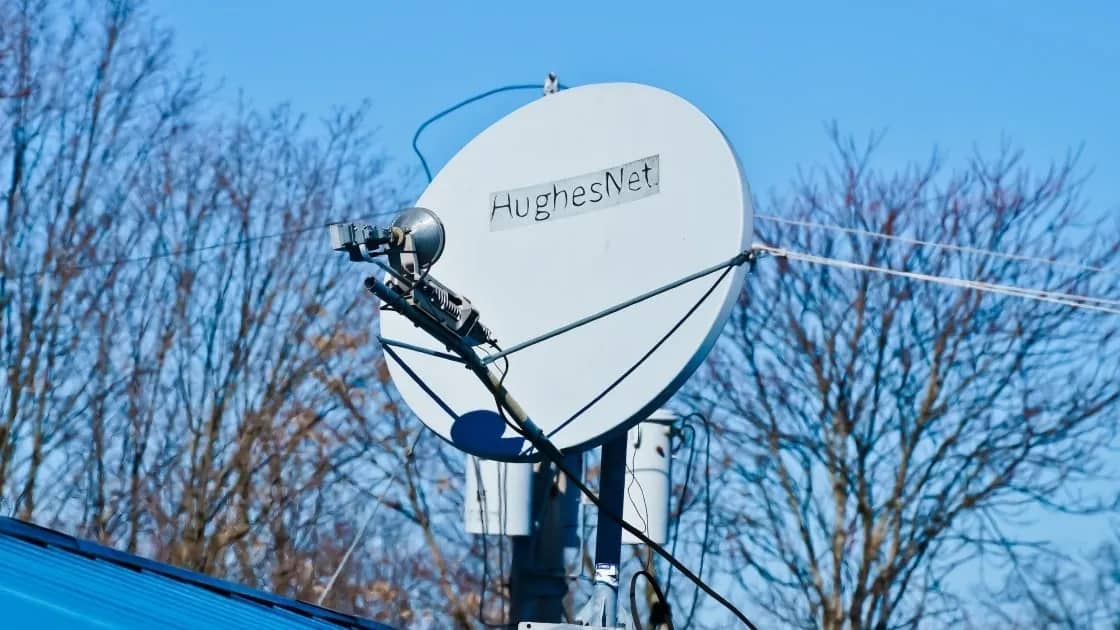
HughesNet's satellite subscriber count has dropped from 1.56 million in December 2020 to 681,000 as of March 31 amid competition from faster, cheaper Starlink service. The losses coincide with EchoStar's $7.6 million quarterly loss and a going-concern warning.
Source:pcmag.com
Post
HughesNet Loses Over Half Its Satellite Subscribers to Starlink
From The CircuitryWhy The Circuitry

Verified tech news, cross-checked.

Every story is checked against independent sources before it posts — no rumors dressed up as fact.

How we verify →
TL;DRAI · 60 sec read

HughesNet loses more than half its satellite broadband subscribers since December 2020, falling from 1.56 million to 681,000 by March 31. Losses accelerate after Starlink enters the US market with 127 Mbps speeds versus HughesNet's 48.55 Mbps. EchoStar reports a $7.6 million net loss and warns of viability concerns amid shrinking revenue.

HughesNet has lost more than half its satellite broadband subscribers since December 2020, with the total falling to 681,000 as of March 31. The drop from 1.56 million customers marks a steady erosion that accelerated after SpaceX began serving U.S. consumers with Starlink.

The latest quarterly decline shows 853,000 subscribers a year earlier shrinking by roughly 20 percent. HughesNet has shed about 100,000 users annually since late 2020. Median download speeds for U.S. HughesNet customers reached 48.55 Mbps in the first quarter, compared with 127 Mbps for Starlink users, according to Ookla data.
From The CircuitryThe Feed — live briefs across tech, all day.See what’s happening →
Parent company EchoStar reported a $7.6 million net loss for the quarter and warned that insufficient cash on hand raises substantial doubt about its ability to continue as a going concern. Revenue continues to shrink year over year while HughesNet plans start at $40 per month for new customers.

SpaceX and EchoStar have struck two deals worth $20 billion in cash and stock that let Starlink use EchoStar spectrum for mobile service. In return, Boost Mobile gains satellite connectivity in dead zones. EchoStar sells Starlink kits through Dish Network and Boost Mobile but has not integrated the service under the HughesNet brand.
From The CircuitryWhy The Circuitry

Verified tech news, cross-checked.

Every story is checked against independent sources before it posts — no rumors dressed up as fact.

How we verify →
Earlier reports documented similar losses: 224,000 customers left in 2023 and another 117,000 by early 2025, bringing the base to 883,000 at that point. Viasat, another legacy satellite provider, has also lost more than half its fixed broadband customers since Starlink launched.
Why this mattersAI · ~100 words

Tap a lens to see what this story means for you.

Morning Brief

Liked this? The Brief brings you the whole day in tech, verified, every morning.

Two minutes, free forever. What's in The Brief →

Reader-supported
DonateBuy me a coffee →Follow@thecircuitry_ →Follow@thecircuitry.to →
HELP US IMPROVE
From The Circuitry

See what’s happening right now

The Feed runs all day — short, verified briefs the moment they break.

Open the Feed →
From The Circuitry

Follow @thecircuitry_

Every story we publish, as it happens. No noise between.

Follow on X ↗On Bluesky ↗

Reader-supported

The Circuitry is a passion project I've always wanted to build, and I love the work behind it.

Running it costs real money. APIs, hosting, time. To keep improving the site and growing this into something useful for everyone, those costs have to be covered.

Any contribution is appreciated. If not, no pressure. Thanks for reading.

Buy me a coffee
More inEnergy
  • Germany brings around 260MW of BESS online through three fresh deals

    Energy · 1mo
  • LG Energy Solution starts LFP and NMC battery production in Michigan

    Energy · 1mo
  • Europe BESS round-up: Encavis, OX2 advance in Italy, Sunotec commissions Bulgaria project

    Energy · 1mo
SupportThe Work

The Circuitry is reader-supported. If you find the daily brief useful, you can buy me a coffee to keep it going.

Buy a coffee →
From The CircuitryWhy The Circuitry

Verified tech news, cross-checked.

Every story is checked against independent sources before it posts — no rumors dressed up as fact.

How we verify →

MORE IN THIS BEAT

All Energy →
  • Energy· 

    California requires AI data centers to fund local grid and water upgrades

    Gavin Newsom has signed seven bills that require AI data centers to cover the cost of upgrades to local power grids and water systems while also disclosing projected water consumption and satisfying specific efficiency standards. The legislation prevents utility expenses from being transferred to residents as data center activity expands.

  • Energy· 

    US Data Centers Could Use More Natural Gas Than Germany and Japan Combined by 2035, BNEF Says

    BloombergNEF projects U.S. data centers could consume about 18 Bcf/d of natural gas by 2035 — more than Germany and Japan combined and nearly double BNEF’s forecast from nine months earlier — TechCrunch reported September 15, 2026. Onsite plants may use 2.9–3.4 Bcf/d while grid-connected sites could add ~15 Bcf/d; price and climate impacts are framed as contingent.

  • Energy· 

    Tamarack Valley, Headwater Exploration Agree to $7.25B All-Stock Merger

    Tamarack Valley and Headwater Exploration have agreed to merge in an all-stock deal valued at C$10 billion ($7.25 billion) that will create the largest publicly traded oil producer focused on Alberta's Clearwater Formation. The transaction includes a dividend increase, updated growth targets, leadership changes and the spin-off of non-core assets into a new public company.

  • Energy· 

    SB Energy Files for US IPO With $439B Backlog

    SB Energy, the SoftBank-backed developer of AI data centers, filed for a US IPO on Tuesday, reporting 66.4% revenue growth in the first half of 2026 and a $439 billion backlog while disclosing it has no operational facilities and is substantially dependent on OpenAI. The filing underscores the tight linkages among OpenAI, SoftBank, and Nvidia in the $500 billion Stargate project as the company seeks to broaden its customer base through acquisitions.

  • Energy· 

    Rebirth Clings to Factory, Solar Fire Averted, Battery Tests Reveal Gaps

    Rebirth Group is fighting eviction from its Normandy factory over unpaid rent, a homeowner personally put out a solar panel fire in Moselle, and German lab tests revealed usable-capacity shortfalls in 16 home batteries. The stories illustrate the practical frictions that continue to accompany the energy transition.