Meta will build its first large Canadian data center, a 1GW AI-optimized project in Alberta's Sturgeon County expected to cost approximately $9 billion and require two to three years. The initiative forms part of the company's accelerated AI infrastructure rollout even as it develops a cloud computing business aimed at selling surplus capacity.
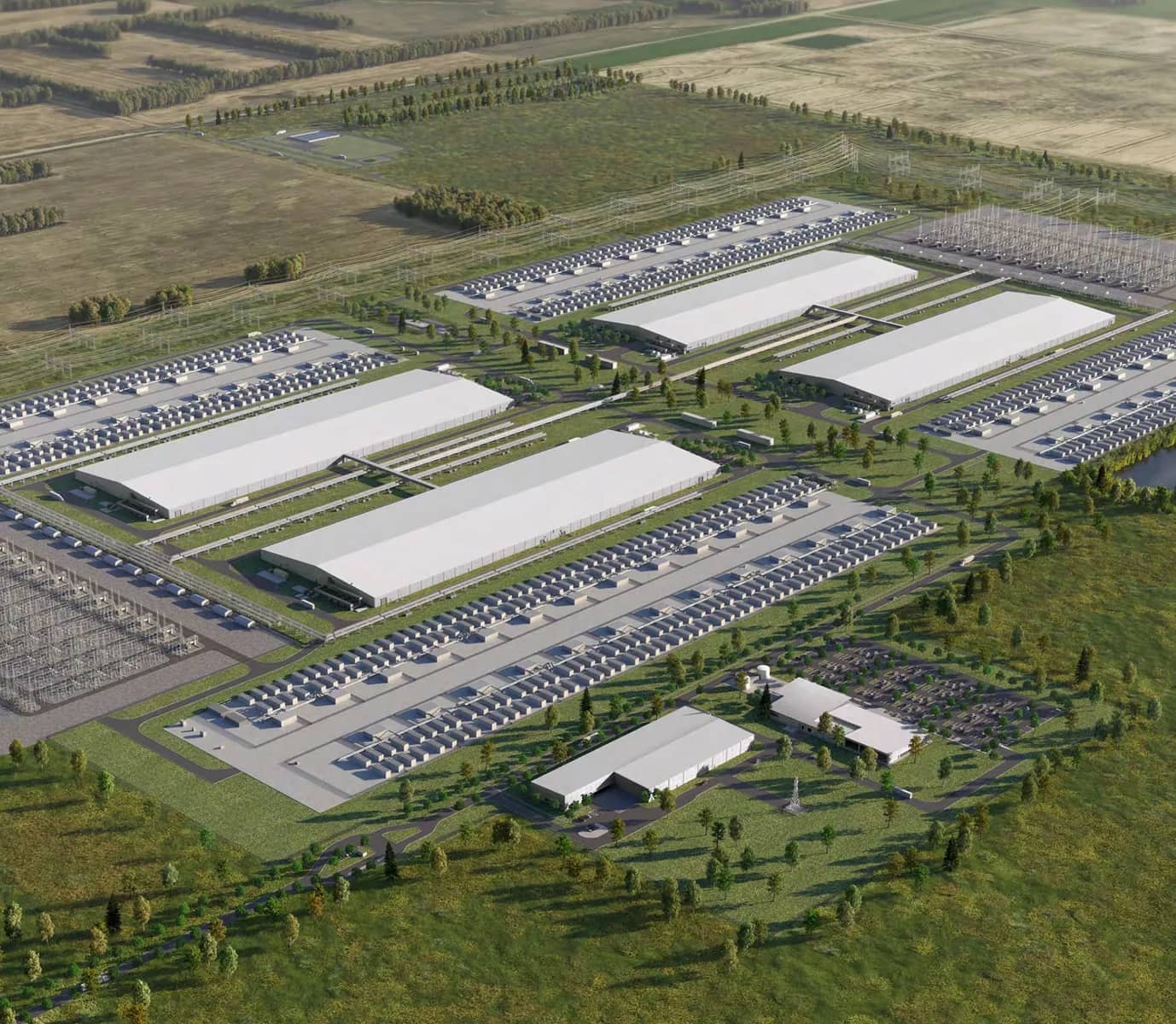
Meta is racing to stand up AI facilities while competing with hyperscalers Alphabet, Microsoft and Amazon.
It still lacks a proven route to earnings beyond digital advertising.
Tap a lens to see what this story means for you.
Liked this? The Brief brings you the whole day in tech, verified, every morning.
Two minutes, free forever. What's in The Brief →
See what’s happening right now
The Feed runs all day — short, verified briefs the moment they break.
Open the FeedFollow @thecircuitry_
Every story we publish, as it happens. No noise between.
Reader-supported
The Circuitry is a passion project I've always wanted to build, and I love the work behind it.
Running it costs real money. APIs, hosting, time. To keep improving the site and growing this into something useful for everyone, those costs have to be covered.
Any contribution is appreciated. If not, no pressure. Thanks for reading.
Meta has unveiled Muse Spark Open, an 816B-parameter open-weight multimodal model optimized for the M5 Ultra Mac Studio. The model supports on-device agentic coding and reasoning workflows through Apple’s MLX framework.
Meta's Ray-Ban Meta Audio glasses went on sale October 13 starting at $349 USD, according to Meta. Meta calls them its first audio glasses and its lightest AI glasses yet at 43 grams, with up to 12 hours of battery life and prescription lenses on every style.
Meta and Microsoft are cutting employee use of Anthropic’s Claude AI and directing staff toward their own coding tools, The Information reported. The changes reflect tighter internal AI budgets while customer access to Claude through Microsoft platforms continues to expand.
Google DeepMind, Meta, and Isomorphic Labs are investing $300 million in Biohub to build AI datasets for a virtual cell model. The funding is part of a $1.8 billion initiative that also includes contributions from the Department of Energy and National Institutes of Health.
Meta, Xiaomi, Apple and two AI labs all moved major hardware or model updates in the same week. The activity centers on 2 nm mobile chips and expanded smart-glasses hardware.

