A suspected China-linked group exploited VMware vCenter bug CVE-2026-123890 in early September, before the flaw was disclosed on Nov. 19. Federal agencies have until Nov. 23 to apply the vendor's mitigations for the known-exploited flaw.
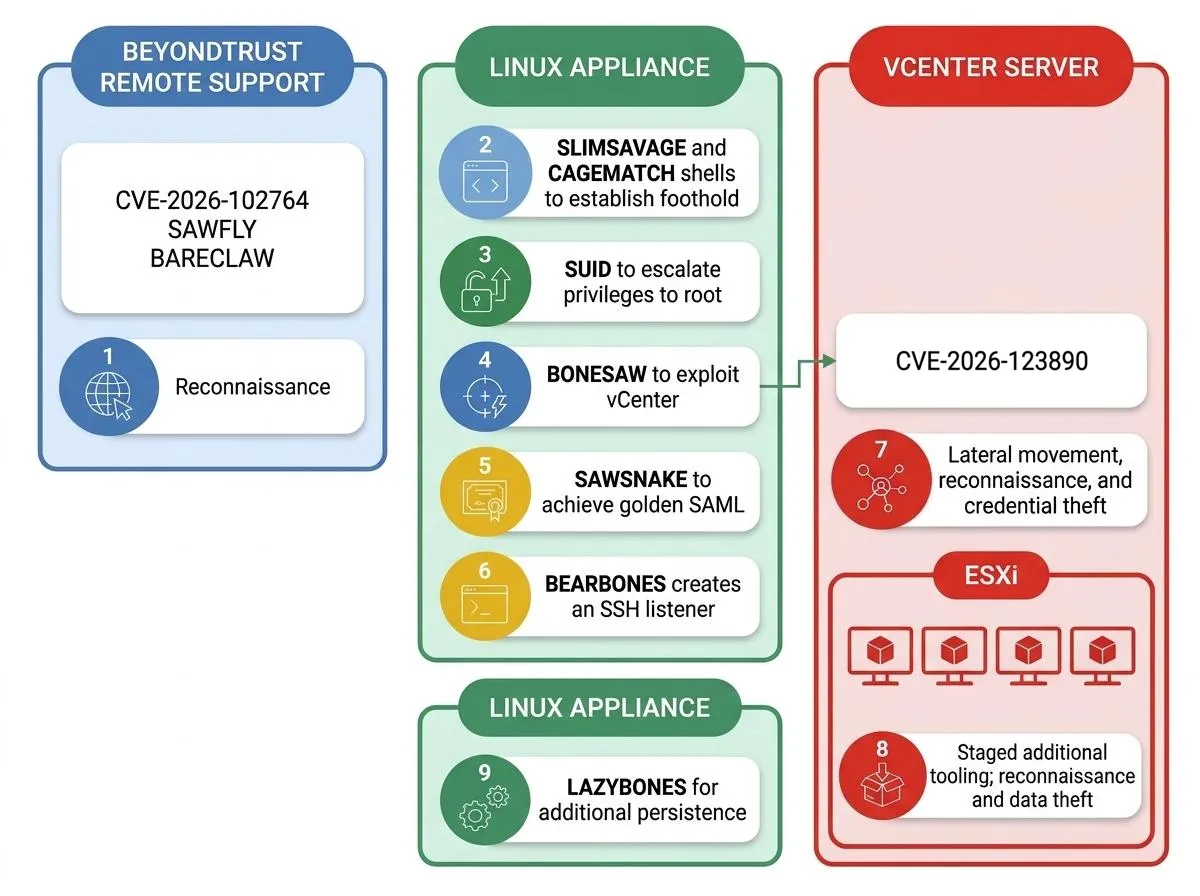
BONESAW is a Go program written to attack vCenter from the network.
Port 2012 carries the remote calls for vCenter single sign-on, and that is the channel BONESAW uses.
Tap a lens to see what this story means for you.
Liked this? The Brief brings you the whole day in tech, verified, every morning.
Two minutes, free forever. What's in The Brief →
See what’s happening right now
The Feed runs all day — short, verified briefs the moment they break.
Open the FeedFollow @thecircuitry_
Every story we publish, as it happens. No noise between.
Reader-supported
The Circuitry is a passion project I've always wanted to build, and I love the work behind it.
Running it costs real money. APIs, hosting, time. To keep improving the site and growing this into something useful for everyone, those costs have to be covered.
Any contribution is appreciated. If not, no pressure. Thanks for reading.
OpenAI has cut the average success rate of attacks that extract protected reasoning from an earlier request to 0.2% on GPT-6.2 Astra, from 54.0% on GPT-6 Astra. Current-request attacks are at 0.9%, and selected safeguard improvements are being applied back to GPT-6 Astra.
Autonomous Cairn agents found an unpatched flaw in a medical imaging app and took control of a server in a university campaign that began September 8, 2026. Amazon rates a Chinese-nexus link as moderate confidence, and the project advisory still lists no patched version.
Google has linked a late-2025 data theft at a US organization to a 2026 intrusion at a second US organization by the Russian group COLD RELIC. Operators used stolen staff records from the first breach to impersonate an employee and phish the next target.
Two Grok Bots made 31 unattended requests for employee calendar, email, Slack, GitHub, and Notion data over five days. Every request was a read, and none of them reached the data.
Malicious JavaScript has reached visitors at 178 organizations through Optimizely Web, swapping copied cryptocurrency addresses and reading cards typed into site forms. By 5:52 p.m. AST only one of 188 infected snippets still carried the code, and outreach with the details had drawn no response.