
By Xavier Rivera· ·1.5 min read
Tesla Superchargers cost businesses $940K all-in for 8 stalls
Tesla's new Supercharger for Business configurator discloses $940,000 all-in costs for an eight-stall V4 site, including $500,000 in hardware and a $0.10/kWh Tesla fee. This pricing clarity accelerates third-party expansion of the network, boosting EV infrastructure while securing Tesla's long-term revenue.
Source:Electrek
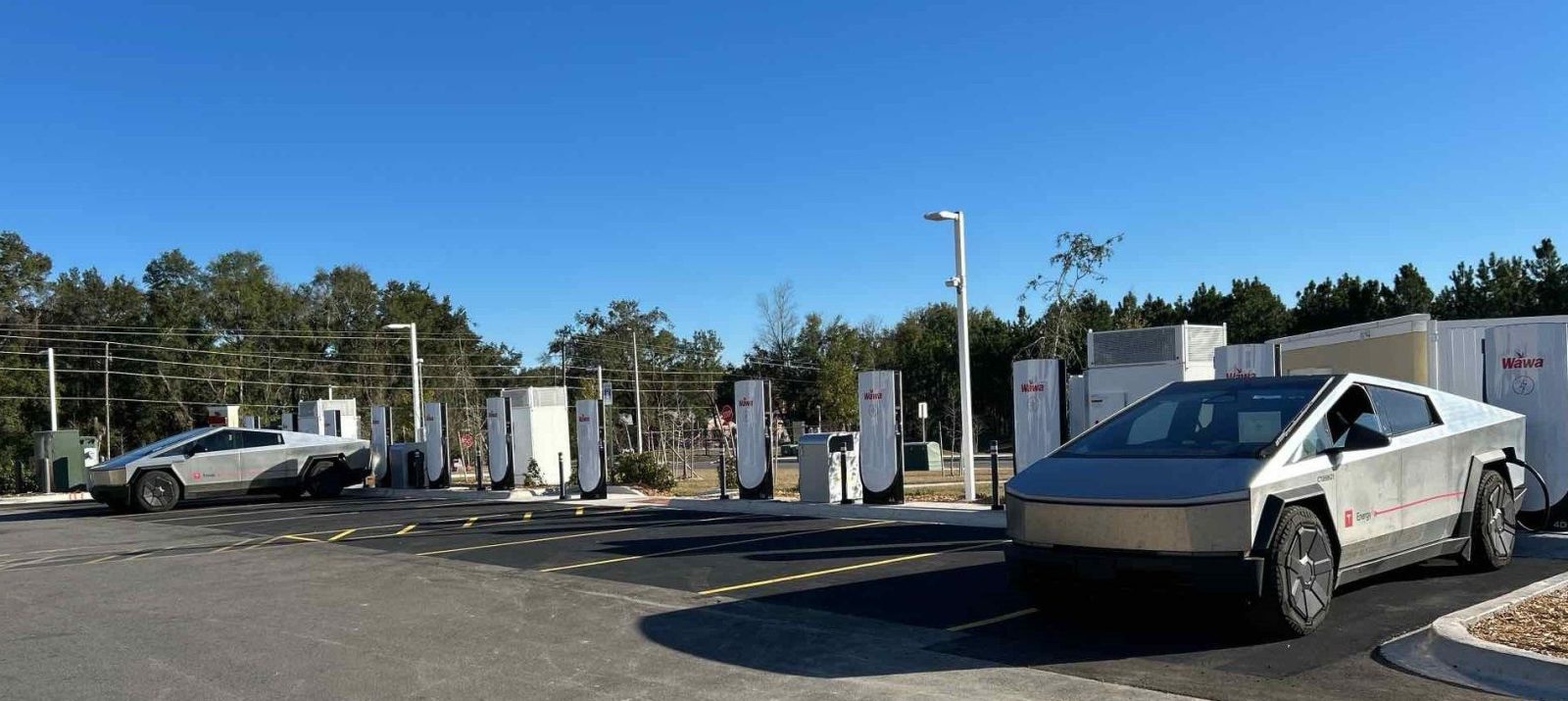
Businesses eyeing Tesla's Supercharger network now face a stark reality: a standard eight-stall V4 site runs $940,000 all-in, with $500,000 just for hardware. Tesla flips the script on its once-exclusive charging empire by launching a public configurator that lays bare these costs, complete with location-specific ROI projections.
The tool crunches numbers for prospective partners, revealing payback periods from four years in high-demand San Francisco to seven years in gridlocked Manhattan. It pegs Tesla's ongoing cut at a flat $0.10 per kWh—transparent pricing that undercuts rivals while locking in revenue from electricity sales and network access.
This move builds on Tesla's 2024 pivot to open Superchargers to non-Tesla EVs, a concession that lured Ford, GM, and others onto the plugs. Now, third parties like hotels, malls, and fleets can deploy branded sites, tapping Tesla's software smarts for reliability and demand management without building from scratch.
For the EV industry, $940K per site signals scale: cheaper than custom builds, yet hefty enough to deter casual entrants. Tesla subsidizes expansion indirectly, as partners foot hardware while Tesla rakes in usage fees—potentially flooding highways with 250kW V4 stalls faster than governments can subsidize alternatives.
ROI swings highlight location's kingmaker role; coastal hotspots promise quicker returns amid rising EV adoption, while urban bottlenecks lag. Tesla's configurator thus doubles as a sales pitch, weeding out weak bids while guiding serious players.
Expect a rush of announcements soon. As Superchargers proliferate beyond Tesla drivers, the network cements dominance, pressuring Electrify America and EVgo to match pricing transparency and speed.
The tool crunches numbers for prospective partners, revealing payback periods from four years in high-demand San Francisco to seven years in gridlocked Manhattan. It pegs Tesla's ongoing cut at a flat $0.10 per kWh—transparent pricing that undercuts rivals while locking in revenue from electricity sales and network access.
This move builds on Tesla's 2024 pivot to open Superchargers to non-Tesla EVs, a concession that lured Ford, GM, and others onto the plugs. Now, third parties like hotels, malls, and fleets can deploy branded sites, tapping Tesla's software smarts for reliability and demand management without building from scratch.
For the EV industry, $940K per site signals scale: cheaper than custom builds, yet hefty enough to deter casual entrants. Tesla subsidizes expansion indirectly, as partners foot hardware while Tesla rakes in usage fees—potentially flooding highways with 250kW V4 stalls faster than governments can subsidize alternatives.
ROI swings highlight location's kingmaker role; coastal hotspots promise quicker returns amid rising EV adoption, while urban bottlenecks lag. Tesla's configurator thus doubles as a sales pitch, weeding out weak bids while guiding serious players.
Expect a rush of announcements soon. As Superchargers proliferate beyond Tesla drivers, the network cements dominance, pressuring Electrify America and EVgo to match pricing transparency and speed.
TeslaEVSuperchargerCharging