XPeng’s robotics unit closed a funding round exceeding $900 million at a post-money valuation above $6.3 billion, which the company calls the largest single-round private financing in the history of China’s embodied AI industry. The proceeds will support mass production of its IRON humanoid robot by the end of 2026, a timeline that keeps the firm ahead of Tesla’s Optimus program.
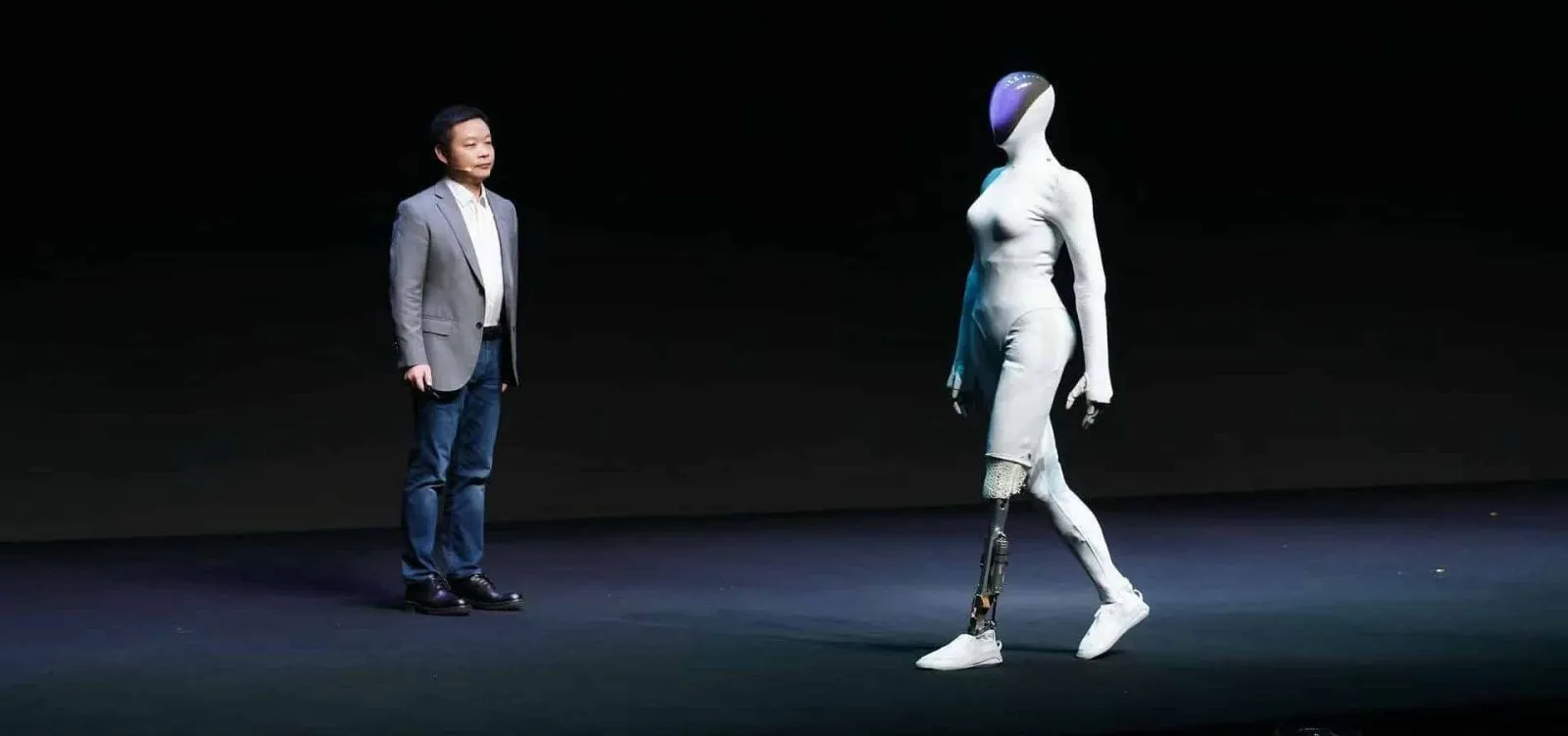
Proceeds from the round are intended to accelerate development so that XPeng’s IRON humanoid reaches mass production by the end of 2026 — a schedule that reportedly keeps the automaker ahead of Tesla’s stalling Optimus program.
https://x.com/XPENG_Global/status/2091847849277337737
The deal sets a record for China’s embodied AI sector.
Tap a lens to see what this story means for you.
Liked this? The Brief brings you the whole day in tech, verified, every morning.
Two minutes, free forever. What's in The Brief →
See what’s happening right now
The Feed runs all day — short, verified briefs the moment they break.
Open the FeedFollow @thecircuitry_
Every story we publish, as it happens. No noise between.
Reader-supported
The Circuitry is a passion project I've always wanted to build, and I love the work behind it.
Running it costs real money. APIs, hosting, time. To keep improving the site and growing this into something useful for everyone, those costs have to be covered.
Any contribution is appreciated. If not, no pressure. Thanks for reading.
LimX Dynamics completed a pre-IPO round raising nearly $200 million at a reported $2.2 billion valuation as it prepares for a public listing. The move comes as China's robotics market swells to include hundreds of companies competing in humanoid and embodied AI technologies.
Agility Robotics is set to list publicly through a SPAC merger at a $2.5 billion valuation, according to executives who spoke to The Wall Street Journal. The move comes as major tech players like Nvidia intensify efforts in humanoid robotics for industrial use.
Stoke Space obtained roughly $1 billion in Series E funding to prepare Nova Pathfinder for an early 2027 launch while accelerating the larger Nova Block 2 scheduled for 2029. The capital will also expand the Moses Lake test facility and increase maximum payload fivefold to 15 metric tons in low Earth orbit, preserving full reusability for both stages.
Nvidia and LG Group announced a wide-ranging partnership on June 7 covering AI factory infrastructure, home robotics, autonomous driving components, and sovereign AI model development. The deal is one of the broadest single-company collaborations Nvidia has announced during Jensen Huang's South Korea visit.
OKX attracted investment at a $25 billion pre-money valuation from Circle, Ripple, Standard Chartered’s venture arm and Qube Research. The round builds on prior support from Intercontinental Exchange and advances the firm’s tokenized asset and platform expansion plans.