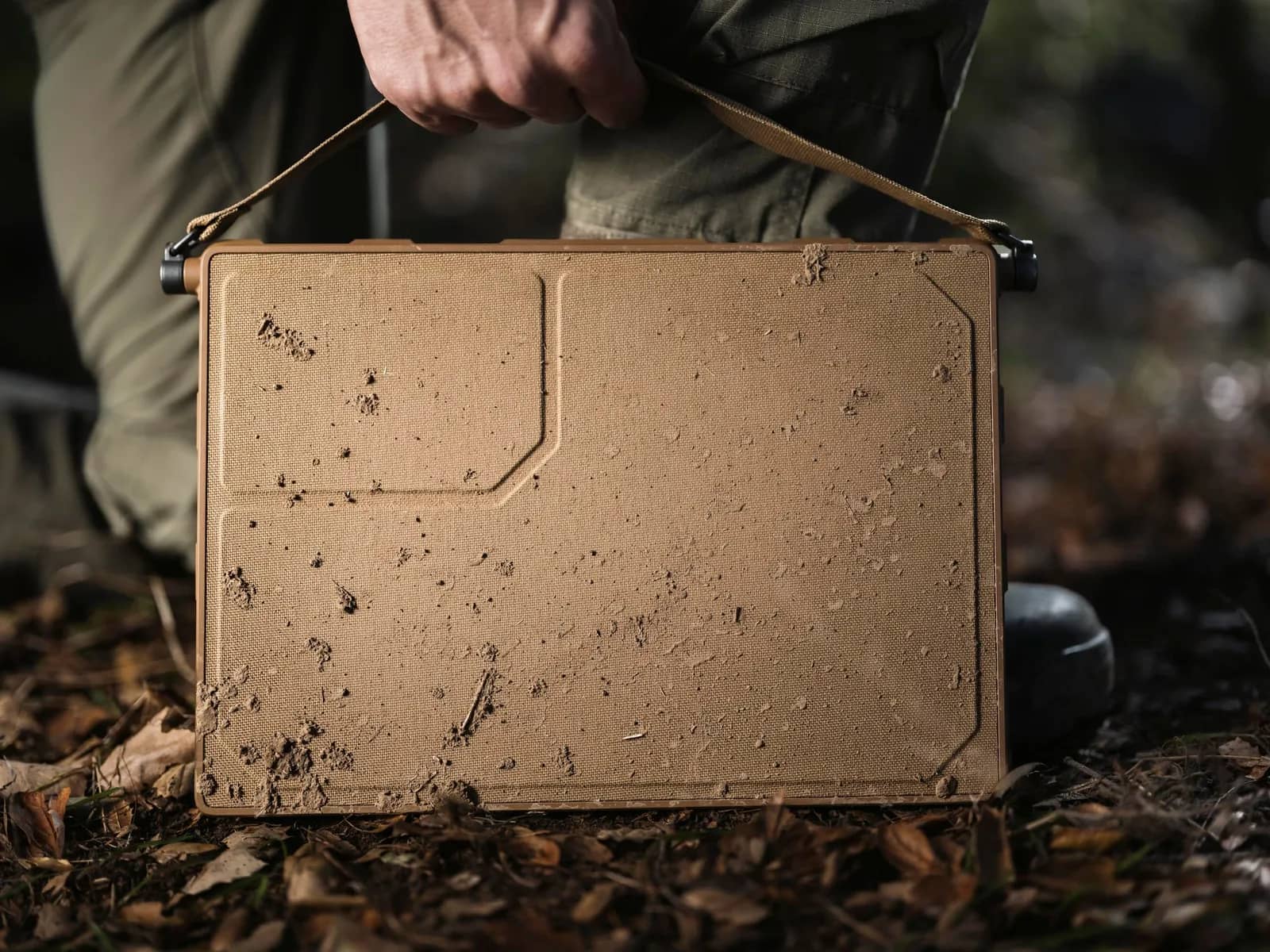
Anduril now says its BlueChip laptop, which uses Qualcomm Snapdragon X chips, is being developed to exceed the 65% US domestic-content threshold at its 2027 launch, per a statement to The Verge. The company says the final percentage is still being determined. On Tuesday, Anduril said it could not confirm whether the launch model would clear 65%, and put the prototype at about 32% US-origin by component cost.
Tap a lens to see what this story means for you.
Liked this? The Brief brings you the whole day in tech, verified, every morning.
Two minutes, free forever. What's in The Brief →
See what’s happening right now
The Feed runs all day — short, verified briefs the moment they break.
Open the FeedFollow @thecircuitry_
Every story we publish, as it happens. No noise between.
Reader-supported
The Circuitry is a passion project I've always wanted to build, and I love the work behind it.
Running it costs real money. APIs, hosting, time. To keep improving the site and growing this into something useful for everyone, those costs have to be covered.
Any contribution is appreciated. If not, no pressure. Thanks for reading.
The first laptops built on Nvidia's RTX Spark chip, from Microsoft, Asus, Dell, HP, Lenovo and MSI, start at $2,599 and climb to $6,999.99 for a maxed-out Asus ProArt P16 with 128GB of unified memory, The Verge reports. The first models ship as early as October 16.
Microsoft has set an October 16 launch date for the Surface Laptop Ultra with pricing from $2,599. The RTX Spark-powered laptop targets premium creative, gaming, and AI workloads.
Anduril has won an up to $2.9 billion Navy contract to build Virginia-class submarine components days after co-founder Palmer Luckey was named to a Pentagon weapons task force. The company is also investing $3.7 billion in a new Maryland shipyard expected to open in 2030.
Tesla marked the start of high-volume Semi production at its new Sparks, Nevada factory on September 24. The plant, which Tesla says covers 1.8 million square feet, is built to scale to 50,000 trucks annually.
King Yuan Electronics approved a $1.4 billion investment for a US semiconductor testing plant on July 10. The project, its largest overseas expansion, aims to address the growing US gap in backend packaging and testing capacity amid domestic manufacturing initiatives.

