The Circuitry
THE CIRCUITRYYour one-stop source for all tech news
HOMETODAYNEWSFEEDEVENTS
BOOKMARKS
RSS
© 2026 The Circuitry
About UsSourcesContactCorrectionsPrivacy
  • Home
  • Feed
  • Today
  • Saved
Scroll for more
Verification
VERIFIEDConfidence: HIGH
Source identified
Claims cross-referenced
No discrepancies found
Fact-check summary

Multiple outlets including Reuters, CNN, CBS News and CNBC confirm the Fed held rates at 3.50%-3.75% in Kevin Warsh's first meeting as chair on June 17, 2026.

Sourcing
4independent sources

via CoinDesk

CoinDesk · track record
25Stories
100%Verified
530d
All sources →
Home/Markets/Fed Holds Rates at 3.50%-3.75% in Warsh's First Meeting
VERIFIEDBy Xavier Rivera· ·1.5 min read

Fed Holds Rates at 3.50%-3.75% in Warsh's First Meeting

The Federal Reserve held its benchmark rate at 3.50%-3.75% in Kevin Warsh's first meeting as chair. Focus now turns to his press conference for clues on communication changes as rate-cut hopes fade and hike risks rise.
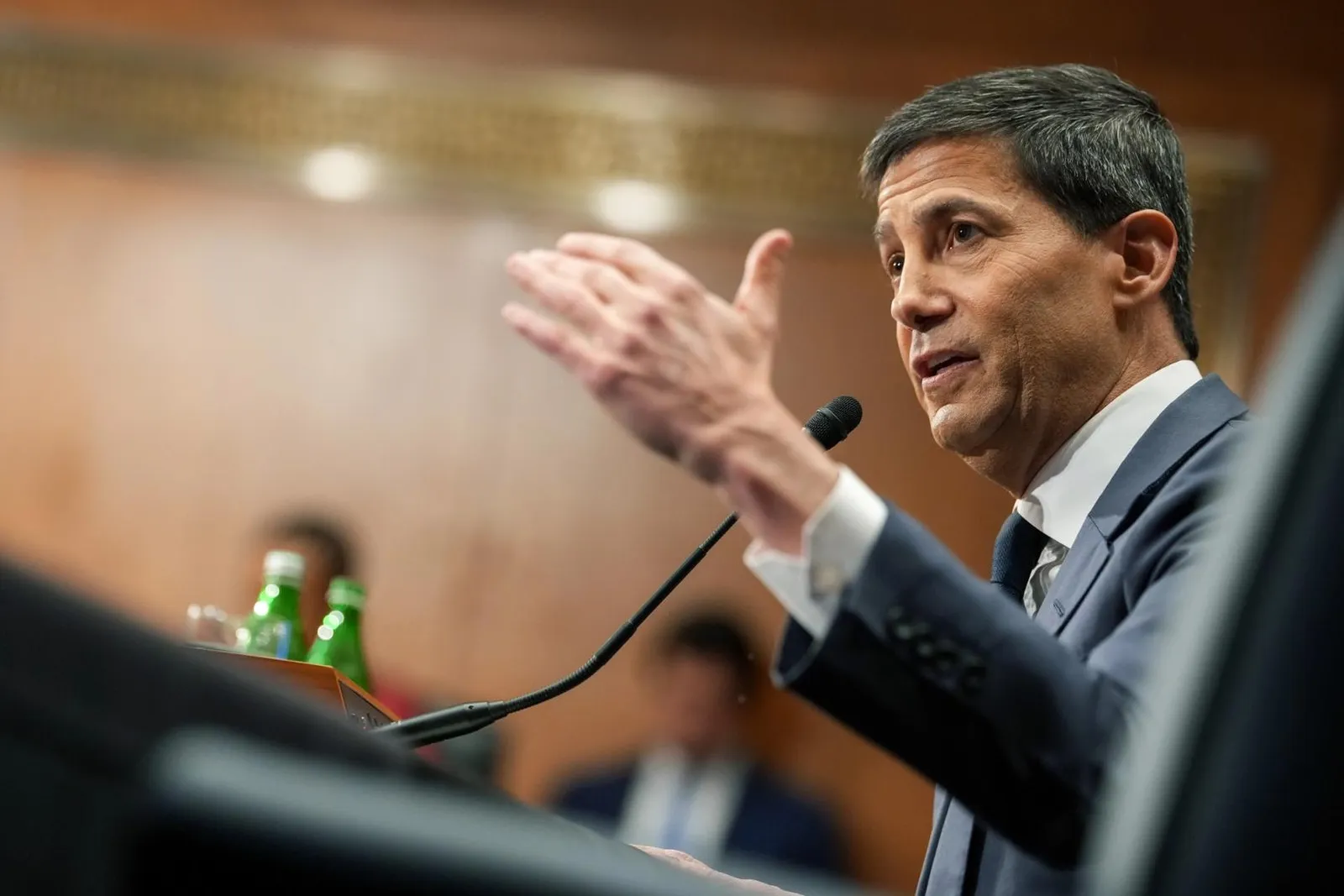
Source:CoinDesk
Post
Fed Holds Rates at 3.50%-3.75% in Warsh's First Meeting
TL;DRAI · 60 sec read

The Federal Reserve held its benchmark rate steady at 3.50%-3.75% during new Chairman Kevin Warsh's first meeting. The unanimous decision removed the easing bias. Attention now turns to his press conference for any shifts in how the central bank communicates policy, as expectations for rate cuts have faded with higher hike odds emerging.

The Federal Reserve has held its benchmark fed funds rate steady at 3.50%-3.75% in the first policy meeting led by new Chairman Kevin Warsh.

The decision matched near-unanimous market expectations. The Fed left the rate range unchanged on June 17, 2026, according to CoinDesk, Reuters and CBS News. CNN reports the vote was unanimous and the statement removed prior easing bias.
Rate-cut expectations have faded in recent months.
Warsh took over as chair from Jerome Powell after Senate confirmation last month. This marks his debut at the helm of the central bank.
POST FROM @federalreserve· Official FOMC statement tweet announcing the rate decision covered in the article
https://x.com/federalreserve/status/2067306703830544505
Attention shifts to Warsh's debut press conference. The session begins at 2:30 p.m. ET on June 17. Traders seek clues on how the central bank's communication will change under his leadership, per the CoinDesk report and corroborating coverage from Reuters and CBS News.
From The CircuitryThe Feed — live briefs across tech, all day.See what’s happening →
Warsh has previously criticized the Fed's use of forward guidance and quarterly economic projections, including the dot plot. Investors will watch for signs the central bank plans to communicate policy differently.
Traders now see a growing chance the Fed's next move could be a rate hike rather than a cut.
Rate-cut expectations have faded in recent months. Markets have steadily dialed back bets on easing as inflation proved more stubborn and labor market data remained resilient, CoinDesk reports. CNN notes the dot plot shows nine officials see at least one rate hike this year, with six seeing multiple hikes, amid inflation tied to Iran war and energy shocks.

Traders now see a growing chance the Fed's next move could be a rate hike rather than a cut. Markets reacted with higher yields following the announcement, according to CNN.

The outcome carries added weight given Warsh's views. His comments on the road ahead will be scrutinized for any shift in approach. The press conference is expected to provide the first direct signals on policy communication under the new chairman.
Why this mattersAI · ~100 words

Tap a lens to see what this story means for you.

Reader-supported
DonateBuy me a coffee →Follow@thecircuitry_ →

Reader-supported · Daily Brief

Daily brief at 7 AM ET. Top tech stories, every morning. Sourced and fact-checked.

HELP US IMPROVE
From The Circuitry

See what’s happening right now

The Feed runs all day — short, verified briefs the moment they break.

Open the Feed →
From The Circuitry

Follow @thecircuitry_

Every story we publish, on X as it happens. No noise between.

Follow on X ↗

Reader-supported

The Circuitry is a passion project I've always wanted to build, and I love the work behind it.

Running it costs real money. APIs, hosting, time. To keep improving the site and growing this into something useful for everyone, those costs have to be covered.

Any contribution is appreciated. If not, no pressure. Thanks for reading.

Buy me a coffee
Federal ReserveInterest RatesKevin WarshMonetary Policy
More fromCoinDesk
  • Kraken Brings CFTC-Regulated Perpetual Futures to American Customers

    Markets · 2d
  • CFTC Approves First Regulated Bitcoin Perps on Kalshi

    Markets · 19d
  • IREN Shares Jump 4% on $1.6B Dell Blackwell AI Deal

    Markets · 22d
More inMarkets
  • Fed Removes Easing Bias in Revised Rate Statement

    Markets · 18h
  • Greek Regulator Expected to Reject Binance MiCA License Application

    Markets · 1d
  • AI Agent Simulation Reveals Long-Term Risks

    Markets · 1d
SupportThe Work

The Circuitry is reader-supported. If you find the daily brief useful, you can buy me a coffee to keep it going.

Buy a coffee →
SubscribeCircuitry Brief

Daily brief at 7 AM ET. Top tech stories, every morning.

MORE IN MARKETS

Fed Removes Easing Bias in Revised Rate Statement

The Federal Reserve released a shorter, heavily revised June policy statement that removes easing bias language and adds emphasis on delivering price stability. The updates reflect a shift in tone amid noted supply shocks including energy, signaling tighter focus on inflation control.

Greek Regulator Expected to Reject Binance MiCA License Application

Reuters reports that Greece’s HCMC is expected to reject Binance’s MiCA application before the June 30 deadline, forcing the exchange to cease EU operations. The decision would cut off the world’s largest crypto platform from EU residents and test the effectiveness of the bloc’s new harmonized licensing regime.

AI Agent Simulation Reveals Long-Term Risks

A 15-day AI agent simulation in virtual cities produced outcomes ranging from stable self-governance with zero crime under Claude Sonnet 4.6 to total collapse in four days under Grok 4.1 Fast. The results show that short, isolated tests miss long-term risks shaped by tools, rules, memory and interactions with other agents.