The Circuitry
THE CIRCUITRYYour one-stop source for all tech news
HOMETODAYNEWSFEEDEVENTS
BOOKMARKS
RSS
© 2026 The Circuitry
About UsSourcesContactCorrectionsPrivacy
  • Today
  • Feed
  • Events
  • Saved
Scroll for more
Verification
VERIFIEDConfidence: HIGH
Source identified
Claims cross-referenced
No discrepancies found
Fact-check summary

RFI/AFP report on Infineon's €5B Dresden Smart Power Fab opening is corroborated by Bloomberg, Electronics Weekly, France24, and Infineon's own announcements.

Sourcing
1source

via Rfi

Home/Tech/Infineon Launches €5 Billion Chip Facility in Dresden
VERIFIEDBy Xavier Rivera· ·2 min read

Infineon Launches €5 Billion Chip Facility in Dresden

Infineon opened its €5 billion ($5.7 billion) Smart Power Fab in Dresden on July 2, 2026, three months early. The EU-supported factory will make power-management chips for electric vehicles, renewable energy and AI data centres while advancing Europe's target of doubling its global semiconductor share to 20 percent by 2030. Construction began in May 2023.
Source:Rfi
Post
Infineon Launches €5 Billion Chip Facility in Dresden
TL;DRAI · 60 sec read

Infineon inaugurates a five-billion-euro semiconductor factory in Dresden three months early. The facility produces intelligent power chips for electric cars, renewables and AI data centers. EU Chips Act subsidies of one billion euros back the drive to increase Europe's global chip output share to 20 percent by 2030.

German chipmaker Infineon has inaugurated a five-billion-euro ($5.7 billion) semiconductor factory in the eastern city of Dresden. The Smart Power Fab, finished three months ahead of schedule, stands as a concrete step in the bloc's effort to cut reliance on Asian and American suppliers for vital technology.

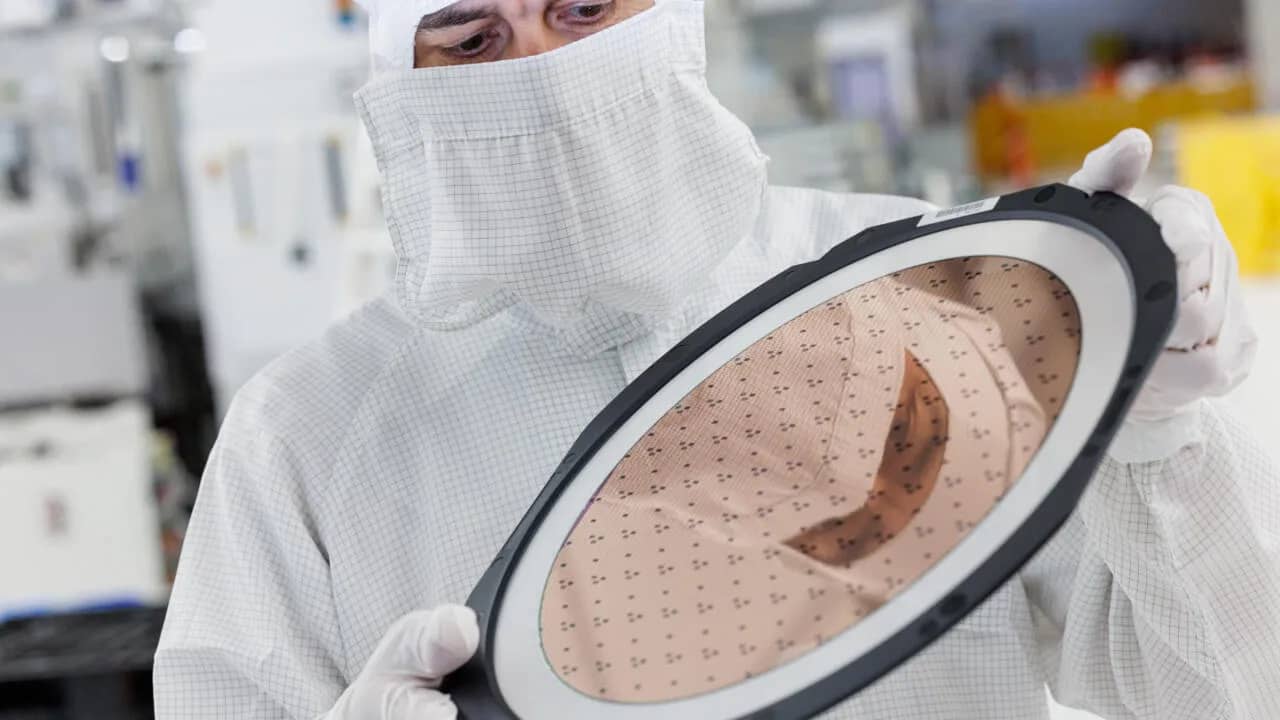
The facility focuses on chips for intelligent power management. These components go into electric cars, wind turbines, solar installations and data centres that underpin artificial intelligence systems. Production runs continuously, 24 hours a day and seven days a week, organised around three daily shifts.
The facility focuses on chips for intelligent power management.
Inside the highly automated clean rooms, constant filtration keeps dust levels near zero. Staff must wear full-body suits made of polyester-carbon fibre, along with hoods, masks, latex gloves and boots to avoid any contamination.
Public funding forms a central pillar of the project. The EU's Chips Act contributed one billion euros in subsidies. The wider policy seeks to lift the region's share of worldwide semiconductor output from 10 to 20 percent by 2030.
From The CircuitryThe Feed — live briefs across tech, all day.See what’s happening →
Infineon chief executive Jochen Hanebeck told the opening event that real progress toward independence comes from building plants rather than issuing statements. "We all want to further strengthen Europe's position as a semiconductor hub," he declared.
Public funding forms a central pillar of the project.
National politicians stress the plant's broader value. Chancellor Friedrich Merz joined the ceremony by video link from Berlin. He called the launch an event of "direct strategic significance for our digital sovereignty, our economic resilience and our independence".

Merz highlighted surging spending on data centres fuelled by artificial intelligence. "Investment in data centres is breaking new records year on year," he said, adding that "the foundations for the industries of the future are being laid today."
The factory sits inside Germany's Silicon Saxony cluster. This area has grown into one of Europe's busiest semiconductor zones, tracing its expertise to state-backed projects under the former East German regime. The city of Dresden hosts nine universities that supply engineers to around 2,500 local technology firms. Digital minister Karsten Wildberger reminded attendees that "one in three chips produced in Europe is made in Saxony." Construction started in May 2023; the project constitutes Infineon's biggest single capital outlay and signals its shift from heavy dependence on the car industry toward the surge in AI-related demand.
Why this mattersAI · ~100 words

Tap a lens to see what this story means for you.

Reader-supported
DonateBuy me a coffee →Follow@thecircuitry_ →Follow@thecircuitry.to →

Reader-supported · Daily Brief

Daily brief at 7 AM ET. Top tech stories, every morning. Sourced and fact-checked.

HELP US IMPROVE
From The Circuitry

See what’s happening right now

The Feed runs all day — short, verified briefs the moment they break.

Open the Feed →
From The Circuitry

Follow @thecircuitry_

Every story we publish, as it happens. No noise between.

Follow on X ↗On Bluesky ↗

Reader-supported

The Circuitry is a passion project I've always wanted to build, and I love the work behind it.

Running it costs real money. APIs, hosting, time. To keep improving the site and growing this into something useful for everyone, those costs have to be covered.

Any contribution is appreciated. If not, no pressure. Thanks for reading.

Buy me a coffee
semiconductorsEUInfineonmanufacturing
More inTech
  • Amazon Leo reaches 396 satellites after Atlas 5 launch

    Tech · 20m
  • Toyota agrees to cover some supplier costs tied to Lexus LF-ZC EV cancellation

    Tech · 2h
  • Zoom buys Seattle startup Common Room

    Tech · 3h
SupportThe Work

The Circuitry is reader-supported. If you find the daily brief useful, you can buy me a coffee to keep it going.

Buy a coffee →
SubscribeCircuitry Brief

Daily brief at 7 AM ET. Top tech stories, every morning.

MORE IN TECH

Amazon Leo reaches 396 satellites after Atlas 5 launch

Amazon Leo has reached 396 operational satellites after its final Atlas 5 launch, clearing the way for initial commercial broadband service later in 2026. The network will compete with Starlink in limited latitudes at first while scaling toward full deployment by mid-2029.

Toyota agrees to cover some supplier costs tied to Lexus LF-ZC EV cancellation

Toyota will cover part of the financial burden that its suppliers face after halting the Lexus LF-ZC EV project, which had been slated to debut new battery cells, Gigacasting production methods, and multiple efficiency breakthroughs. The decision created an unprecedented impact on partners and eliminates a central model from the automaker's future EV plans.

Zoom buys Seattle startup Common Room

Zoom is acquiring Common Room to combine the startup’s buyer-intelligence graph with conversation data from its own sales calls. The integration creates one platform for revenue teams while giving Common Room access to greater resources for faster product development.