The Circuitry
THE CIRCUITRYYour one-stop source for all tech news
HOMETODAYNEWSFEEDEVENTS
BOOKMARKS
RSS
© 2026 The Circuitry
About UsSourcesContactCorrectionsPrivacy
  • Today
  • Feed
  • Events
  • Saved
Scroll for more
Verification
VERIFIEDConfidence: HIGH
Source identified
Claims cross-referenced
No discrepancies found
Fact-check summary

Mistral's Robostral Navigate announcement is corroborated by Bloomberg coverage from July 8, 2026.

Sourcing
1source

via Mistral

Mistral · track record
2Stories
100%Verified
230d
All sources →
Home/Tech/Mistral introduces Robostral Navigate for single-camera robot guidance
VERIFIEDBy Xavier Rivera· ·2 min read

Mistral introduces Robostral Navigate for single-camera robot guidance

Mistral introduced Robostral Navigate, an 8B model that achieves 76.6 percent success on unseen R2R-CE benchmarks using only a single RGB camera. The in-house simulation-trained system outperforms multi-sensor approaches and generalizes across robot types, advancing embodied AI for real-world navigation tasks.
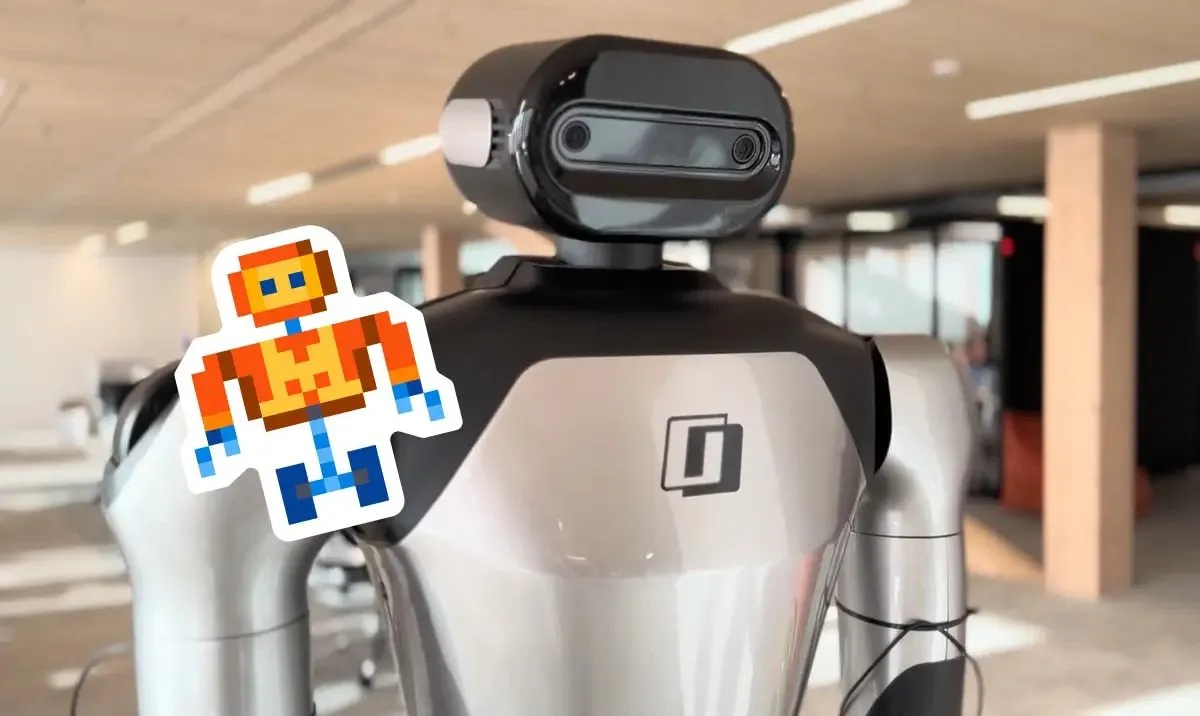
Source:Mistral
Post
Mistral introduces Robostral Navigate for single-camera robot guidance
TL;DRAI · 60 sec read

Mistral releases Robostral Navigate, an 8B model that guides robots through complex indoor and outdoor spaces using only one RGB camera plus language instructions. It hits 79.4 percent success on seen environments and 76.6 percent on unseen, beating prior single-camera and multi-sensor methods. Trained fully in simulation, the system works across robot types for manufacturing and logistics.

Mistral has released Robostral Navigate, an 8B parameter system that directs robots through intricate indoor and outdoor spaces relying solely on one standard RGB camera.

Robostral Navigate sets new benchmark records. The system records a 79.4 percent success rate on R2R-CE validation seen environments and 76.6 percent on validation unseen. It surpasses the top prior single-camera method by 9.7 percentage points and exceeds the leading multi-sensor alternative by 4.5 points even though it employs neither depth sensors nor additional cameras.
Navigation arises organically from the underlying model’s ability to locate and reference objects.
Robostral Navigate processes ordinary RGB camera feeds together with natural-language directions to guide autonomous movement across offices, homes, commercial properties and exterior areas. The model executes extended instruction sequences independently inside active workspaces containing people and unfamiliar barriers.
POST FROM @MistralAI· official announcement tweet from Mistral AI introducing Robostral Navigate
https://x.com/MistralAI/status/2074856309438980145
Model relies on pointing-based navigation. Supplied with an objective and past observations, the system determines the subsequent action by estimating pixel coordinates for the goal spot visible in the live camera image plus the required final heading. This technique renders the decision process inherently stable against variations in camera parameters or environmental dimensions.
From The CircuitryThe Feed — live briefs across tech, all day.See what’s happening →
Should the intended spot fall outside the visible frame, the model switches to specifying offsets within the robot’s immediate coordinate system. One such instruction states “Move 2 meters forward, 1.5 meters to the left, and turn 25 degrees left.” The approach integrates reinforcement learning to enable ongoing refinement.
Training conducted entirely in simulation. Robostral Navigate was developed internally at Mistral without dependence on any publicly available vision-language foundation. The weights began from the company’s own grounding-focused vision-language model tuned for tasks including pointing, counting and object localization. A streamlined synthetic data pipeline yielded roughly 400,000 distinct movement sequences.
Once spatial understanding is established, locomotion skills follow directly.
Training leveraged token-efficient methods through prefix-caching. The resulting network transfers successfully to wheeled, legged and aerial platforms of different scales while tolerating changes in camera calibration. Target sectors include manufacturing, delivery services, logistics operations and hospitality venues.
Development signals push toward unified embodied AI. Navigation arises organically from the underlying model’s ability to locate and reference objects. Once spatial understanding is established, locomotion skills follow directly. The new release marks one of the highest-priority features requested by Mistral’s enterprise clients.
Why this mattersAI · ~100 words

Tap a lens to see what this story means for you.

Reader-supported
DonateBuy me a coffee →Follow@thecircuitry_ →Follow@thecircuitry.to →

Reader-supported · Daily Brief

Daily brief at 7 AM ET. Top tech stories, every morning. Sourced and fact-checked.

HELP US IMPROVE
From The Circuitry

See what’s happening right now

The Feed runs all day — short, verified briefs the moment they break.

Open the Feed →
From The Circuitry

Follow @thecircuitry_

Every story we publish, as it happens. No noise between.

Follow on X ↗On Bluesky ↗

Reader-supported

The Circuitry is a passion project I've always wanted to build, and I love the work behind it.

Running it costs real money. APIs, hosting, time. To keep improving the site and growing this into something useful for everyone, those costs have to be covered.

Any contribution is appreciated. If not, no pressure. Thanks for reading.

Buy me a coffee
AIRoboticsMistral
More fromMistral
  • Mistral launches OCR 4 featuring bounding boxes and typed block classification

    Tech · 15d
More inTech
  • Micron raises US chip investment to over $250B through 2035

    Tech · 28m
  • Meta says its Muse Spark 1.1 AI model can now rival top coding tools

    Tech · 42m
  • Micron sets $3B US semiconductor supply chain push anchored by GlobalWafers pact

    Tech · 43m
SupportThe Work

The Circuitry is reader-supported. If you find the daily brief useful, you can buy me a coffee to keep it going.

Buy a coffee →
SubscribeCircuitry Brief

Daily brief at 7 AM ET. Top tech stories, every morning.

MORE IN TECH

Micron raises US chip investment to over $250B through 2035

Micron Technology has raised its planned US fab and technology investment to more than $250 billion through 2035, citing surging demand for memory driven by AI. The increase supports the company's long-term goal of producing 40% of its DRAM output domestically as its New York fab breaks ground ahead of schedule.

Meta says its Muse Spark 1.1 AI model can now rival top coding tools

Meta has released Muse Spark 1.1, which it describes as a major upgrade for advanced coding, agentic workflows and multimodal understanding. The model is now available to US developers through a public preview of the company’s Model API as it seeks to match leading AI competitors.

Micron sets $3B US semiconductor supply chain push anchored by GlobalWafers pact

On July 9 Micron Technology said it would allocate as much as $3 billion to reinforce the US semiconductor supply chain. The bulk of the move rests on a new financing and wafer supply pact with Taiwan's GlobalWafers that targets greater domestic resilience.