The Circuitry
THE CIRCUITRYYour one-stop source for all tech news
HOMETODAYNEWSFEEDEVENTS
BOOKMARKS
RSS
© 2026 The Circuitry
About UsSourcesContactCorrectionsPrivacy
  • Today
  • Feed
  • Events
  • Saved
Scroll for more
Verification
VERIFIEDConfidence: HIGH
Source identified
Claims cross-referenced
No discrepancies found
Sourcing
1source

via Frandroid

Frandroid · track record
29Stories
100%Verified
1630d
All sources →
Markets
NVDA···

Live quote · not investment advice

Home/Tech/Nvidia Crosses $5.5 Trillion Market Cap for First Time
VERIFIEDBy Xavier Rivera· ·2 min read

Nvidia Crosses $5.5 Trillion Market Cap for First Time

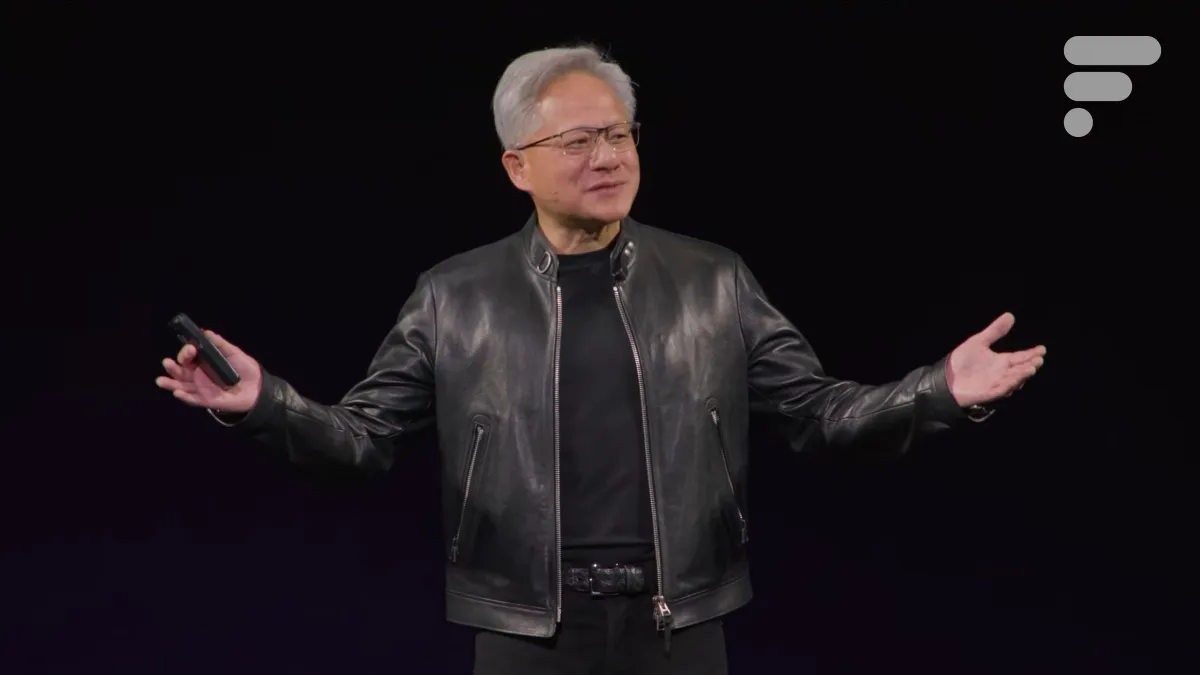
Nvidia crossed the $5,500 billion market capitalization threshold on May 13, 2026, the first time any company has reached that level. The milestone comes as the stock has multiplied more than fourteenfold since the end of 2022, with analysts projecting further acceleration in AI data center spending.
Source:Frandroid
Post
Nvidia Crosses $5.5 Trillion Market Cap for First Time
TL;DRAI · 60 sec read

Nvidia reaches $5.5 trillion market cap for the first time on May 13, 2026, surpassing Apple, Microsoft, and 1.5 times France's GDP. The record ties to CEO Jensen Huang joining Trump at a Beijing summit with Xi Jinping, where reopening China's market to Blackwell AI chips is discussed, fueling AI-driven stock gains.

Nvidia crossed the $5,500 billion market capitalization threshold on Wednesday, May 13, 2026, a peak no one had ever reached before. The California-based maker of chips for AI and graphics cards for gamers is now worth more than one and a half times France’s annual GDP.

France’s annual GDP stands at roughly $3,600 billion in 2026 according to the IMF. Apple and Microsoft, its two direct rivals atop the global valuation rankings, have been hovering around the $4,000 billion mark since autumn 2025.

The NVDA share touched $227.16 intraday on Wednesday, up roughly 3%. Since the end of 2022 and the arrival of ChatGPT, the stock has multiplied more than fourteenfold, adding nearly $4,500 billion in value.

According to Fortune, Nvidia crossed the $1,000 billion mark in June 2023, the $4,000 billion mark in July 2025, then the $5,000 billion mark at the end of October 2025. Seven months later, it has reached $5,500 billion. Over the past 12 months the stock is up more than 84%, five times the performance of the S&P 500 over the same period.
From The CircuitryThe Feed — live briefs across tech, all day.See what’s happening →

The timing of the record is tied to a very specific news item. Jensen Huang, founder and CEO of Nvidia, is ultimately accompanying Donald Trump to a summit with Xi Jinping in Beijing, where the reopening of the Chinese market to Blackwell chips, the company’s latest generation of AI accelerators, is openly on the table. China accounted for up to 95% of Nvidia’s market share before the U.S. restrictions, against zero today.

Vivek Arya at Bank of America has raised his price target to $320 according to Investors.com, implying 45% upside. He sees 2026 as a year of clear acceleration and projects a data center systems market worth more than $2,000 billion in 2030. First-quarter fiscal 2027 results are due on May 20, with guidance centered on roughly $78 billion in revenue, up 77% year-on-year.
Nvidia remains the reference name of the AI cycle. If the China deal materializes, the $6,000 billion mark cited by retail investors is not unrealistic. If demand slows, the correction will match the scale of the party.
Why this mattersAI · ~100 words

Tap a lens to see what this story means for you.

Reader-supported
DonateBuy me a coffee →Follow@thecircuitry_ →Follow@thecircuitry.to →

Reader-supported · Daily Brief

Daily brief at 7 AM ET. Top tech stories, every morning. Sourced and fact-checked.

HELP US IMPROVE
From The Circuitry

See what’s happening right now

The Feed runs all day — short, verified briefs the moment they break.

Open the Feed →
From The Circuitry

Follow @thecircuitry_

Every story we publish, as it happens. No noise between.

Follow on X ↗On Bluesky ↗

Reader-supported

The Circuitry is a passion project I've always wanted to build, and I love the work behind it.

Running it costs real money. APIs, hosting, time. To keep improving the site and growing this into something useful for everyone, those costs have to be covered.

Any contribution is appreciated. If not, no pressure. Thanks for reading.

Buy me a coffee
NvidiaMarket CapAI ChipsStock Market
More fromFrandroid
  • Microsoft extends free Windows 10 security updates to 2027

    Tech · 2d
  • RTE outage leaves 100,000 Breton homes dark after heatwave reassurance

    Energy · 3d
  • Anthropic positions Claude as autonomous agent inside Slack

    Tech · 3d
More inTech
  • NHTSA Closes Probe Into Tesla Model 3 and Y Steering Failures

    Tech · 5h
  • Tata Electronics leak is mostly Apple data

    Tech · 11h
  • Linux Foundation Debuts Akrites to Speed Up Open Source Vulnerability Fixes

    Tech · 1d
SupportThe Work

The Circuitry is reader-supported. If you find the daily brief useful, you can buy me a coffee to keep it going.

Buy a coffee →
SubscribeCircuitry Brief

Daily brief at 7 AM ET. Top tech stories, every morning.

MORE IN TECH

NHTSA Closes Probe Into Tesla Model 3 and Y Steering Failures

NHTSA has closed its investigation into power steering loss on 376,241 Tesla Model 3 and Model Y vehicles after Tesla deployed an over-the-air software fix. The closure marks another regulatory win for the company even as a separate FSD visibility probe remains active.

Tata Electronics leak is mostly Apple data

Tata Electronics confirmed a cybersecurity incident after extortion group World Leaks published more than 630 GB of data that is overwhelmingly Apple-related according to a file index. The breach affects an Indian contract manufacturer that assembles iPhones and supplies other global tech companies.

Linux Foundation Debuts Akrites to Speed Up Open Source Vulnerability Fixes

The Linux Foundation launched Akrites on Thursday with 19 founding members including major tech firms and banks to organize remediation of critical open source vulnerabilities before AI-powered attackers can exploit them. The project tackles the reality that fewer than 5% of thousands of AI-identified flaws have received patches by instituting one confidential response team in place of scattered reports.