According to reporting, Biren Technology is preparing its next-generation BR20X GPU for mass production. The move advances a domestic AI accelerator roadmap built on broader low-precision support and locally available manufacturing.
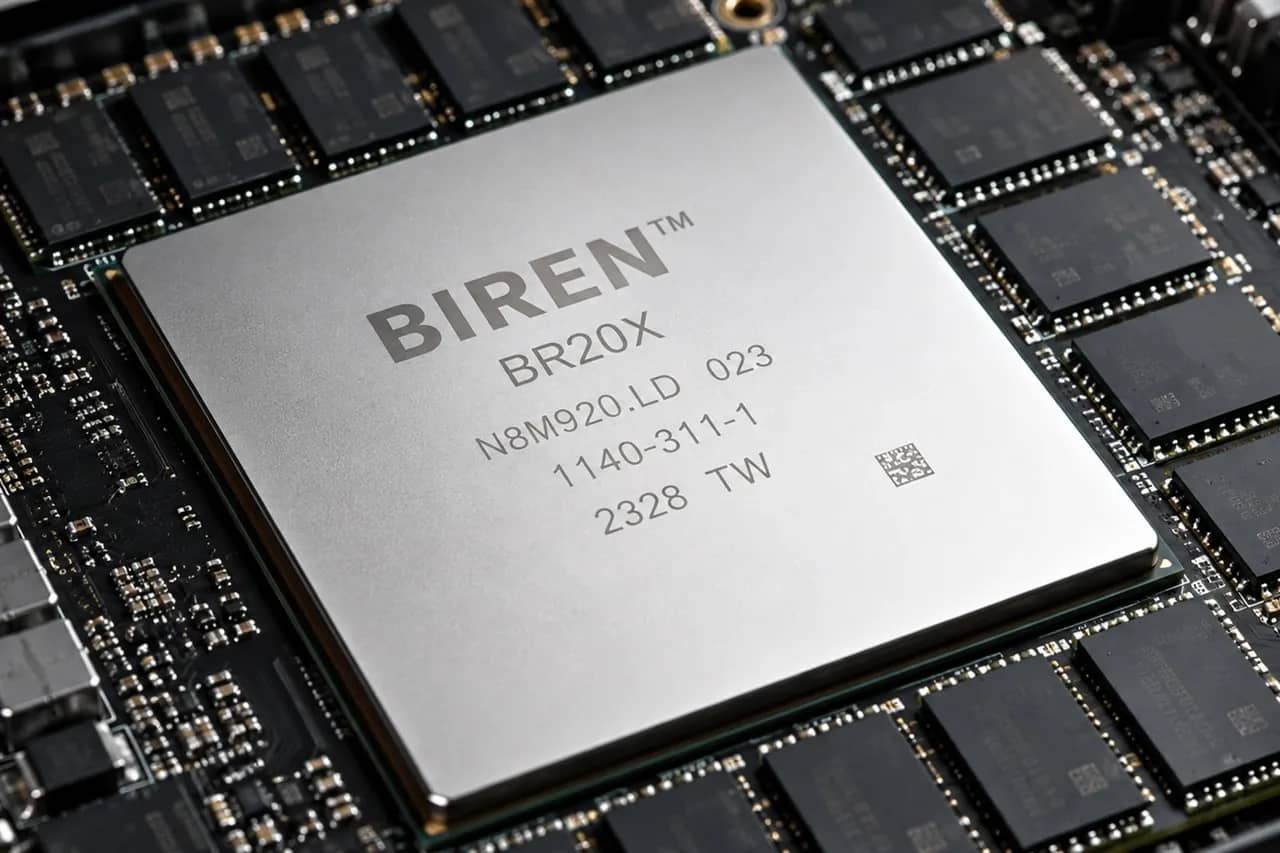
The BR20X development sharpens China's AI GPU challenge to Nvidia.
Tap a lens to see what this story means for you.
Liked this? The Brief brings you the whole day in tech, verified, every morning.
Two minutes, free forever. What's in The Brief →
See what’s happening right now
The Feed runs all day — short, verified briefs the moment they break.
Open the FeedFollow @thecircuitry_
Every story we publish, as it happens. No noise between.
Reader-supported
The Circuitry is a passion project I've always wanted to build, and I love the work behind it.
Running it costs real money. APIs, hosting, time. To keep improving the site and growing this into something useful for everyone, those costs have to be covered.
Any contribution is appreciated. If not, no pressure. Thanks for reading.
NVIDIA has expanded supply agreements with Kinsus, Samsung Electro-Mechanics, Amkor, SPIL, Foxconn and TSMC to add manufacturing capacity for its AI platforms. Kinsus will raise dedicated substrate capacity by more than 3.5 times, with production expected to start in the second half of 2027.
NVIDIA has reported third-quarter revenue of $115.8 billion, up 103% from a year ago, with data-center revenue of $107.6 billion. Fourth-quarter revenue is expected at $130.0 billion, plus or minus 3%, with no data-center compute revenue from China assumed.
Jensen Huang has said he would return as Nvidia CEO if the board decides a comeback serves shareholders, employees, the company, and the country. He writes that he regrets problems he created for the board and will cooperate with its independent investigation.
Isomorphic Labs has raised $5 billion in a Series C co-led by Greenoaks and Sequoia Capital, with further investment from Alphabet. The company will scale IsoDDE, its AI drug design engine, and move treatment programs toward clinical trials.
Google has identified a framework that drafted and ran exploits with no person in the loop. The same report says zero-day exploits rose to 22 in August, and stolen model access reached $1 million in the worst cases.