Ring has announced its first smart lock that uses thumbturn cranking to generate power and avoid dead-battery lockouts, plus several new 4K cameras with improved low-light performance. The lock arrives in Q1 2027 for $249 while the cameras are available immediately.
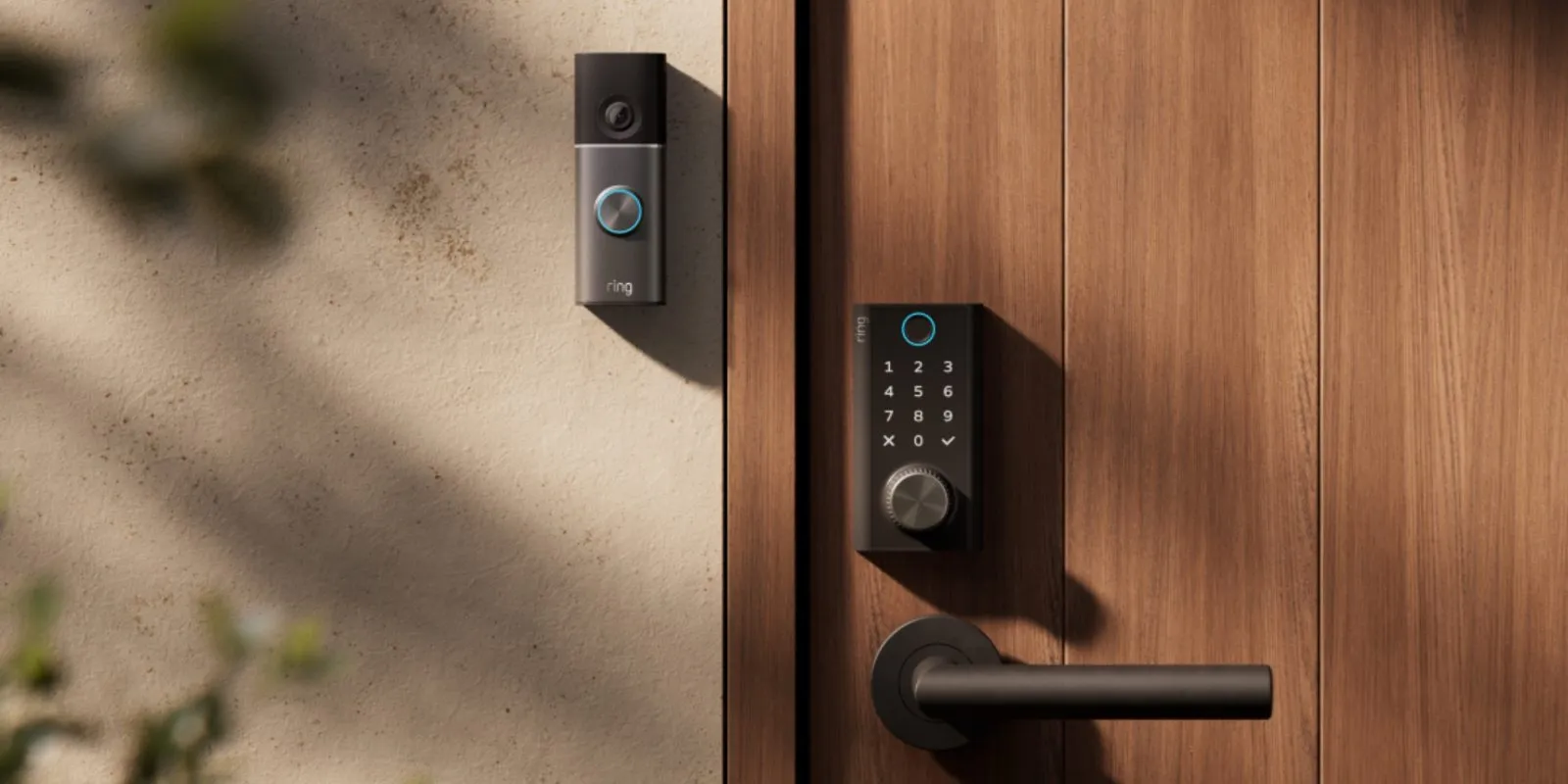
Users can rotate the thumbturn several times to produce enough energy for brief operation and avoid lockouts.
Tap a lens to see what this story means for you.
Liked this? The Brief brings you the whole day in tech, verified, every morning.
Two minutes, free forever. What's in The Brief →
See what’s happening right now
The Feed runs all day — short, verified briefs the moment they break.
Open the FeedFollow @thecircuitry_
Every story we publish, as it happens. No noise between.
Reader-supported
The Circuitry is a passion project I've always wanted to build, and I love the work behind it.
Running it costs real money. APIs, hosting, time. To keep improving the site and growing this into something useful for everyone, those costs have to be covered.
Any contribution is appreciated. If not, no pressure. Thanks for reading.
Rundeck before 6.2.0 contains an OS command injection vulnerability rated 7.5 HIGH that lets authenticated users run arbitrary commands on Windows nodes. The flaw was fixed in the 6.2.0 release.
CVE-2026-104335 lets an authenticated remote attacker run arbitrary code on IBM Langflow OSS 1.0.0 through 1.12.2 because of improper access control. IBM rates it 8.8 (high) and says to upgrade to 1.12.3.
Denmark's Central Population Register disclosed a data breach that exposed personal information of 8.8 million individuals through misuse of a private company's access. The incident, discovered October 2 after occurring in September, prompted a police investigation and new security measures.
Citrix NetScaler ADC and Gateway face denial-of-service risk from CVE-2026-88779 due to a memory buffer flaw.
NVD has published CVE-2014-125130 on a CVSS 7.5 unauthenticated file read issue in the CodeArt Google MP3 Audio Player WordPress plugin through version 1.0.11. Remote attackers can reach wp-config.php and further sensitive files to enable site compromise, with exploitation first noted in 2023.