TDF has activated a large-scale 5G Broadcast trial in Paris, Reims, Bourges and Le Havre using its TNT transmitters to deliver free TV to smartphones without data or a SIM card. The trial prepares for potential national deployment while addressing congestion issues that affect traditional mobile networks during major events.
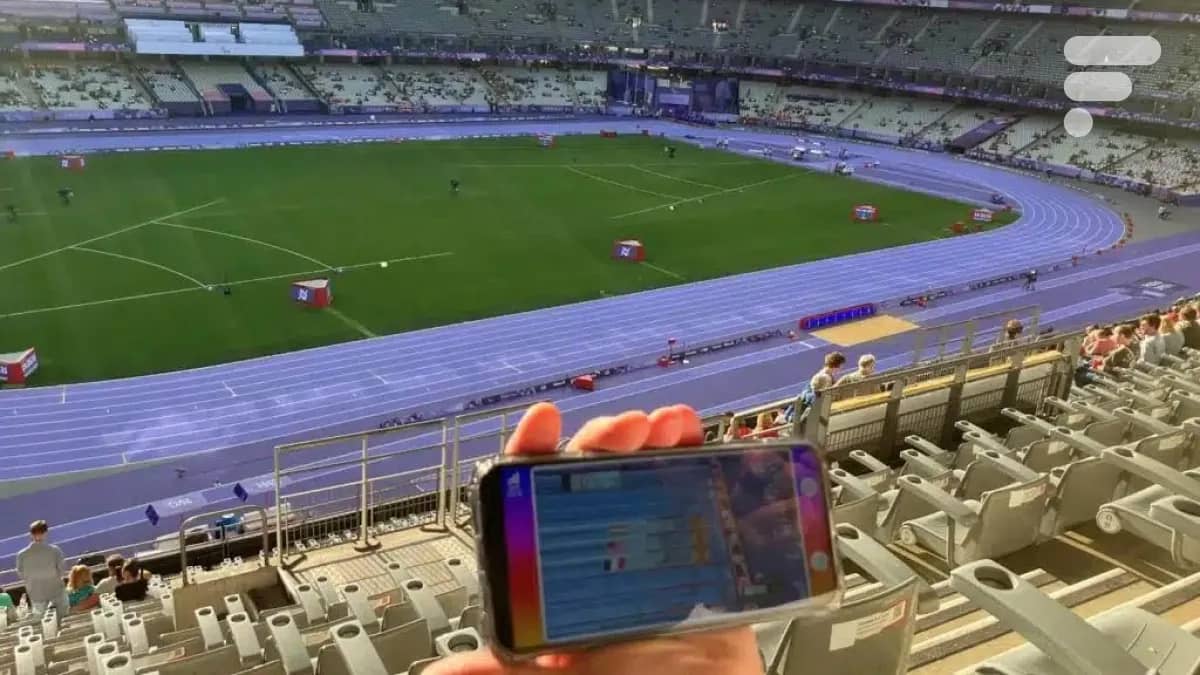
Unlike conventional streaming that relies on individual IP streams, the technology avoids any impact on quality from the number of users and eliminates dependence on internet infrastructure.
It does not substitute for TNT, cable, satellite or streaming services but adds a building block designed for mass audiences and simultaneity.
Tap a lens to see what this story means for you.
Liked this? The Brief brings you the whole day in tech, verified, every morning.
Two minutes, free forever. What's in The Brief →
See what’s happening right now
The Feed runs all day — short, verified briefs the moment they break.
Open the FeedFollow @thecircuitry_
Every story we publish, as it happens. No noise between.
Reader-supported
The Circuitry is a passion project I've always wanted to build, and I love the work behind it.
Running it costs real money. APIs, hosting, time. To keep improving the site and growing this into something useful for everyone, those costs have to be covered.
Any contribution is appreciated. If not, no pressure. Thanks for reading.
Apple introduced the C2 modem with the iPhone Duo announcement, promising meaningfully faster uploads, 15% lower power consumption, and mmWave support in the US. Fully integrated with the A20 Pro and iOS 27, the platform uses AI algorithms to strengthen connection reliability in weak signal areas.
The Council of State has rejected a CFE-CGC union appeal, clearing Amazon Leo to offer satellite internet in France under a 10-year frequency authorization granted by Arcep in July 2025. The ruling removes the final legal hurdle for the Starlink rival as it prepares to launch commercially in the country, with initial service expected later in 2026 once the satellite count supports it.
Rockstar North development head Rob Nelson said GTA 6 players can rob stores, banks, payday loan offices, and other sites spontaneously. The system forms part of the core gameplay loop and works with or without a partner character.
IGN has published the full verbatim transcript of its interview with Rockstar North's Rob Nelson. The release adds specific details on character switching, side missions, dynamic NPC reactions, and autonomous companion behavior in GTA 6.
Google DeepMind, Meta, and Isomorphic Labs are investing $300 million in Biohub to build AI datasets for a virtual cell model. The funding is part of a $1.8 billion initiative that also includes contributions from the Department of Energy and National Institutes of Health.