The Circuitry
THE CIRCUITRYYour one-stop source for all tech news
HOMETODAYNEWSFEEDEVENTS
BOOKMARKS
RSS
© 2026 The Circuitry
About UsSourcesContactCorrectionsPrivacy
  • Today
  • Feed
  • Events
  • Saved
Scroll for more
Verification
VERIFIEDConfidence: HIGH
Source identified
Claims cross-referenced
No discrepancies found
Fact-check summary

Confirmed: CVE-2026-112146 is listed in NVD and VulDB, covering hard-coded MQTT credentials on D-Link E15, M32, R15 and R32. No D-Link fix has been reported yet.

Sourcing
1source

via NVD

NVD · track record
82Stories
100%Verified
5730d
All sources →
From The CircuitryWhy The Circuitry

Verified tech news, cross-checked.

Every story is checked against independent sources before it posts — no rumors dressed up as fact.

How we verify →
Home/Tech/D-Link E15 and three other routers hit by credential flaw
VERIFIEDBy Xavier Rivera·Monday, October 19, 2026 at 12:46 PM EDT·1 min read

D-Link E15 and three other routers hit by credential flaw

D-Link E15, M32, R15 and R32 routers have a hard-coded credential flaw (CVE-2026-112146) in the MQTT Broker. The CNA rated it 7.4 under CVSS 3.1, and a proof-of-concept exploit is public. No fix has been reported.
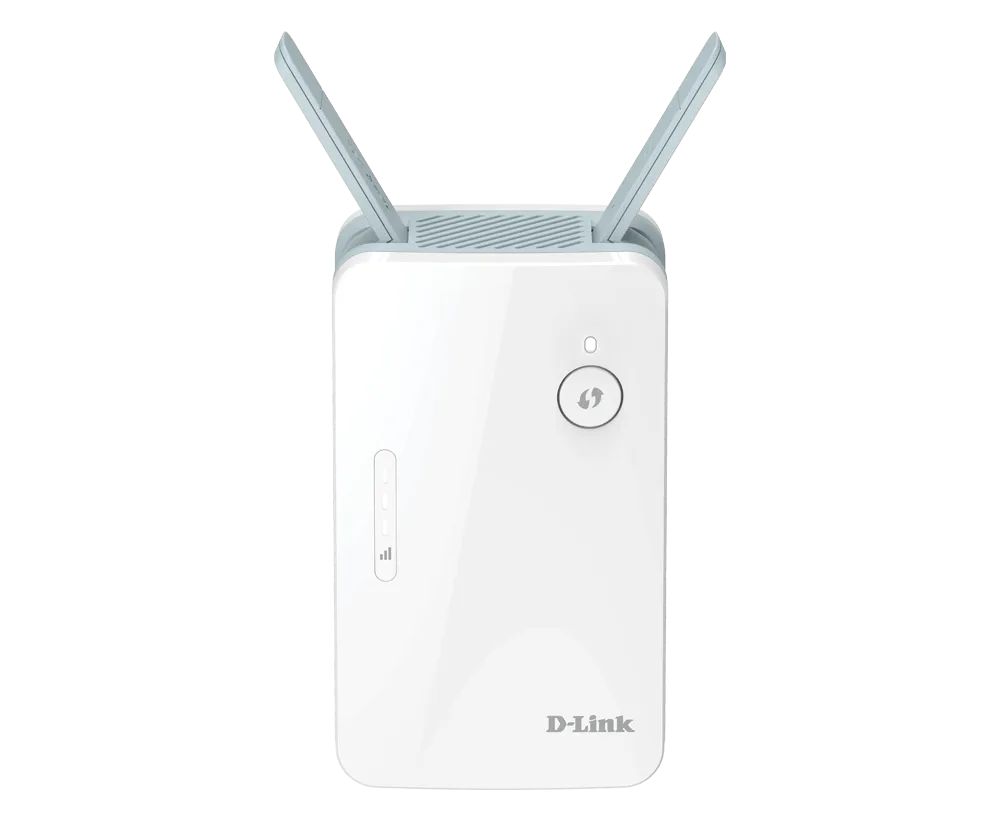
Source:NVD
Post
D-Link E15 and three other routers hit by credential flaw
From The CircuitryWhy The Circuitry

Verified tech news, cross-checked.

Every story is checked against independent sources before it posts — no rumors dressed up as fact.

How we verify →
TL;DRAI · 60 sec read

D-Link E15, M32, R15 and R32 routers contain hard-coded MQTT Broker credentials in /etc/emDaemon/passwd. The CNA scored the flaw 6.5 on CVSS 2.0 and 7.4 on CVSS 3.1; NVD has not scored it. Public exploit code on GitHub shows remote attackers can extract the credentials without user interaction.

A vulnerability was reported affecting four D-Link router models: the E15, M32, R15 and R32.

The flaw, tracked as CVE-2026-112146 and published October 19, 2026, is a hard-coded credential issue (CWE-798) in the MQTT Broker component, tied to the file /etc/emDaemon/passwd. The record says it can be attacked remotely.

VulDB, acting as the CNA, scored it 7.4 (High) under CVSS 3.1, 6.5 under CVSS 2.0, and 5.3 (Medium) under CVSS 4.0. The CVSS 3.1 vector lists network access, low attack complexity, low privileges required and no user interaction. NVD has not assigned its own score.
From The CircuitryThe Feed — live briefs across tech, all day.See what’s happening →
Exploit code is public. The CVE record links to proof-of-concept material on GitHub, and VulDB lists the exploit status as proof-of-concept.

The record does not list affected firmware versions. No fix, patch or end-of-life status has been reported for this CVE, and D-Link had not published an advisory for it at the time of writing.
From The CircuitryWhy The Circuitry

Verified tech news, cross-checked.

Every story is checked against independent sources before it posts — no rumors dressed up as fact.

How we verify →
This is separate from CVE-2024-6045, an older D-Link flaw in related router models that D-Link has already addressed.
Why this mattersAI · ~100 words

Tap a lens to see what this story means for you.

Morning Brief

Liked this? The Brief brings you the whole day in tech, verified, every morning.

Two minutes, free forever. What's in The Brief →

Reader-supported
DonateBuy me a coffee →Follow@thecircuitry_ →Follow@thecircuitry.to →
HELP US IMPROVE
From The Circuitry

See what’s happening right now

The Feed runs all day — short, verified briefs the moment they break.

Open the Feed →
From The Circuitry

Follow @thecircuitry_

Every story we publish, as it happens. No noise between.

Follow on X ↗On Bluesky ↗

Reader-supported

The Circuitry is a passion project I've always wanted to build, and I love the work behind it.

Running it costs real money. APIs, hosting, time. To keep improving the site and growing this into something useful for everyone, those costs have to be covered.

Any contribution is appreciated. If not, no pressure. Thanks for reading.

Buy me a coffee
securityvulnerabilitydlink
More fromNVD
  • bbs-go Through 4.4.6 Vulnerable to Google One Tap Account Takeover (CVE-2026-111639)

    Tech · 2d
  • FreeRDP 3.29.0 before 3.32.0 hit by CVE-2026-111380 heap overflow

    Tech · 3d
  • Lenovo Baiying PC Client vulnerable to privilege escalation flaw

    Tech · 3d
More inTech
  • Apple announces October 28 gathering with 'Pro and tell' theme

    Tech · 1h
  • Microsoft expands Project Perception to monitor companies' own AI agents

    Tech · 2h
  • Linux Kernel 7.3 Released with Record 18,765 Commits

    Tech · 8h
SupportThe Work

The Circuitry is reader-supported. If you find the daily brief useful, you can buy me a coffee to keep it going.

Buy a coffee →
From The CircuitryWhy The Circuitry

Verified tech news, cross-checked.

Every story is checked against independent sources before it posts — no rumors dressed up as fact.

How we verify →

MORE IN THIS BEAT

All Tech →
  • Tech·Oct 16

    CISA adds two actively exploited AhsayCBS flaws to KEV catalog

    CISA added AhsayCBS flaws CVE-2026-105134 and CVE-2026-105133 to its Known Exploited Vulnerabilities catalog on October 14, with an October 17 deadline for federal agencies. Attackers are chaining them to plant webshells and cryptominers, and Ahsay says its first patches did not fully fix them.

  • Tech·Oct 16

    bbs-go Through 4.4.6 Vulnerable to Google One Tap Account Takeover (CVE-2026-111639)

    bbs-go through 4.4.6 has a Google One Tap login flaw (CVE-2026-111639) that skips ID-token audience checks, letting attackers replay tokens from any OAuth client to take over Google-linked accounts. VulnCheck rates it 8.1 (CVSS 3.1) and 8.6 (CVSS 4.0).

  • Tech·Oct 16

    FreeRDP 3.29.0 before 3.32.0 hit by CVE-2026-111380 heap overflow

    FreeRDP versions 3.29.0 before 3.32.0 contain an integer overflow in the Apple audin backends (CVE-2026-111380) that leads to a heap out-of-bounds write. VulnCheck as the CNA rates the flaw 8.8 under CVSS 3.1 and 8.7 under CVSS 4.0.

  • Tech·Oct 15

    Lenovo Baiying PC Client vulnerable to privilege escalation flaw

    Lenovo disclosed CVE-2026-92629, a high-severity improper authorization flaw in Baiying PC Client versions before 1.1.0.295 that could allow local authenticated users to execute arbitrary code with elevated privileges. Lenovo PSIRT as the CNA rates the issue 7.3 under CVSS 3.1 and 7.0 under CVSS 4.0.

  • Tech·Oct 15

    Lenovo fixes high-severity flaw in Legion Zone app before 2.0.28.8182

    Lenovo has fixed CVE-2026-75941 in the Legion Zone application before version 2.0.28.8182. Lenovo PSIRT as CNA rates the flaw 8.0 under CVSS 3.1 and 8.6 under CVSS 4.0, allowing same-network arbitrary code execution in the China-only app.