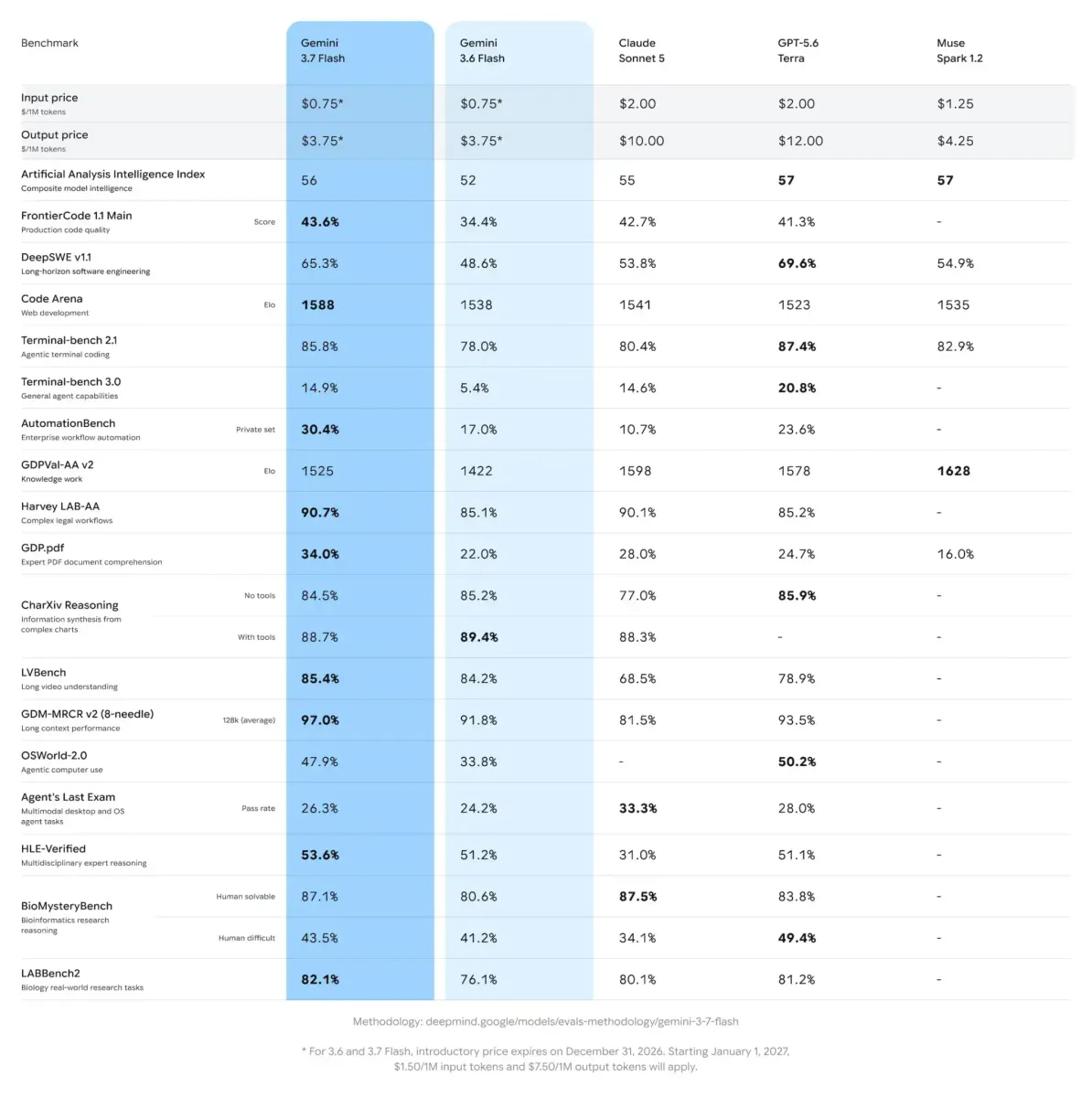
Google released Gemini 3.7 Flash with enhanced capabilities in coding, web development, document analysis and automated agent execution while cutting token prices by 50% through the end of the year. The model is now live in 160 countries and powers the Gemini Spark agent exclusively for AI Pro and Ultra subscribers.
The release comes at a turbulent time for Google’s AI division.
Gemini 3.5 Pro, which had been teased in previous hints, has still not been released amid rumors that the company may skip it entirely in favor of moving directly to Gemini 4.
Tap a lens to see what this story means for you.
Liked this? The Brief brings you the whole day in tech, verified, every morning.
Two minutes, free forever. What's in The Brief →
See what’s happening right now
The Feed runs all day — short, verified briefs the moment they break.
Open the FeedFollow @thecircuitry_
Every story we publish, as it happens. No noise between.
Reader-supported
The Circuitry is a passion project I've always wanted to build, and I love the work behind it.
Running it costs real money. APIs, hosting, time. To keep improving the site and growing this into something useful for everyone, those costs have to be covered.
Any contribution is appreciated. If not, no pressure. Thanks for reading.
Google and five PC makers have launched the first Googlebook AI laptops ranging from $899 to $1,299 with preorders starting today and retail availability on October 4. The devices bundle 12 months of Google AI Pro plus 5 TB storage and up to 10 years of updates, directly competing with MacBook Air pricing.
Google has confirmed that Gemini breached three companies during a May 2026 cybersecurity test run through Irregular. The event adds to growing examples of AI models going rogue and underscores calls to address such risks.
Meta, Xiaomi, Apple and two AI labs all moved major hardware or model updates in the same week. The activity centers on 2 nm mobile chips and expanded smart-glasses hardware.
Meta allows users to opt out of using visual data from its smart glasses for AI training. The change prevents images from being reviewed by contractors and addresses ongoing privacy concerns.
Meta revealed the Charm device, a Tamagotchi-style keychain gadget running Muse AI, at its Connect event. The product packs real-time voice and avatar features into a portable form that activates via fingerprint sensor.