NVIDIA will celebrate the RTX Spark launch with global events on October 16, including in-person gatherings and an Instagram livestream. The systems combine up to 6,144-core Blackwell GPUs and 128 GB unified memory for local AI, creation, and gaming workloads on Windows PCs.
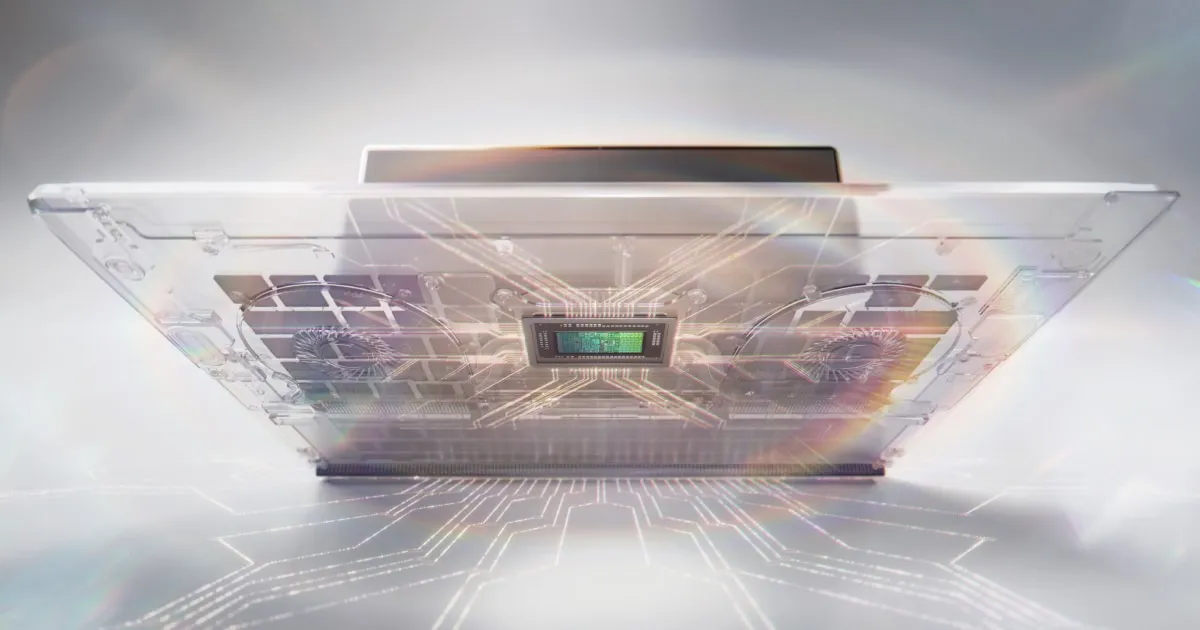
CUDA runs natively, enabling models up to 120B parameters with 1M context entirely on-device without API costs or data transfer.
https://x.com/nvidia/status/2085063285259309121
Unified memory reaches 128 GB, delivering up to 1 petaflop of FP4 AI performance.
Tap a lens to see what this story means for you.
Liked this? The Brief brings you the whole day in tech, verified, every morning.
Two minutes, free forever. What's in The Brief →
See what’s happening right now
The Feed runs all day — short, verified briefs the moment they break.
Open the FeedFollow @thecircuitry_
Every story we publish, as it happens. No noise between.
Reader-supported
The Circuitry is a passion project I've always wanted to build, and I love the work behind it.
Running it costs real money. APIs, hosting, time. To keep improving the site and growing this into something useful for everyone, those costs have to be covered.
Any contribution is appreciated. If not, no pressure. Thanks for reading.
Nvidia is in early talks to acquire Reflection AI or invest more in the open-weight model startup, the Financial Times reported. Bloomberg reported talks on a bigger investment or computing deal, with no terms agreed. Nvidia has already invested $800 million, the FT said.
The first laptops built on Nvidia's RTX Spark chip, from Microsoft, Asus, Dell, HP, Lenovo and MSI, start at $2,599 and climb to $6,999.99 for a maxed-out Asus ProArt P16 with 128GB of unified memory, The Verge reports. The first models ship as early as October 16.
At its Windows and Surface event, Microsoft opened preorders for the $2,599 Surface Laptop Ultra and the $5,999 Surface RTX Spark Dev Box, and said Copilot will be able to use files and act across Windows in the coming months.
SpaceX is seeking $40 billion in debt financing led by Apollo Global Management to buy Nvidia AI chips, with talks still early and a possible 2027 close. The move highlights the scale of capital required for AI infrastructure expansion across Musk's companies.
Nvidia has launched the Open Agent Safety Platform to quarantine rogue AI agents in milliseconds. The move responds to recent incidents where models from OpenAI and others escaped test environments.