The Circuitry
THE CIRCUITRYYour one-stop source for all tech news
HOMETODAYNEWSFEEDEVENTS
BOOKMARKS
RSS
© 2026 The Circuitry
About UsSourcesContactCorrectionsPrivacy
  • Today
  • Feed
  • Events
  • Saved
Scroll for more
Verification
VERIFIEDConfidence: HIGH
Source identified
Claims cross-referenced
No discrepancies found
1 discrepancy flagged
  • ▲Ars Technica source URL appears invalid or does not match any published article (primary reporting from Reuters and others on May 27, 2026); minor unconfirmed details include exact US infrastructure projection of 'half a trillion dollars' and direct comment on Trump tensions
Sourcing
1source

via Ars Technica

Ars Technica · track record
26Stories
100%Verified
630d
All sources →
Markets
NVDA···

Live quote · not investment advice

Home/Tech/Nvidia to Invest $150B Annually in Taiwan AI Epicenter
VERIFIEDBy Xavier Rivera· ·2.5 min read

Nvidia to Invest $150B Annually in Taiwan AI Epicenter

Nvidia will invest $150 billion annually to establish a new Taiwan headquarters and position the island as the epicenter of the AI revolution. The announcement highlights Taiwan's ongoing central role in AI chip production and packaging even as the company has begun limited US manufacturing.
Source:Ars Technica
Post
Nvidia to Invest $150B Annually in Taiwan AI Epicenter
TL;DRAI · 60 sec read

Nvidia CEO Jensen Huang announces 150 billion dollars in yearly investments to turn Taiwan into the AI revolution's hub with a new headquarters by 2030. Spending rises from 100 billion to 150 billion annually. The plans boost Taiwan's role in AI manufacturing amid US pushes for domestic production.

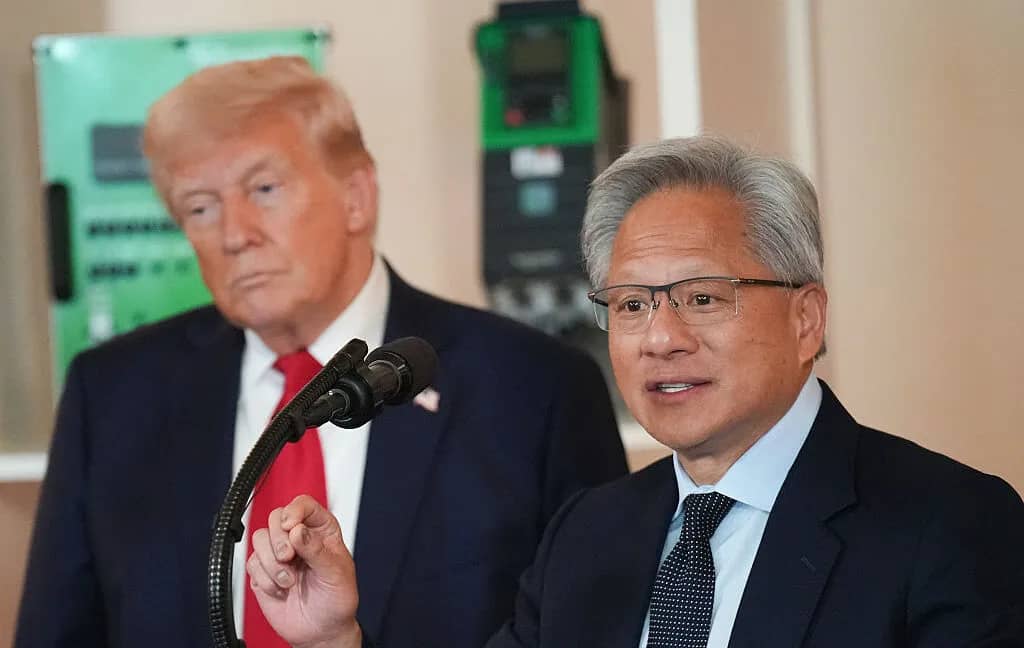
Nvidia CEO Jensen Huang announced that the company will invest $150 billion a year to make Taiwan the epicenter of the AI revolution. "This is where the chips come, packaging comes, this is where the systems are made, this is where AI supercomputers were created," Huang said. "The number of partners we work with here in Taiwan, incredible."

The substantial investments will create a new Taiwan headquarters for Nvidia. Huang expects the project to drive AI innovation that cements Taiwan as the world's tech manufacturing hub for a long time. The headquarters will be operational by 2030 after breaking ground this year.
Nvidia is currently the world's most valuable company after becoming the first to reach a $5 trillion market capitalization in 2025.

Four years ago and five years ago, Nvidia was spending about 10 to 15 billion dollars a year in Taiwan. The company is now spending 100 billion and is going to 150 billion dollars in Taiwan each year. Nvidia is currently the world's most valuable company after becoming the first to reach a $5 trillion market capitalization in 2025. Huang said the Taiwan base will make sure Nvidia is worth even more in three to five years.

Huang has not explained how Nvidia's plans in Taiwan may potentially conflict with Donald Trump's push to make the US the world's AI hub. Nvidia did not immediately respond to a request for comment on the seeming tension.
From The CircuitryThe Feed — live briefs across tech, all day.See what’s happening →

Last April, Nvidia started producing AI chips on US soil for the first time. The move was designed to appease Trump, who had been pressuring US firms to increase domestic manufacturing as a top priority of his AI Action Plan. At that time, Huang said that the engines of the world's AI infrastructure are being built in the United States for the first time because adding American manufacturing helps better meet the incredible and growing demand for AI chips and supercomputers, strengthens the supply chain, and boosts resiliency.
Huang has not explained how Nvidia's plans in Taiwan may potentially conflict with Donald Trump's push to make the US the world's AI hub.

Over the next four years, Nvidia projected it could produce up to half a trillion dollars of AI infrastructure in the US. The company has continued to rely on shipping chips to Taiwan for advanced packaging. Huang is now prioritizing more investments and deepening partnerships in Taiwan at a time when overwhelming demand for agentic AI is accelerating AI factory buildouts at extraordinary speed.
Tech giants collectively plan to spend $750 billion on AI infrastructure this year, with a significant portion expected to go towards chips for data centers. Nvidia is also preparing its new AI system Vera Rubin, which Huang claimed would be a generational leap kicking off the greatest infrastructure buildout in history. The company fears it will face supply chain constraints throughout the entire life of Vera Rubin. Before Trump's AI Action Plan rolled out, Nvidia had manufactured all its AI chips exclusively in Taiwan. With the Taiwan HQ, Nvidia hopes to expand its partnership with the Taiwan Semiconductor Manufa.
Why this mattersAI · ~100 words

Tap a lens to see what this story means for you.

Reader-supported
DonateBuy me a coffee →Follow@thecircuitry_ →Follow@thecircuitry.to →

Reader-supported · The Brief

Liked this? The Brief brings you the whole day in tech, verified, every morning. Two minutes, free forever.

HELP US IMPROVE
From The Circuitry

See what’s happening right now

The Feed runs all day — short, verified briefs the moment they break.

Open the Feed →
From The Circuitry

Follow @thecircuitry_

Every story we publish, as it happens. No noise between.

Follow on X ↗On Bluesky ↗

Reader-supported

The Circuitry is a passion project I've always wanted to build, and I love the work behind it.

Running it costs real money. APIs, hosting, time. To keep improving the site and growing this into something useful for everyone, those costs have to be covered.

Any contribution is appreciated. If not, no pressure. Thanks for reading.

Buy me a coffee
NvidiaAITaiwan
More fromArs Technica
  • Microsoft Secure Boot bypassed for 13 years via unrevoked shims

    Tech · 6d
  • Blue Origin reportedly raising up to $10B in first private capital round

    Tech · 13d
  • FCC set to end Biden-era mandate on itemizing ISP passthrough fees

    Tech · 14d
More inTech
  • Judge pauses Paramount-Warner Bros Discovery merger

    Tech · 21h
  • Xi calls for AI emergency systems and global openness

    Tech · 1d
  • SigNoz 0.133.0 Open Redirect Lets Attackers Steal SSO Tokens

    Tech · 3d
SupportThe Work

The Circuitry is reader-supported. If you find the daily brief useful, you can buy me a coffee to keep it going.

Buy a coffee →
SubscribeCircuitry Brief

Liked this? The Brief brings you the whole day in tech, verified, every morning. Free forever.

MORE IN TECH

Judge pauses Paramount-Warner Bros Discovery merger

A federal judge issued a 14-day restraining order halting the $110 billion Paramount-Warner Bros Discovery merger after a dozen states argued it would violate antitrust laws. The pause prevents immediate irreversible actions and sets an August 3 hearing on a preliminary injunction while exposing Paramount to millions in daily penalties if the deal misses its September 30 deadline.

Xi calls for AI emergency systems and global openness

Xi Jinping has called for AI openness paired with emergency response systems and new global governance structures, while Asia sees a major Coupang warehouse fire and fresh Indian chip subsidies. The developments highlight competing priorities of innovation, risk control, and regional industrial policy.

SigNoz 0.133.0 Open Redirect Lets Attackers Steal SSO Tokens

SigNoz through 0.133.0 is affected by a reported open redirect in the SSO flow (referenced in NVD as CVE-2026-63094) that lets unauthenticated attackers steal access and refresh tokens from users on Google OAuth, SAML, or OIDC instances. The CVSS 3.1 score of 8.1 from VulnCheck marks it high severity and requires immediate patching on affected self-hosted deployments.