Samsung has set its next Galaxy Unpacked event for July 22 in London where it will introduce the latest Galaxy innovations focused on foldables. The event is expected to debut the Galaxy Z Flip 8 and possibly two versions of the Galaxy Z Fold 8 along with potential wearable updates.
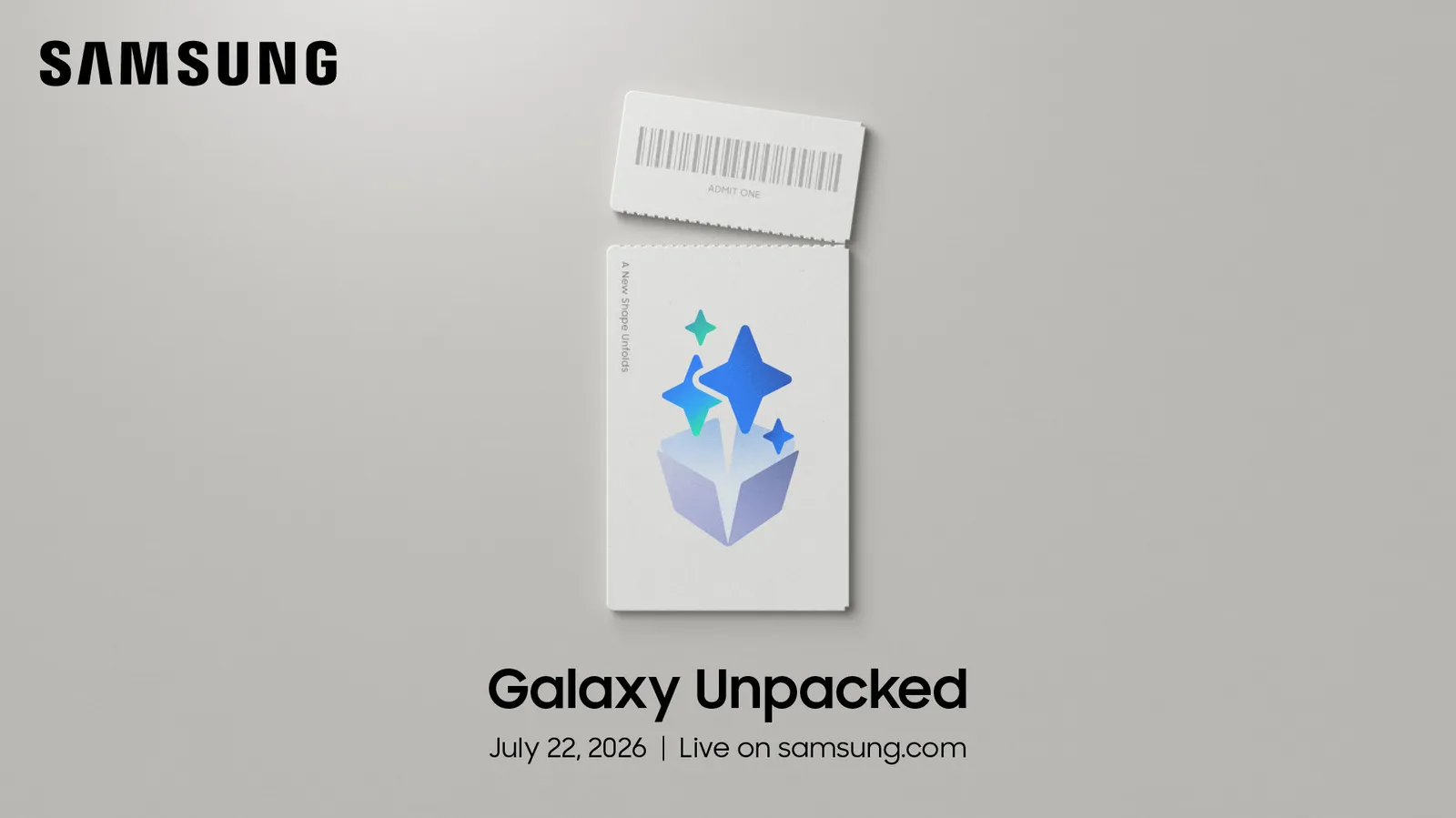
However, a global RAM shortage is making major upgrades cost prohibitive for 2026.
https://x.com/SamsungMobile/status/2074629572989972488
The arrival of two different book-style foldables at the same event would mark a first for the company.
Tap a lens to see what this story means for you.
Liked this? The Brief brings you the whole day in tech, verified, every morning.
Two minutes, free forever. What's in The Brief →
See what’s happening right now
The Feed runs all day — short, verified briefs the moment they break.
Open the FeedFollow @thecircuitry_
Every story we publish, as it happens. No noise between.
Reader-supported
The Circuitry is a passion project I've always wanted to build, and I love the work behind it.
Running it costs real money. APIs, hosting, time. To keep improving the site and growing this into something useful for everyone, those costs have to be covered.
Any contribution is appreciated. If not, no pressure. Thanks for reading.
Samsung is presenting new smartphones including the anticipated Galaxy Z Fold 8 and smartwatches at its Galaxy Unpacked event on July 22, 2026. The live stream begins at 15:00 on YouTube and Twitch amid an ongoing RAM crisis that is expected to drive price increases.
Samsung has introduced Flex Titanium, a thinner and mechanically stiffer foldable display that reduces visible creases and power consumption. The panel, built on experience from seven prior generations, will launch in the Galaxy Z Fold 8 series and may supply Apple’s expected folding iPhone.
Samsung's 65-inch 2025 The Frame TV has reached an all-time low of $898 on Amazon during Prime Big Deal Days. The matte-screen art television now carries a 40 percent discount through October 7.
Samsung Electronics expects 90 trillion won to 110 trillion won available for shareholder returns in 2026, labeling the amount the largest ever by a Korean company. The disclosure follows SK Hynix's buyback announcement and reflects the windfall from AI-fueled memory chip sales.
Samsung introduced the Galaxy Watch 9 and Galaxy Watch Ultra 2 with displays up to 5,000 nits, larger batteries, FDA-cleared sleep apnea detection and fresh AI-driven wellness tools. The wearables emphasize preventive monitoring that includes trail-run analysis, dive-computer functions and remote support features, with general availability beginning August 7.