Taiwan's Department of Investment Review has approved TSMC's US$20 billion capital injection into its US subsidiary TSMC Arizona. The approval clears the way for the semiconductor foundry to expand its manufacturing operations in the United States.
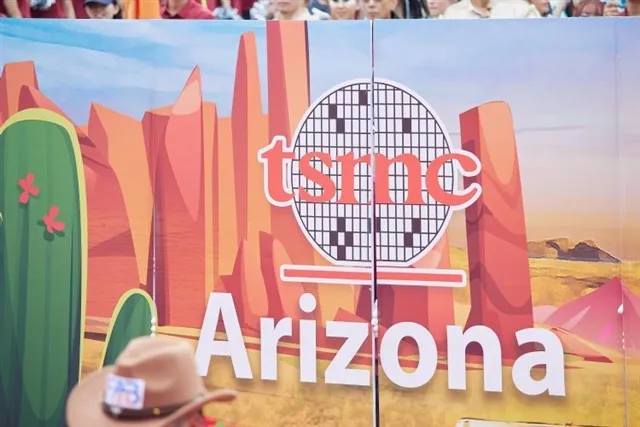
The approval enables the semiconductor giant to proceed with its planned expansion in the US state.
The Arizona project represents a significant commitment to US-based production capacity.
Tap a lens to see what this story means for you.
Liked this? The Brief brings you the whole day in tech, verified, every morning.
Two minutes, free forever. What's in The Brief →
See what’s happening right now
The Feed runs all day — short, verified briefs the moment they break.
Open the FeedFollow @thecircuitry_
Every story we publish, as it happens. No noise between.
Reader-supported
The Circuitry is a passion project I've always wanted to build, and I love the work behind it.
Running it costs real money. APIs, hosting, time. To keep improving the site and growing this into something useful for everyone, those costs have to be covered.
Any contribution is appreciated. If not, no pressure. Thanks for reading.
AUO's board approved selling its Taichung Plant Phase II buildings, cleanrooms and facility equipment in Xitun District to TSMC for NT$38.8 billion (about US$1.2 billion) before tax, per AUO's TWSE material-information filing as reported by TechNews and DigiTimes. AUO expects a disposal gain of about NT$18.5 billion, with payment in installments under the property contract. Separately, AUO ended a planned NT$19.7 billion sale of its Huaya site to Quanta because the two sides could not agree on specs and delivery timing.
GlobalFoundries signed a multi-year US$2 billion agreement with TSMC on October 8, 2026 to manufacture silicon interposers at its Malta, New York fab. The deal creates the first US-based source of silicon interposers for TSMC's CoWoS advanced packaging ecosystem.
NVIDIA has expanded supply agreements with Kinsus, Samsung Electro-Mechanics, Amkor, SPIL, Foxconn and TSMC to add manufacturing capacity for its AI platforms. Kinsus will raise dedicated substrate capacity by more than 3.5 times, with production expected to start in the second half of 2027.
Jensen Huang has said he would return as Nvidia CEO if the board decides a comeback serves shareholders, employees, the company, and the country. He writes that he regrets problems he created for the board and will cooperate with its independent investigation.
SpaceX has said it plans to invest more than $74 billion in supercomputing campuses at Starbase in Texas and in Cochise County, Arizona. The Arizona campus still needs county approval, and the Texas site would generate its own power.