Xi Jinping has called for AI openness paired with emergency response systems and new global governance structures, while Asia sees a major Coupang warehouse fire and fresh Indian chip subsidies. The developments highlight competing priorities of innovation, risk control, and regional industrial policy.
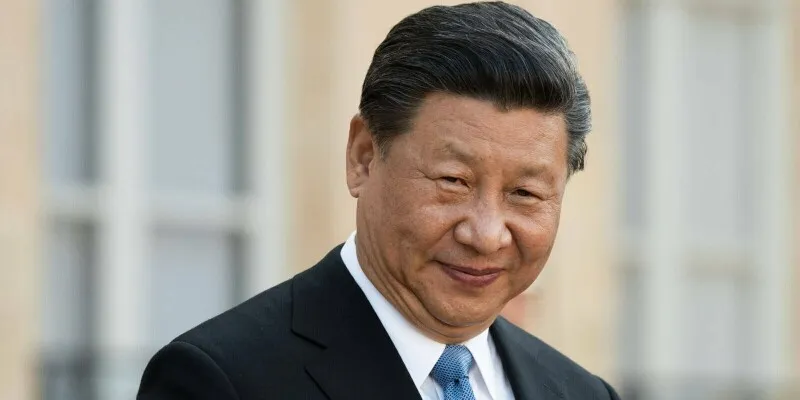
In a major speech, the Chinese President described AI as both a driver of economic growth and a source of inherent and secondary risks.
https://x.com/TheRegister/status/2079004160641622031
He called for laws, technological monitoring, early warning, emergency response systems, and global collaboration to keep the technology under human control and prevent malicious use.
Tap a lens to see what this story means for you.
Liked this? The Brief brings you the whole day in tech, verified, every morning.
Two minutes, free forever. What's in The Brief →
See what’s happening right now
The Feed runs all day — short, verified briefs the moment they break.
Open the FeedFollow @thecircuitry_
Every story we publish, as it happens. No noise between.
Reader-supported
The Circuitry is a passion project I've always wanted to build, and I love the work behind it.
Running it costs real money. APIs, hosting, time. To keep improving the site and growing this into something useful for everyone, those costs have to be covered.
Any contribution is appreciated. If not, no pressure. Thanks for reading.
Apple plans to launch Apple Intelligence in mainland China in December with iOS 27.3, Bloomberg reports. The first release would include the features that reached the U.S. two years ago, but not the new Siri AI.
Microsoft has announced the Work IQ Retrieve tool that gives agents a single retrieval layer over authorized workplace data. The tool supplies both structured hits and citation-ready markdown so agents can ground responses without custom search systems.
Apple has expanded its App Store rules to require developers to proactively prevent and remove AI-generated deepfakes and nonconsensual intimate imagery. The changes also target hidden nudify features and extend existing bans to alternative app distribution.
Amazon's Bee unit launched the $74.99 Bee Frontier AI wristband, available now in the US, and announced the Bee Eclipse phone attachment, starting at $99.99 and coming soon.
Meta has unveiled Muse Spark Open, an 816B-parameter open-weight multimodal model optimized for the M5 Ultra Mac Studio. The model supports on-device agentic coding and reasoning workflows through Apple’s MLX framework.