The Circuitry
THE CIRCUITRYYour one-stop source for all tech news
HOMETODAYNEWSFEEDEVENTS
BOOKMARKS
RSS
© 2026 The Circuitry
About UsSourcesContactCorrectionsPrivacy
  • Today
  • Feed
  • Events
  • Saved
Scroll for more
Verification
VERIFIEDConfidence: HIGH
Source identified
Claims cross-referenced
No discrepancies found
Fact-check summary

Ars Technica reports Blue Origin's first-ever private capital raise targeting $10B; earlier FT coverage confirms the company is weighing external funding for the first time.

2 caveats
  • ▲Specific $10B round size, $130B valuation, and Coatue $4B lead not corroborated by other outlets.
  • ▲SpaceX raise cited as ~$85B vs. reports of $75B.
Sourcing
1source

via Ars Technica

Ars Technica · track record
25Stories
100%Verified
1130d
All sources →
Home/Tech/Blue Origin reportedly raising up to $10B in first private capital round
VERIFIEDBy Xavier Rivera· ·2 min read

Blue Origin reportedly raising up to $10B in first private capital round

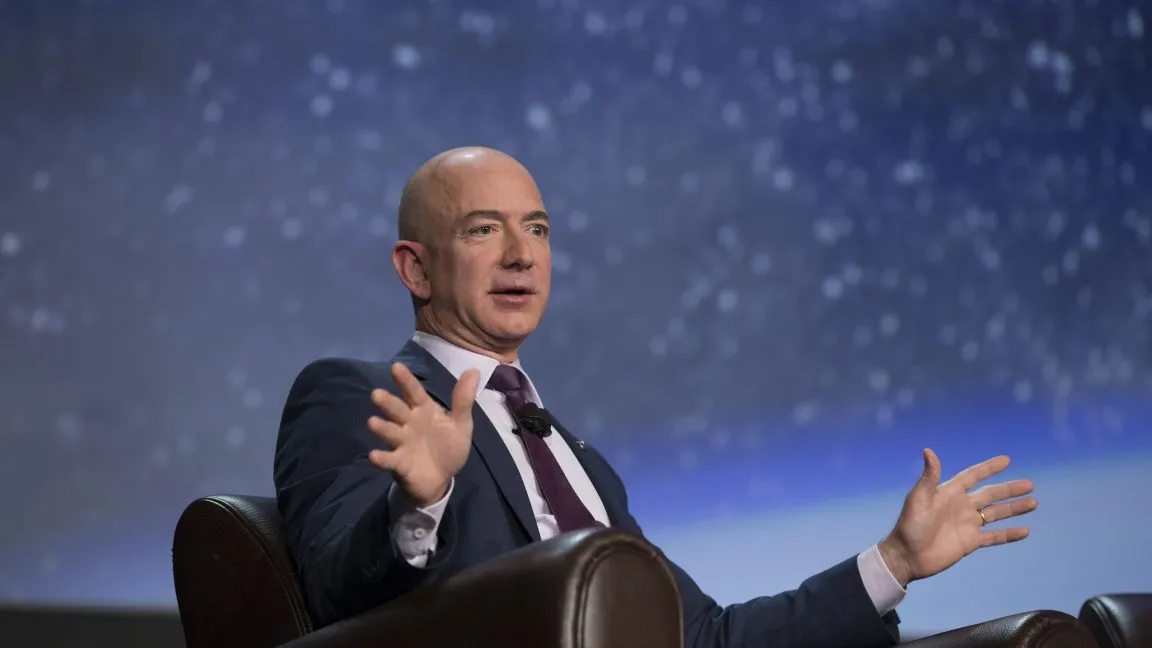
Blue Origin is reportedly raising up to $10 billion in its first private capital round at a $130 billion valuation, with Coatue Management reported to lead participation from institutional investors and Jeff Bezos. The move ends the company's near-total reliance on Bezos' personal funding as it races to scale ambitious launch, lunar, and satellite constellation projects against SpaceX.
Source:Ars Technica
Post
Blue Origin reportedly raising up to $10B in first private capital round
TL;DRAI · 60 sec read

Blue Origin raises up to $10 billion in its first private capital round at a $130 billion valuation. Coatue leads with $4 billion, institutions add another $4 billion, and Jeff Bezos supplies $2 billion. The funds end sole reliance on his contributions and back competition with SpaceX in rockets and megaconstellations after the New Glenn explosion setback.

Blue Origin is raising private capital for the first time in its history, according to the DealBook newsletter. The round is targeting $10 billion at a $130 billion valuation, with Coatue Management reported to lead a $4 billion commitment, another $4 billion from large institutional investors, and $2 billion from founder Jeff Bezos.

Blue Origin shifts from sole Bezos funding. Founded in 2000, the company has subsisted almost entirely on Bezos' largesse, with the Amazon founder now investing several billion dollars a year. It operates major facilities in Washington, Alabama, and Florida while developing super heavy lift rockets, lunar landers, and two megaconstellations.
Unlike SpaceX, which grew through government and commercial contracts, private investment, and loans after an initial small investment from Elon Musk, Blue Origin has relied solely on Bezos until now.
The fundraising comes as Blue Origin seeks to compete directly with SpaceX in launch, telecommunications, and data centers from space. Unlike SpaceX, which grew through government and commercial contracts, private investment, and loans after an initial small investment from Elon Musk, Blue Origin has relied solely on Bezos until now.

New Glenn explosion delayed plans. Multiple sources told Ars Technica that Bezos was involved in fundraising activities during the spring and summer. Those plans were set back on May 28 when the New Glenn rocket exploded in Florida and destroyed its only launch pad.
From The CircuitryThe Feed — live briefs across tech, all day.See what’s happening →
Bezos and CEO Dave Limp have since moved rapidly to clean up the site and begin rebuilding. Bezos has publicly stated he intends to return New Glenn to flight before the end of this year, though most industry observers believe a 12-month timeline is more realistic.
These projects are expected to require tens to hundreds of billions of dollars to reach fruition.
Ambitions require massive capital. New Glenn serves as the backbone for lunar cargo and crew delivery to NASA and commercial partners, as well as providing pricing competition to SpaceX's Falcon and Starship for satellite launches. Blue Origin has also announced the TeraWave megaconstellation for high-speed enterprise connectivity in low-Earth and medium-Earth orbit, plus Project Sunrise with up to 51,600 satellites in Sun-synchronous orbits between 500 and 1,800 km.

These projects are expected to require tens to hundreds of billions of dollars to reach fruition. Sources have told Ars Technica that Bezos, now 62, has grown fatigued from self-funding the company. The capital raise is also needed to compete with the lucrative stock options SpaceX offers employees, especially after SpaceX raised approximately $85 billion through its IPO process earlier this year at an approximate $2 trillion valuation.
In March, Ars Technica predicted Bezos would likely seek outside investors to compete financially with SpaceX. The DealBook-reported numbers remain dwarfed by SpaceX's totals, underscoring the scale of the challenge ahead.
Why this mattersAI · ~100 words

Tap a lens to see what this story means for you.

Reader-supported
DonateBuy me a coffee →Follow@thecircuitry_ →Follow@thecircuitry.to →

Reader-supported · Daily Brief

Daily brief at 7 AM ET. Top tech stories, every morning. Sourced and fact-checked.

HELP US IMPROVE
From The Circuitry

See what’s happening right now

The Feed runs all day — short, verified briefs the moment they break.

Open the Feed →
From The Circuitry

Follow @thecircuitry_

Every story we publish, as it happens. No noise between.

Follow on X ↗On Bluesky ↗

Reader-supported

The Circuitry is a passion project I've always wanted to build, and I love the work behind it.

Running it costs real money. APIs, hosting, time. To keep improving the site and growing this into something useful for everyone, those costs have to be covered.

Any contribution is appreciated. If not, no pressure. Thanks for reading.

Buy me a coffee
SpaceBlue OriginVenture Capital
More fromArs Technica
  • FCC set to end Biden-era mandate on itemizing ISP passthrough fees

    Tech · 1d
  • Netflix now demands separate email logins for each profile

    Tech · 11d
  • IBM reveals nanostack transistor design targeting sub-1nm performance

    Tech · 13d
More inTech
  • Telstra outage disrupts emergency calls, trains and payments

    Tech · 21m
  • CISA tells federal agencies to fix actively exploited Langflow IDOR flaw by Friday

    Tech · 1h
  • KDDI breach hits email platform used by five Japanese ISPs

    Tech · 2h
SupportThe Work

The Circuitry is reader-supported. If you find the daily brief useful, you can buy me a coffee to keep it going.

Buy a coffee →
SubscribeCircuitry Brief

Daily brief at 7 AM ET. Top tech stories, every morning.

MORE IN TECH

Telstra outage disrupts emergency calls, trains and payments

A software defect at Telstra on July 8, 2026 caused emergency calls to fail, halted regional trains in Victoria and disrupted payments for 80,000 businesses. The outage highlights vulnerabilities in critical national infrastructure that rely on a single telco provider.

CISA tells federal agencies to fix actively exploited Langflow IDOR flaw by Friday

CISA directed federal agencies to patch the actively exploited CVE-2026-55255 authorization bypass in Langflow by Friday after adding it to the Known Exploited Vulnerabilities catalog. The IDOR flaw lets authenticated attackers reach other users' AI agent flows, sensitive data, and resources, with exploitation observed targeting compute power and credentials.

KDDI breach hits email platform used by five Japanese ISPs

KDDI disclosed that attackers breached an email platform used by five Japanese ISPs, exposing email addresses of 12,233,087 people and passwords of 7,616,173 others via a zero-day vulnerability first exploited on May 16. The company is forcing password changes and has deployed new detection tools after notifying regulators, with no confirmed secondary damage reported.