The Circuitry
THE CIRCUITRYYour one-stop source for all tech news
HOMENEWSFEEDEVENTS
—STORIES—VERIFIED
BOOKMARKS
RSSSOURCESABOUTCORRECTIONS
RSS
© 2026 The Circuitry
About UsContactCorrections
  • Home
  • Feed
  • Events
  • Saved
Scroll for more
Verification
VERIFIEDConfidence: HIGH
Source identified
Claims cross-referenced
No discrepancies found
Fact-check summary

Multiple sources including Reddit, Spaceflight Now, Instagram, and Wikipedia confirm Blue Origin's New Glenn exploded during a static fire test for NG-4 at LC-36 on May 28/29, 2026, captured on NASASpaceflight feeds.

Sourcing
1source

via Ars Technica

Ars Technica · track record
13Stories
100%Verified
1030d
All sources →
Home/Tech
VERIFIEDBy Xavier Rivera· ·3.5 min read

Blue Origin's New Glenn Explodes During Static Fire Test

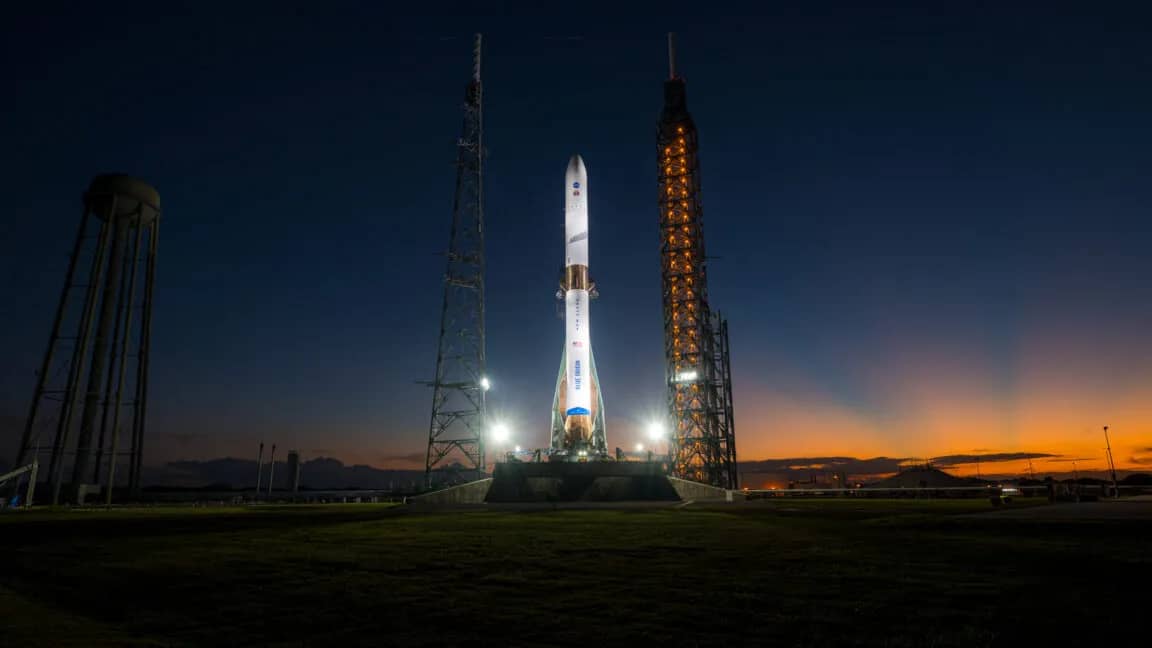
Blue Origin's New Glenn rocket exploded during a static fire test on Thursday evening, destroying the booster in a massive fireball. The incident is the worst disaster in the company's history and carries major implications for NASA's lunar rover deliveries and human Moon missions.

Source:Ars Technica
Post
Blue Origin's New Glenn Explodes During Static Fire Test
TL;DRAI · 60 sec read

Blue Origin's New Glenn rocket exploded during a static fire test Thursday evening at its Florida launch site. The first stage failure created a massive fireball. No one was injured but the pad suffered extensive damage. The incident delays NASA lunar rover deliveries planned for 2028 and disrupts Blue Origin's recent progress toward monthly launches.

Blue Origin's New Glenn rocket exploded during a static fire test on Thursday evening at its Florida launch site. The super heavy lift rocket produced a massive fireball above the launch site along the Florida coast at LC-36A after engine ignition. The first stage is fueled with methane.

The static fire test was being filmed by NASASpaceflight.com on its Space Coast Live feed, which captured video of the conflagration that followed destruction of the booster. It is possibly the most dramatic and powerful rocket explosion since the Soviet Union’s N1 rocket was destroyed during a launch attempt in 1969. The test was being conducted ahead of NG-4.

There was no immediate indication as to what caused the rocket to fail during the initial stages of the static fire test. The failure originated with the first stage of the rocket, which is powered by seven BE-4 engines. Sources said the problem appeared to start in the engine section of the vehicle.
By all accounts, the rocket was viewed as a major success for a company which, for so long, had seemed to plod along.

“It’s too early to know the root cause but we’re already working to find it,” Blue Origin founder Jeff Bezos said on X. “Very rough day, but we’ll rebuild whatever needs rebuilding and get back to flying. It’s worth it.” No one was injured during the failure, which sources said caused extensive damage to the company’s large and complex launch site. During a pad failure in 2016 with the smaller Falcon 9 rocket, it took SpaceX more than a year to rebuild its seriously damaged Space Launch Complex-40 pad.
POST FROM @JeffBezos· official statement from Blue Origin founder/CEO referenced in the article
https://x.com/JeffBezos/status/2060182822170902622

This is the worst disaster in the history of Blue Origin, founded in 2000. The company has launched New Glenn three times, during each of which the first stage performed well. The company had already demonstrated the ability to land the New Glenn first stage and impressively reused it in April for the first time.

During that third flight, carrying the Blue Bird 7 satellite, an upper stage issue caused the mission to fail. However the company responded rapidly to the in-flight failure and returned to the launch pad in less than two months this week. The first stage for this mission, nicknamed No, It’s Necessary, was making its debut launch.

Prior to this launch attempt Blue Origin had in its inventory two first stages and about six New Glenn upper stages completed, and it was poised to break into a monthly launch cadence. By all accounts, the rocket was viewed as a major success for a company which, for so long, had seemed to plod along. New Glenn’s success catapulted the company to the upper echelon of spaceflight enterprises in the world. That Blue Origin was on the precipice of accelerating further makes this setback all the more painful.
That Blue Origin was on the precipice of accelerating further makes this setback all the more painful.

The failure of New Glenn also has major implications for NASA and its surging efforts to return humans to the Moon before the end of this decade, and to establish a lunar base on the surface. On Tuesday NASA announced that it had selected the New Glenn rocket to deliver the first two rovers, built by Lunar Outpost and Astrolab, to the lunar surface in 2028. Blue Origin has developed its own cargo lunar lander, Blue Moon Mark 1, designed to fly on top of New Glenn. It was due to launch this fall to the Moon for the first time, and again next year carrying the VIPER rover to the Moon for NASA.

Then there is the larger Blue Moon Mark 2 lander, which is due to fly on a larger and more powerful version of the New Glenn rocket with nine first stage engines, known as 9×4. NASA is counting on the Mark 2 lander, alongside SpaceX’s Starship vehicle, to carry humans to the Moon.
Why this mattersAI · ~100 words

Tap a lens to see what this story means for you.

Reader-supported
CoffeeSupport →Follow@thecircuitry_ →

Reader-supported · Daily Brief

Daily brief at 7 AM ET. Top tech stories, every morning. Sourced and fact-checked.

HELP US IMPROVE

Reader-supported

The Circuitry is a passion project I've always wanted to build, and I love the work behind it.

Running it costs real money. APIs, hosting, time. To keep improving the site and growing this into something useful for everyone, those costs have to be covered.

Any contribution is appreciated. If not, no pressure. Thanks for reading.

Support →
Blue OriginNew GlennSpace Launch
More fromArs Technica
  • Waymo to Repurpose Robotaxi Batteries for Grid Storage

    Energy · 19h
  • Nvidia to Invest $150B Annually in Taiwan AI Epicenter

    Tech · 8d
  • Roku OS Home Screen Overhauled With Large Permanent Ad

    Tech · 8d
More inTech
  • DentaQuest Breach Exposes Data of 2.6 Million Accounts

    Tech · 13h
  • OpenAI Upgrades ChatGPT Memory, Extends to Free Users

    Tech · 15h
  • Pinterest Commits $4B to AWS for AI Infrastructure

    Tech · 19h
SupportThe Work

The Circuitry is reader-supported. If you find the daily brief useful, you can buy me a coffee to keep it going.

Buy a coffee →
SubscribeCircuitry Brief

Daily brief at 7 AM ET. Top tech stories, every morning.

MORE IN TECH

DentaQuest Breach Exposes Data of 2.6 Million Accounts

A data breach at DentaQuest exposed sensitive records for 2.6 million accounts after ShinyHunters publicly leaked more than 234 GB of stolen data. The compromise includes names, government IDs, health insurance details and other personal information, raising risks of phishing and social engineering.

OpenAI Upgrades ChatGPT Memory, Extends to Free Users

OpenAI is making ChatGPT’s memory feature smarter with a new synthesis system and extending it to free users for the first time. The changes address staleness, correctness and scalability for hundreds of millions of users across multi-year time horizons.

Pinterest Commits $4B to AWS for AI Infrastructure

Pinterest announced a planned $4 billion commitment to AWS through 2031, its largest infrastructure deal ever. The investment will scale AI models for visual search and discovery used by more than 600 million monthly users.