The Circuitry
THE CIRCUITRYYour one-stop source for all tech news
HOMENEWSFEEDEVENTS
—STORIES—VERIFIED
BOOKMARKS
RSSSOURCESABOUTCORRECTIONS
RSS
© 2026 The Circuitry
About UsContactCorrections
  • Home
  • Feed
  • Events
  • Saved
Scroll for more
Verification
VERIFIEDConfidence: HIGH
Source identified
Claims cross-referenced
No discrepancies found
Fact-check summary

CarNewsChina (June 9, 2026) and BYD announcements corroborate the first German Flash Charging station (opened May 2026, 1,500 kW, Denza Z9GT) plus the 3,000-station Europe target by end-2026.

Sourcing
1source

via Frandroid

Frandroid · track record
18Stories
100%Verified
1430d
All sources →
Home/Energy
VERIFIEDBy Xavier Rivera· ·2 min read

BYD Opens First Flash Charging Station in Germany

BYD opened its first Flash Charging station in Germany that can recharge compatible EVs from 10% to 70% in five minutes at up to 1,500 kW. The Chinese manufacturer plans 3,000 such stations across Europe by the end of 2026 while expanding its Denza premium brand.
Source:Frandroid
Post
BYD Opens First Flash Charging Station in Germany
TL;DRAI · 60 sec read

BYD opens its first Flash Charging station in Germany, recharging compatible EVs from 10% to 70% in five minutes at up to 1,500 kW. The company plans 3,000 such stations across Europe by end of 2026, though regulatory approvals and grid limits pose deployment risks.

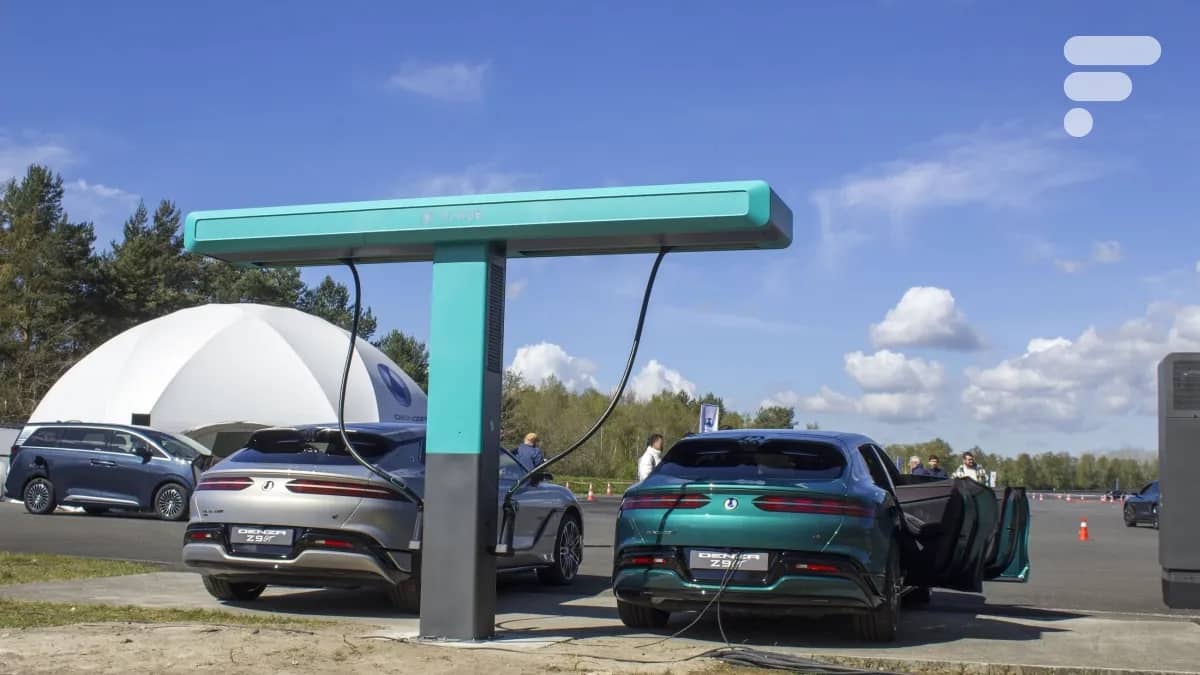
BYD has opened its first Flash Charging station in Germany, capable of recharging an electric vehicle from 10% to 70% in five minutes.

BYD launches ultra-fast charging network in Europe. The station inaugurated in May 2026 uses the second generation of BYD’s Flash Charging technology, first presented in Paris in April during the launch of the Blade Battery 2.0. It delivers up to 1,500 kW of maximum power and shows limited performance degradation in severe cold, adding only three minutes at -30°C according to the manufacturer.
BYD states this technology echoes Tesla’s Supercharger network but reaches higher power levels than the Tesla Supercharger V4, which tops out at around 350 kW.
A compatible vehicle such as the Denza Z9GT can use the station. BYD states this technology echoes Tesla’s Supercharger network but reaches higher power levels than the Tesla Supercharger V4, which tops out at around 350 kW.

BYD targets 3,000 stations in Europe by end of 2026. The company plans to deploy 3,000 ultra-fast charging stations across Europe before the end of 2026. This forms part of a broader program aiming for 6,000 sites outside China.

In China, more than 6,100 Flash Charging stations had already been built by the end of May, covering more than 300 cities. An agreement signed in June with Sinopec, the country’s largest service-station network, is expected to accelerate rollout there further.
Administrative approvals, grid connection constraints and regulatory diversity among the 27 member states complicate large-scale deployment.
European deployment faces logistical and regulatory hurdles. Administrative approvals, grid connection constraints and regulatory diversity among the 27 member states complicate large-scale deployment. Meeting the tight timetable across different markets is no sure thing according to the report.

France remains a key target with Denza as premium showcase. BYD has not released a precise timetable for France. Its European strategy includes developing the Denza premium brand, which opened its first showroom in Hamburg in June and targets around 40 sales outlets in Germany by the end of the year.

Denza plans to launch eight models on the European market by the end of 2027. In France both BYD and Denza face an ecological bonus tied to an environmental score that penalizes vehicles produced in Asia, though the brands continue exploring the market with discussions under way on establishing presence.
Why this mattersAI · ~100 words

Tap a lens to see what this story means for you.

Reader-supported
DonateBuy me a coffee →Follow@thecircuitry_ →

Reader-supported · Daily Brief

Daily brief at 7 AM ET. Top tech stories, every morning. Sourced and fact-checked.

HELP US IMPROVE

Reader-supported

The Circuitry is a passion project I've always wanted to build, and I love the work behind it.

Running it costs real money. APIs, hosting, time. To keep improving the site and growing this into something useful for everyone, those costs have to be covered.

Any contribution is appreciated. If not, no pressure. Thanks for reading.

Buy me a coffee
BYDEV ChargingEurope
More fromFrandroid
  • Apple Unveils macOS 27 Golden Gate

    Tech · 1d
  • Apple unveils iOS 27 child safety features at WWDC 2026

    Tech · 1d
  • Toyota Abandons Lexus LF-ZC Electric Sedan for 2026

    Energy · 7d
More inEnergy
  • Qcells Starts Solar Cell Production at Largest US Factory

    Energy · 7h
  • GM Activates V2G for 250,000 Existing EVs

    Energy · 7h
  • GM Launches Energy Pass for Unified EV Charging

    Energy · 7h
SupportThe Work

The Circuitry is reader-supported. If you find the daily brief useful, you can buy me a coffee to keep it going.

Buy a coffee →
SubscribeCircuitry Brief

Daily brief at 7 AM ET. Top tech stories, every morning.

MORE IN ENERGY

Qcells Starts Solar Cell Production at Largest US Factory

Qcells has started solar cell production at its Cartersville, Georgia factory, which will become the largest such facility in US history with full vertical integration from ingot to module. The site helps customers qualify for domestic content tax credits while adding 8.6 GW of total US capacity by end of Q3 2026.

GM Activates V2G for 250,000 Existing EVs

GM activated vehicle-to-grid capability for more than 250,000 existing bidirectional EVs with no new hardware required. The move positions parked vehicles as a major distributed energy resource to support grid stability amid rising demand.

GM Launches Energy Pass for Unified EV Charging

GM announced Energy Pass, a unified interface in its existing vehicle apps that connects to major charging networks representing nearly 70% of US DC fast chargers. It reduces friction from multiple apps and accounts while rolling out Plug&Charge capabilities and aligning with GM's full shift to native NACS ports.