Germany's District Court Munich I ruled on June 18, 2026 that Innoscience infringed Infineon Technologies' gallium nitride patents, barring imports and sales in Germany while ordering damages. The decision is reported as Infineon's fourth German patent victory as the GaN legal battle spreads to Shanghai.
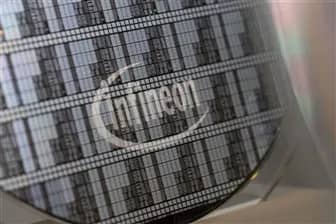
The court delivered what reports describe as the fourth victory for Infineon in the GaN patent dispute.
The gallium nitride patent battle has escalated to Shanghai.
Tap a lens to see what this story means for you.
Liked this? The Brief brings you the whole day in tech, verified, every morning.
Two minutes, free forever. What's in The Brief →
See what’s happening right now
The Feed runs all day — short, verified briefs the moment they break.
Open the FeedFollow @thecircuitry_
Every story we publish, as it happens. No noise between.
Reader-supported
The Circuitry is a passion project I've always wanted to build, and I love the work behind it.
Running it costs real money. APIs, hosting, time. To keep improving the site and growing this into something useful for everyone, those costs have to be covered.
Any contribution is appreciated. If not, no pressure. Thanks for reading.
A federal jury in San Diego ordered Apple to pay Taction Technology more than $5.7 billion after finding that the Taptic Engine in iPhones and Apple Watches infringed two Taction haptic patents. The jury found the infringement was not willful, and Apple says it will appeal.
TSMC posted a 77.4% year-on-year profit increase to NT$706.56 billion and raised its capital spending outlook while announcing another $100 billion for Arizona fabs. The results underscore sustained AI demand that now dominates 66% of its platform revenue.
ChangXin Memory Technologies expects to raise 57.9 billion yuan ($8.55 billion) in its Shanghai STAR Market IPO after doubling its original target. The world's fourth-largest DRAM chipmaker will list on July 27, advancing China's push for semiconductor self-reliance.
King Yuan Electronics approved a $1.4 billion investment for a US semiconductor testing plant on July 10. The project, its largest overseas expansion, aims to address the growing US gap in backend packaging and testing capacity amid domestic manufacturing initiatives.
China enacted a temporary helium export ban on July 10, 2026 to safeguard domestic supplies amid ongoing Middle East supply risks. The step highlights concerns over prolonged global shortages of the irreplaceable gas used in chipmaking and medical imaging.