The Circuitry
THE CIRCUITRYYour one-stop source for all tech news
HOMETODAYNEWSFEEDEVENTS
BOOKMARKS
RSS
© 2026 The Circuitry
About UsSourcesContactCorrectionsPrivacy
  • Today
  • Feed
  • Events
  • Saved
Scroll for more
Verification
VERIFIEDConfidence: HIGH
Source identified
Claims cross-referenced
No discrepancies found
Fact-check summary

Reported directly by Windows Blog — the official primary source for this announcement.

Sourcing
1source

via Windows Blog

Windows Blog · track record
6Stories
100%Verified
030d
All sources →
Markets
MSFT···

Live quote · not investment advice

Home/Tech/Microsoft and NVIDIA Launch RTX Spark Windows PCs
VERIFIEDBy Xavier Rivera· ·2.5 min read

Microsoft and NVIDIA Launch RTX Spark Windows PCs

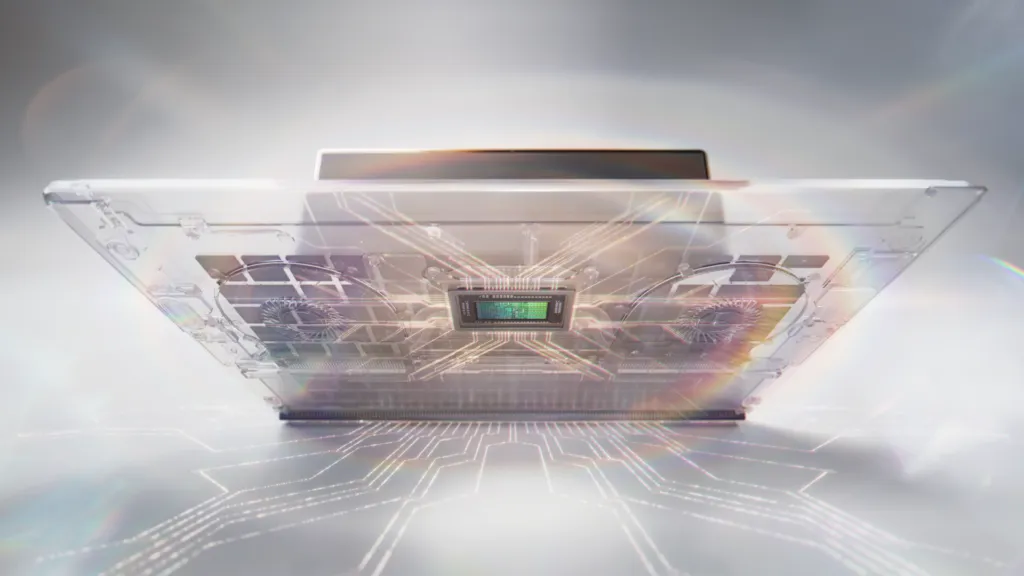
Microsoft and NVIDIA announced the world’s most powerful and efficient thin-and-light Windows PCs accelerated by RTX Spark at NVIDIA GTC. The platform delivers 1 petaflop of AI performance and is purpose-built for local agents with deep Windows scheduler and power optimizations.
Source:Windows Blog
Post
Microsoft and NVIDIA Launch RTX Spark Windows PCs
TL;DRAI · 60 sec read

Microsoft and NVIDIA launch RTX Spark Windows PCs with 1 petaflop AI performance from up to 6144 Blackwell cores and 128GB memory. Windows gets tuned for heterogeneous scheduling, power efficiency, and TensorRT local AI support. The PCs target developers, creators, and gamers running agents on efficient thin laptops.

Microsoft and NVIDIA announced the world’s most powerful and efficient thin-and-light Windows PCs ever at NVIDIA GTC on May 31, 2026. The new systems are accelerated by NVIDIA RTX Spark and purpose-built for the new wave of agents, unlocking momentum for developers, creators and power users.

Multi-year collaboration reaches key milestone. The announcement marks a key milestone in the rich, multi-year, full-stack collaboration between Microsoft and NVIDIA spanning gaming, AI and cloud. The partnership ranges from DirectX and RTX to NVIDIA-accelerated AI workloads on Azure, driving end-to-end innovation for shared customers. These next-generation Windows PCs represent the next step on that journey.
RTX Spark combines NVIDIAs full technology stack with Microsoft Windows and is purpose-built for creators, gamers and AI developers in the personal AI era.

RTX Spark brings 1 petaflop AI performance. RTX Spark delivers 1 petaflop of AI performance and industry-leading performance-per-watt. It includes full stack NVIDIA AI and RTX graphics technology with up to 6144 Blackwell RTX cores, up to 20 power-efficient cores built with the Arm architecture and up to 128GB of unified memory. Paired with Windows, it unlocks capabilities for advanced workloads, building with preferred tools and playing favorite games.

Windows tuned for heterogeneous architecture. Microsoft tuned Windows to bring out the full performance of RTX Spark. Workload profile scheduling was implemented and optimized for RTX Spark, enabling the Windows scheduler to more efficiently scale workloads across all 20 cores. This ensures the best performance and efficiency whether checking email or running an agent locally to debug code.
From The CircuitryThe Feed — live briefs across tech, all day.See what’s happening →

Power, thermal and graphics advancements. Microsoft worked with NVIDIA to enable the Microsoft Power and Thermal Framework on RTX Spark to maximize performance and power on the go. The framework enables industry-leading power efficiency while staying cool under intense workloads. RTX Spark takes advantage of advancements to DirectX 12 including support for neural rendering and optimized ray tracing performance and has been tuned to maximize the Blackwell GPU, making it one of the best places to play on Windows.
The combination of Windows platform leadership with NVIDIA silicon, graphics and AI leadership has produced powerhouse laptops that will redefine how developers and creators interact with their PCs.

Local AI capabilities unlocked. Microsoft and NVIDIA worked to unlock the power of the GPU for local AI workloads through Windows ML. This enables AI developers to leverage TensorRT natively in Windows. The platform improvements focus on improving how Windows supports unified memory systems to realize the potential of up to 128GB on RTX Spark.
Shared vision for agent-driven computing. “NVIDIA and Microsoft share a vision that agents are the future of personal computing,” said Jeff Fisher, senior vice president of personal computing at NVIDIA. “RTX Spark combines NVIDIAs full technology stack with Microsoft Windows and is purpose-built for creators, gamers and AI developers in the personal AI era.” The combination of Windows platform leadership with NVIDIA silicon, graphics and AI leadership has produced powerhouse laptops that will redefine how developers and creators interact with their PCs.
Why this mattersAI · ~100 words

Tap a lens to see what this story means for you.

Reader-supported
DonateBuy me a coffee →Follow@thecircuitry_ →Follow@thecircuitry.to →

Reader-supported · The Brief

Liked this? The Brief brings you the whole day in tech, verified, every morning. Two minutes, free forever.

HELP US IMPROVE
From The Circuitry

See what’s happening right now

The Feed runs all day — short, verified briefs the moment they break.

Open the Feed →
From The Circuitry

Follow @thecircuitry_

Every story we publish, as it happens. No noise between.

Follow on X ↗On Bluesky ↗

Reader-supported

The Circuitry is a passion project I've always wanted to build, and I love the work behind it.

Running it costs real money. APIs, hosting, time. To keep improving the site and growing this into something useful for everyone, those costs have to be covered.

Any contribution is appreciated. If not, no pressure. Thanks for reading.

Buy me a coffee
WindowsNVIDIAAI
More fromWindows Blog
  • Microsoft launches next Surface Pro and Laptop with Snapdragon X2

    Tech · 1mo
  • Microsoft Edge shifts to two-week release cycle

    Tech · 1mo
  • Microsoft Launches Surface Laptop Ultra with NVIDIA Blackwell GPU

    Tech · 1mo
More inTech
  • Judge pauses Paramount-Warner Bros Discovery merger

    Tech · 19h
  • Xi calls for AI emergency systems and global openness

    Tech · 1d
  • SigNoz 0.133.0 Open Redirect Lets Attackers Steal SSO Tokens

    Tech · 3d
SupportThe Work

The Circuitry is reader-supported. If you find the daily brief useful, you can buy me a coffee to keep it going.

Buy a coffee →
SubscribeCircuitry Brief

Liked this? The Brief brings you the whole day in tech, verified, every morning. Free forever.

MORE IN TECH

Judge pauses Paramount-Warner Bros Discovery merger

A federal judge issued a 14-day restraining order halting the $110 billion Paramount-Warner Bros Discovery merger after a dozen states argued it would violate antitrust laws. The pause prevents immediate irreversible actions and sets an August 3 hearing on a preliminary injunction while exposing Paramount to millions in daily penalties if the deal misses its September 30 deadline.

Xi calls for AI emergency systems and global openness

Xi Jinping has called for AI openness paired with emergency response systems and new global governance structures, while Asia sees a major Coupang warehouse fire and fresh Indian chip subsidies. The developments highlight competing priorities of innovation, risk control, and regional industrial policy.

SigNoz 0.133.0 Open Redirect Lets Attackers Steal SSO Tokens

SigNoz through 0.133.0 is affected by a reported open redirect in the SSO flow (referenced in NVD as CVE-2026-63094) that lets unauthenticated attackers steal access and refresh tokens from users on Google OAuth, SAML, or OIDC instances. The CVSS 3.1 score of 8.1 from VulnCheck marks it high severity and requires immediate patching on affected self-hosted deployments.