NASA awarded Blue Origin an initial $188 million contract to deliver lunar rovers to the moon's south pole using its Blue Moon lander as part of the Moon Base program. The initiative leverages commercial partners including Astrolab, Lunar Outpost and Firefly Aerospace to establish a permanent human presence ahead of the 2028 Artemis 4 mission.
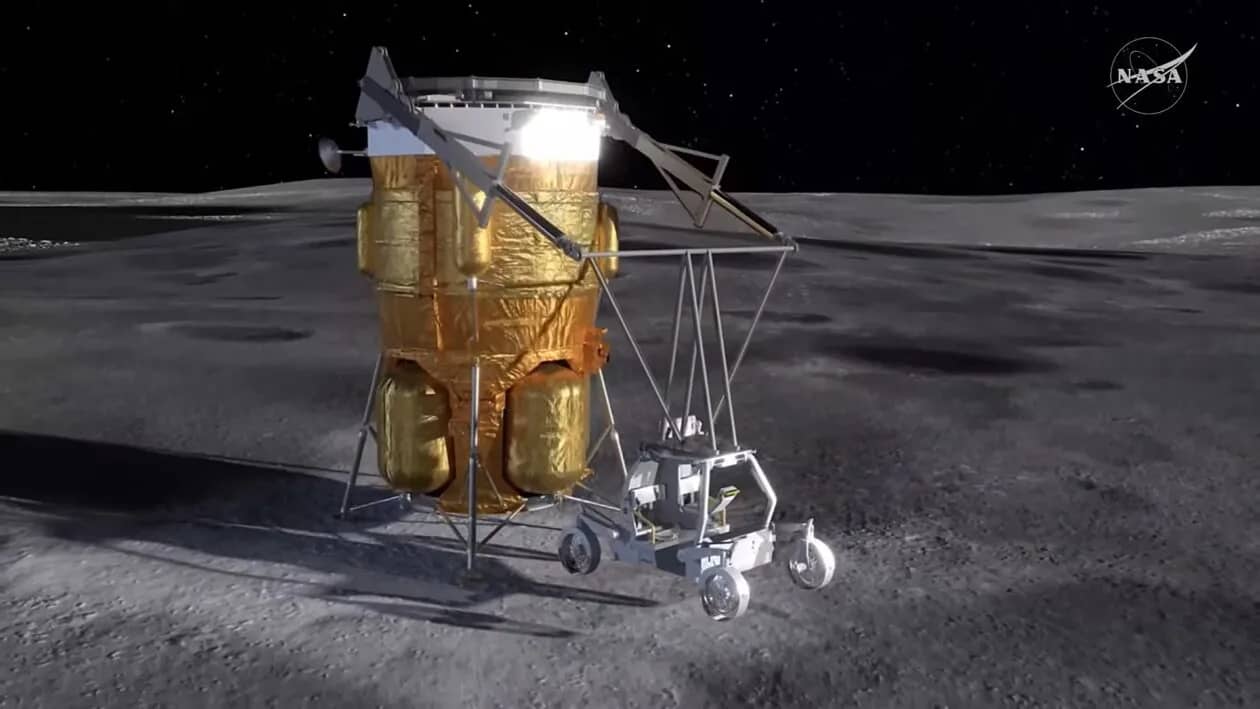
NASA is also preparing a fleet of rocket-powered MoonFall drones for reconnaissance and communications.
Its Research Lab in Texas will produce varieties of simulated moon dirt for testing Astrolab's CLV-1 rover.
Tap a lens to see what this story means for you.
Liked this? The Brief brings you the whole day in tech, verified, every morning.
Two minutes, free forever. What's in The Brief →
See what’s happening right now
The Feed runs all day — short, verified briefs the moment they break.
Open the FeedFollow @thecircuitry_
Every story we publish, as it happens. No noise between.
Reader-supported
The Circuitry is a passion project I've always wanted to build, and I love the work behind it.
Running it costs real money. APIs, hosting, time. To keep improving the site and growing this into something useful for everyone, those costs have to be covered.
Any contribution is appreciated. If not, no pressure. Thanks for reading.
NASA will conduct a 2027 Earth-orbit test of successive docking between Orion and lunar landers from SpaceX and Blue Origin to support a planned 2028 crewed moon landing. The agency expanded contracts with both companies after launch delays raised concerns about falling behind China.
NASA awarded SpaceX a $946 million contract for three more crewed missions to the ISS, bringing the company's total under the deal to 17 flights through 2030 and the contract value to $5.92 billion. The expansion helps NASA sustain access to the station while Boeing prepares its Starliner for crewed operations.
NASA and SpaceX are targeting a 7:26 AM EDT Sunday liftoff of a Falcon Heavy from Kennedy Space Center carrying the Nancy Grace Roman Space Telescope. The observatory will travel to Sun-Earth L2, where its Wide Field and Coronagraph instruments will search for exoplanets and study dark energy.
Blue Origin is reportedly raising up to $10 billion in its first private capital round at a $130 billion valuation, with Coatue Management reported to lead participation from institutional investors and Jeff Bezos. The move ends the company's near-total reliance on Bezos' personal funding as it races to scale ambitious launch, lunar, and satellite constellation projects against SpaceX.
NASA awarded four new Phase One lunar lander contracts totaling nearly $600 million on June 30, 2026, to Astrobotic, Intuitive Machines, and Firefly Aerospace for missions no earlier than 2028. The contracts advance the Moon Base program by delivering standardized science payloads and building on earlier reclassified CLPS landers to establish long-term lunar infrastructure.