S&P Dow Jones Indices refused to waive seasoning, profitability, or public float rules for SpaceX's IPO, blocking accelerated S&P 500 entry that could have unlocked billions in passive funds. The same barriers now apply to expected IPOs from OpenAI and Anthropic, limiting exposure of retirement assets to unprofitable AI bets.
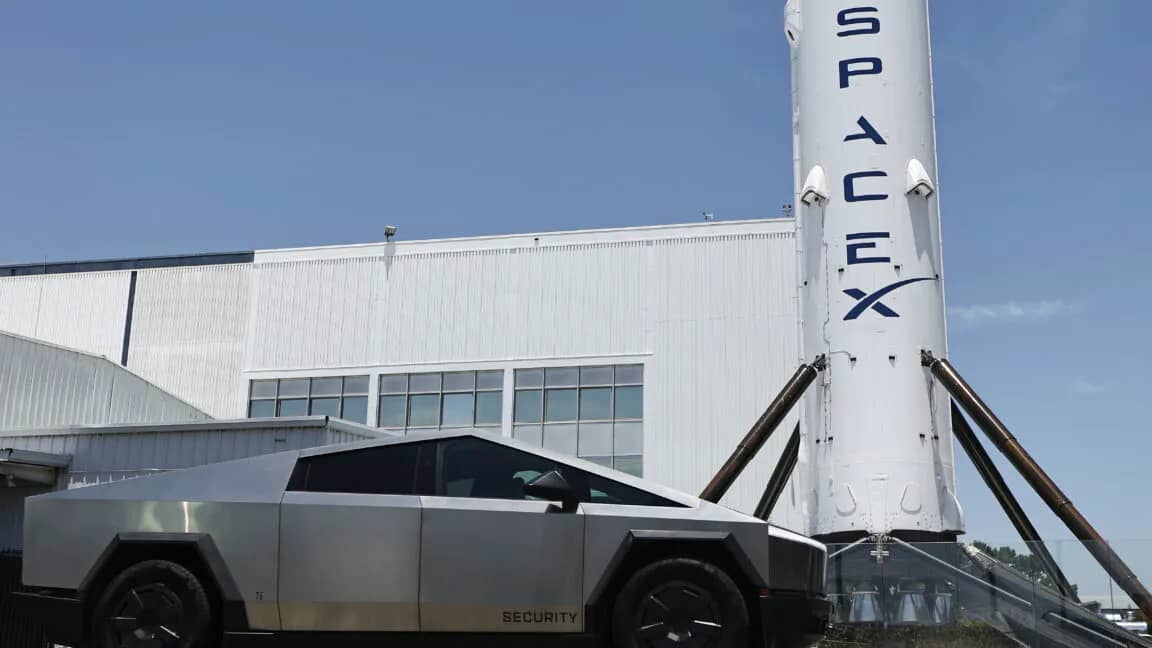
Even after the standard yearlong wait, SpaceX, Anthropic, and OpenAI may struggle to deliver the consistent profitability necessary to qualify for the S&P 500.
Tap a lens to see what this story means for you.
Reader-supported · The Brief
Liked this? The Brief brings you the whole day in tech, verified, every morning. Two minutes, free forever.
See what’s happening right now
The Feed runs all day — short, verified briefs the moment they break.
Open the FeedFollow @thecircuitry_
Every story we publish, as it happens. No noise between.
Reader-supported
The Circuitry is a passion project I've always wanted to build, and I love the work behind it.
Running it costs real money. APIs, hosting, time. To keep improving the site and growing this into something useful for everyone, those costs have to be covered.
Any contribution is appreciated. If not, no pressure. Thanks for reading.
Mistral raised $3.5 billion in a round led by Samsung, pushing its post-money valuation above 21 billion euros as it builds its own data centers. The French startup aims to differentiate from OpenAI and Anthropic by creating custom AI tools for individual companies while planning 100% compute growth over five years.
Stoke Space obtained roughly $1 billion in Series E funding to prepare Nova Pathfinder for an early 2027 launch while accelerating the larger Nova Block 2 scheduled for 2029. The capital will also expand the Moses Lake test facility and increase maximum payload fivefold to 15 metric tons in low Earth orbit, preserving full reusability for both stages.
Mathspace disclosed that attackers stole personal data belonging to 1,079,819 students, staff, and parents or guardians in Australia and New Zealand after breaching its Metabase system. The incident is the latest in a campaign exploiting a Metabase zero-day vulnerability used by multiple companies.