SpaceX launched its Starship rocket on Friday after scrubbing the prior day's attempt due to technical issues. The 12th test flight advances the fully reusable vehicle's role in Starlink expansion, satellite deployment and NASA's 2028 moon mission plans ahead of the company's expected $75 billion IPO.
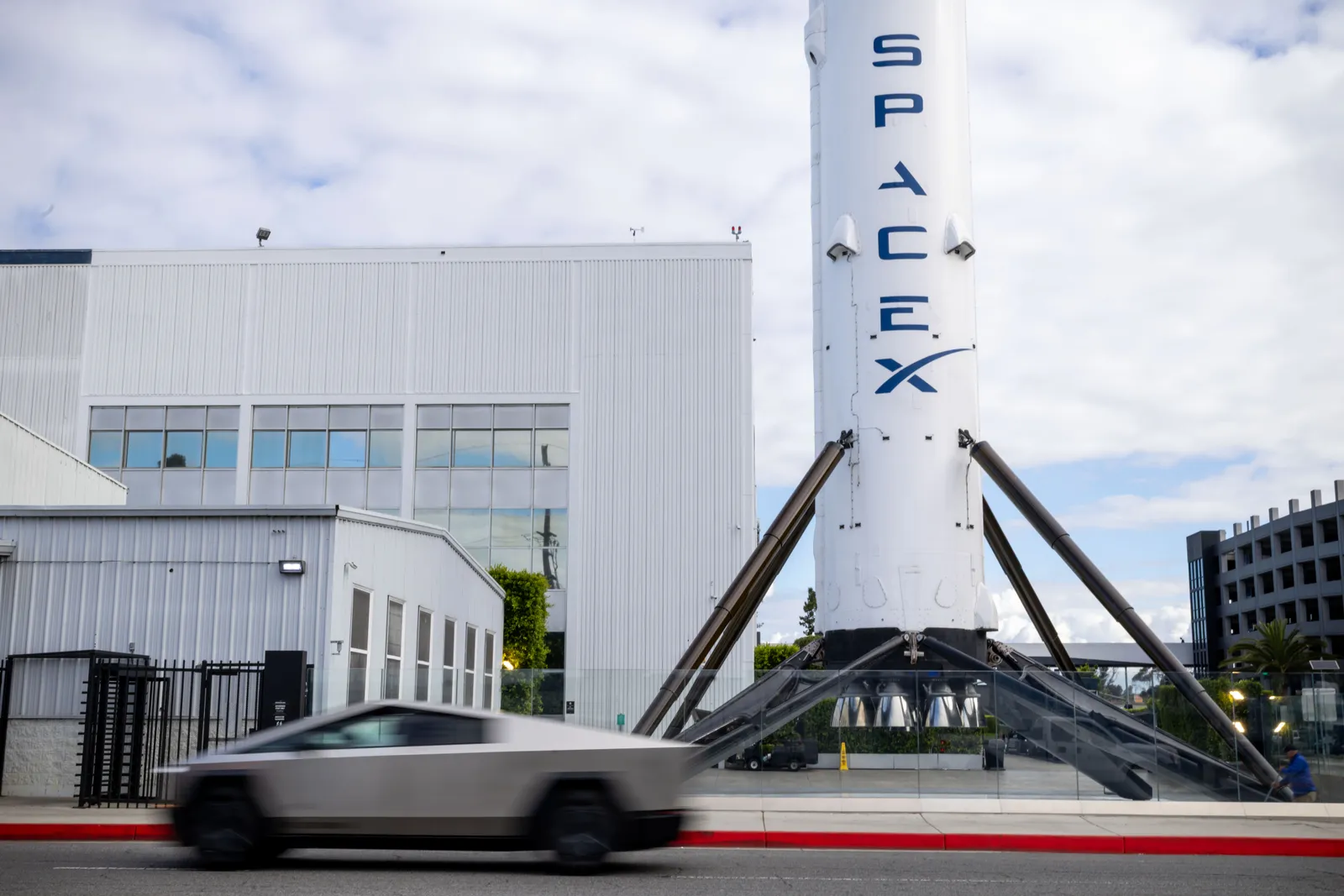

In its IPO filing on Wednesday, SpaceX said that Starship is designed to deliver 100 metric tons to Earth's orbit in a fully reusable configuration while enabling rapid turnaround times akin to commercial aviation.

The upper stage is meant to be fully reusable and to carry both large amounts of cargo and people into space, and SpaceX plans to use it to land NASA astronauts back on the moon in 2028.
https://x.com/elonmusk/status/2057609682865254695
Tap a lens to see what this story means for you.
Liked this? The Brief brings you the whole day in tech, verified, every morning.
Two minutes, free forever. What's in The Brief →
See what’s happening right now
The Feed runs all day — short, verified briefs the moment they break.
Open the FeedFollow @thecircuitry_
Every story we publish, as it happens. No noise between.
Reader-supported
The Circuitry is a passion project I've always wanted to build, and I love the work behind it.
Running it costs real money. APIs, hosting, time. To keep improving the site and growing this into something useful for everyone, those costs have to be covered.
Any contribution is appreciated. If not, no pressure. Thanks for reading.
SpaceX has delayed the first orbital Starship flight from September 22 to September 28 pending regulatory approval. The mission will attempt to place 26 V3 Starlink satellites into a 275 km orbit and marks a key milestone after the program's initial test flight in 2023.
SpaceX completed a static fire of Booster 20 on July 10, clearing the path for Starship's 13th test flight as early as July 15. The test continues development of the Version 3 vehicle toward full operational capability including stage recovery and reuse.
SpaceX Starship reached orbit for the first time on its 14th test flight from Texas on September 28 despite an early engine shutdown. The vehicle is expected to complete six orbits over 10 hours and deploy 26 Starlink V3 satellites before Pacific splashdown.
NASA and SpaceX are targeting a 7:26 AM EDT Sunday liftoff of a Falcon Heavy from Kennedy Space Center carrying the Nancy Grace Roman Space Telescope. The observatory will travel to Sun-Earth L2, where its Wide Field and Coronagraph instruments will search for exoplanets and study dark energy.
SpaceX plans to attempt catching its Starship spacecraft with mechanical tower arms on the next test flight following a successful ocean landing on Flight 13. The milestone would advance the vehicle's reusability after demonstrating satellite deployment and an in-flight engine restart.