Tesla has relaxed its vision-based driver monitoring requirements in FSD v14.3.3, allowing up to a minute of leeway in some conditions while confirming the change via Elon Musk. The update maintains stricter rules in low-confidence scenarios and Mad Max mode as a step toward unsupervised autonomy.
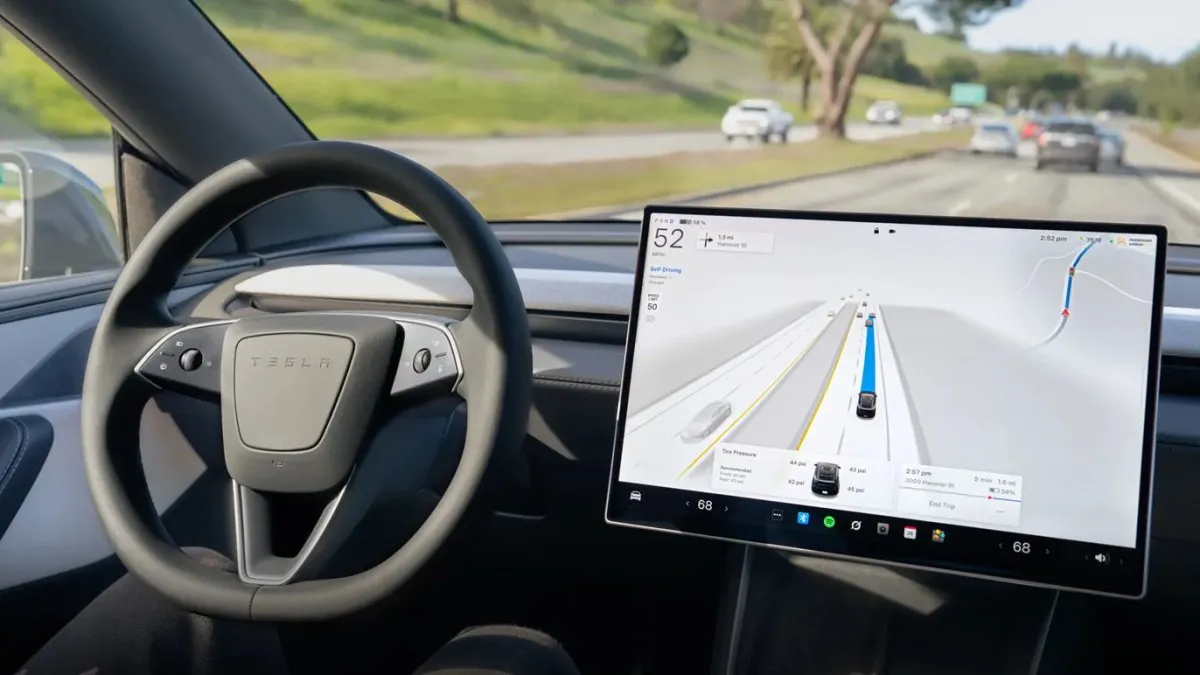
The change makes supervised FSD feel like drivers can pay attention to the greater situation rather than micromanaging every small lane change or turn.
https://x.com/Tesla/status/2056577806981911000
Tap a lens to see what this story means for you.
Liked this? The Brief brings you the whole day in tech, verified, every morning.
Two minutes, free forever. What's in The Brief →
See what’s happening right now
The Feed runs all day — short, verified briefs the moment they break.
Open the FeedFollow @thecircuitry_
Every story we publish, as it happens. No noise between.
Reader-supported
The Circuitry is a passion project I've always wanted to build, and I love the work behind it.
Running it costs real money. APIs, hosting, time. To keep improving the site and growing this into something useful for everyone, those costs have to be covered.
Any contribution is appreciated. If not, no pressure. Thanks for reading.
Tesla marked the start of high-volume Semi production at its new Sparks, Nevada factory on September 24. The plant, which Tesla says covers 1.8 million square feet, is built to scale to 50,000 trucks annually.
Tesla reportedly conducted intensive supplier audits across China's Yangtze River Delta last week as it prepares Optimus production. The visits to potential suppliers Tuopu Group, Sanhua Holding Group, and Joyson Electronics in Ningbo, Hangzhou, and Shanghai leverage existing automotive partners rather than confirming a mass-production acceleration.
Tesla postponed its next-gen Roadster reveal from October 1 to October 15, citing severe weather for an outdoor-only event. The company said additional details will follow and did not announce a new start time.
Tesla has started sending invitations for its Semi Rollout event on September 24 at the new factory in Sparks, Nevada. The gathering will showcase the facility, which Tesla says covers 1.8 million square feet, built to produce up to 50,000 trucks per year along with refreshed vehicle features and fleet economics.
A roundup of electric mobility news on September 5, 2026 highlights the August 11 bankruptcy at Accell Group and July 29 judicial recovery for CactUs Lock, a prominent charging myth on French radio, solar battery test results, and a policy reversal on Tesla FSD following July resistance. These stories illustrate ongoing financial fragility, public misunderstanding of EV best practices, and evolving regulatory attitudes across Europe.