The Circuitry
THE CIRCUITRYYour one-stop source for all tech news
HOMENEWSFEEDEVENTS
—STORIES—VERIFIED
BOOKMARKS
RSSSOURCESABOUTCORRECTIONS
RSS
© 2026 The Circuitry
About UsContactCorrections
  • Home
  • Feed
  • Events
  • Saved
Scroll for more
Verification
VERIFIEDConfidence: HIGH
Source identified
Claims cross-referenced
No discrepancies found
Fact-check summary

Multiple outlets (The Verge, Fortune, Wired, Car and Driver) confirm GM's June 9 San Francisco announcement activating V2G via firmware for over 250,000 existing bidirectional EVs.

Sourcing
1source

via CleanTechnica

CleanTechnica · track record
3Stories
100%Verified
330d
All sources →
Home/Energy
VERIFIEDBy Xavier Rivera· ·1.5 min read

GM Activates V2G for 250,000 Existing EVs

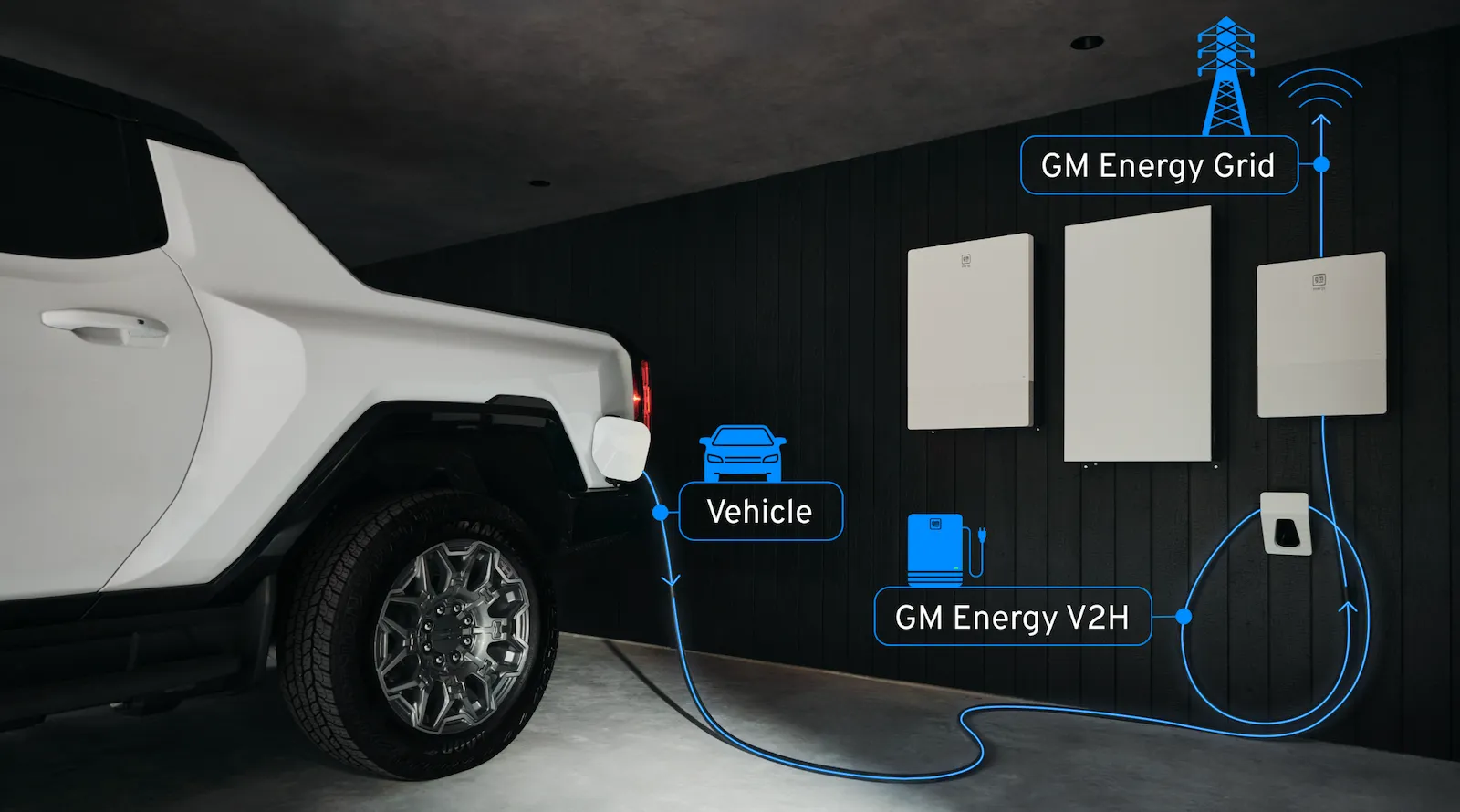
GM activated vehicle-to-grid capability for more than 250,000 existing bidirectional EVs with no new hardware required. The move positions parked vehicles as a major distributed energy resource to support grid stability amid rising demand.
Source:CleanTechnica
Post
GM Activates V2G for 250,000 Existing EVs
TL;DRAI · 60 sec read

GM activates vehicle-to-grid for over 250,000 bidirectional EVs already on US roads, needing no hardware upgrades. It calls on utilities to treat EVs as assets to handle grid strain from heat waves, weather, and AI data centers. The fleet offers capacity for 120,000 homes weekly. Pilots advance with utilities, and GM pushes for supportive policies.

GM activated vehicle-to-grid capability for more than 250,000 bidirectional-capable vehicles already on US roads, requiring no new hardware.

GM calls on utilities to treat EVs as grid assets. The company issued an open letter urging utilities and regulators to use parked electric vehicles for vehicle-to-grid technology. GM highlighted pressure on the grid from heat waves, extreme weather, and AI data center growth.
The automaker stated that its more than 250,000 bidirectional-capable vehicles in the US today have enough combined battery capacity to power roughly 120,000 average US homes for up to a week.
The automaker stated that its more than 250,000 bidirectional-capable vehicles in the US today have enough combined battery capacity to power roughly 120,000 average US homes for up to a week. GM plans to make the bidirectional capability standard on future EVs.

Real-world pilots show growing participation. GM is testing V2G with PG&E in California and projects over 52,000 GM EVs participating in grid-balancing programs by 2030. In Michigan, the company works with DTE Energy using employee homes to build reliable backup capacity matching actual owner usage patterns.

An International Energy Agency analysis cited by GM shows V2G can deliver the largest hourly energy flexibility of any technology evaluated. The IEA sees 250 million EVs globally by 2030 in a Stated Policies Scenario.
An International Energy Agency analysis cited by GM shows V2G can deliver the largest hourly energy flexibility of any technology evaluated.
GM outlines three collaboration areas for utilities and regulators. The company called for better customer enrollment through education and simpler sign-up for utility programs and time-of-use rates, with managed charging as an on-ramp. It also urged modernized tariffs that pay EV owners for discharging during peaks.

Finally, GM pushed for streamlined paperwork, engineering reviews, and interconnection processes for bidirectional chargers. The goal is to let owners buy equipment, plug in, and contribute without excessive hurdles.

The announcement came at a GM event in San Francisco on June 9. It builds on the company's vision for integrating EV batteries with homes, first outlined two years ago in Detroit, and follows expansion of its EV lineup to 12 vehicles.
Why this mattersAI · ~100 words

Tap a lens to see what this story means for you.

Reader-supported
DonateBuy me a coffee →Follow@thecircuitry_ →

Reader-supported · Daily Brief

Daily brief at 7 AM ET. Top tech stories, every morning. Sourced and fact-checked.

HELP US IMPROVE

Reader-supported

The Circuitry is a passion project I've always wanted to build, and I love the work behind it.

Running it costs real money. APIs, hosting, time. To keep improving the site and growing this into something useful for everyone, those costs have to be covered.

Any contribution is appreciated. If not, no pressure. Thanks for reading.

Buy me a coffee
GMV2GElectric VehiclesGrid Storage
More fromCleanTechnica
  • Qcells Starts Solar Cell Production at Largest US Factory

    Energy · 6h
  • GM Launches Energy Pass for Unified EV Charging

    Energy · 7h
More inEnergy
  • Qcells Starts Solar Cell Production at Largest US Factory

    Energy · 6h
  • GM Launches Energy Pass for Unified EV Charging

    Energy · 7h
  • BYD Opens First Flash Charging Station in Germany

    Energy · 16h
SupportThe Work

The Circuitry is reader-supported. If you find the daily brief useful, you can buy me a coffee to keep it going.

Buy a coffee →
SubscribeCircuitry Brief

Daily brief at 7 AM ET. Top tech stories, every morning.

MORE IN ENERGY

Qcells Starts Solar Cell Production at Largest US Factory

Qcells has started solar cell production at its Cartersville, Georgia factory, which will become the largest such facility in US history with full vertical integration from ingot to module. The site helps customers qualify for domestic content tax credits while adding 8.6 GW of total US capacity by end of Q3 2026.

GM Launches Energy Pass for Unified EV Charging

GM announced Energy Pass, a unified interface in its existing vehicle apps that connects to major charging networks representing nearly 70% of US DC fast chargers. It reduces friction from multiple apps and accounts while rolling out Plug&Charge capabilities and aligning with GM's full shift to native NACS ports.

BYD Opens First Flash Charging Station in Germany

BYD opened its first Flash Charging station in Germany that can recharge compatible EVs from 10% to 70% in five minutes at up to 1,500 kW. The Chinese manufacturer plans 3,000 such stations across Europe by the end of 2026 while expanding its Denza premium brand.