The Circuitry
THE CIRCUITRYYour one-stop source for all tech news
HOMENEWSFEEDEVENTS
—STORIES—VERIFIED
BOOKMARKS
RSSSOURCESABOUTCORRECTIONS
RSS
© 2026 The Circuitry
About UsContactCorrections
  • Home
  • Feed
  • Events
  • Saved
Scroll for more
Verification
VERIFIEDConfidence: HIGH
Source identified
Claims cross-referenced
No discrepancies found
Sourcing
1source

via Frandroid

Frandroid · track record
15Stories
100%Verified
1430d
All sources →
Markets
NVDA···

Live quote · not investment advice

Home/Tech
VERIFIEDBy Xavier Rivera· ·2 min read

Mercedes Sets 2027 Rollout for MB.Drive Assist Pro in Europe

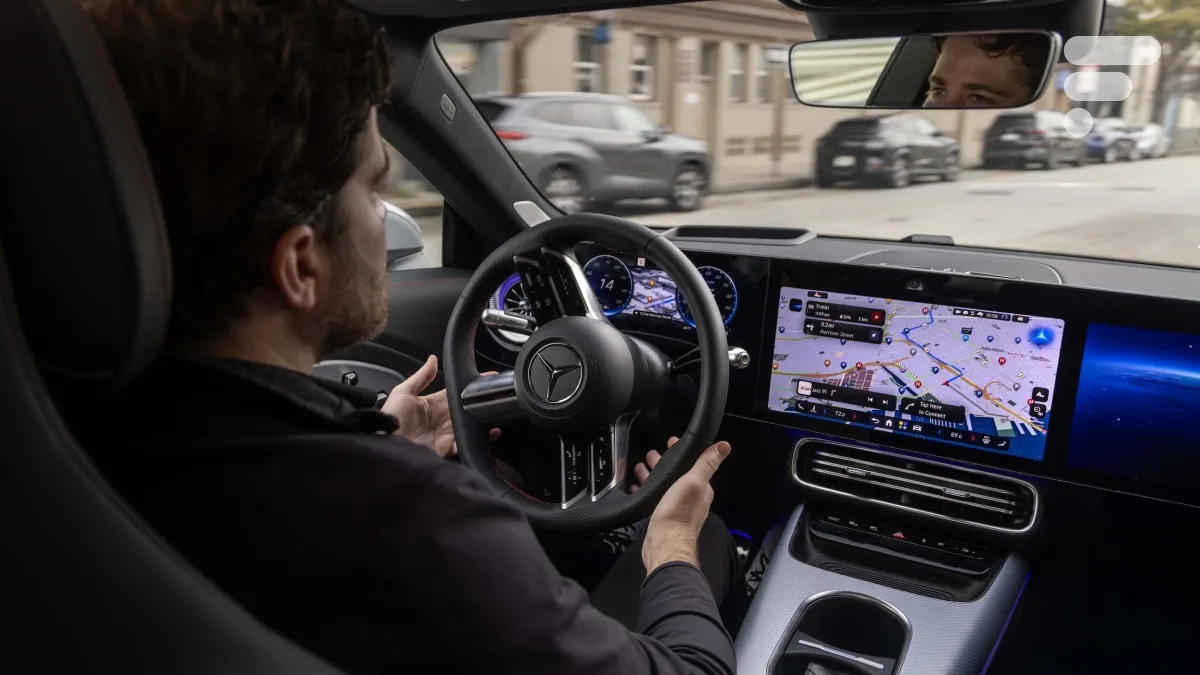
Mercedes-Benz will deploy its Level 2+ MB.Drive Assist Pro urban driving system in German cities by the end of 2026 with a national rollout in early 2027. The Nvidia-powered technology, already active in China and arriving in the US later this year, marks a strategic shift to supervised assistance as the company competes with Tesla and BMW in Europe.
Source:Frandroid
Post
Mercedes Sets 2027 Rollout for MB.Drive Assist Pro in Europe
TL;DRAI · 60 sec read

Mercedes-Benz will roll out its MB.Drive Assist Pro Level 2+ urban system in German cities by late 2026 and nationwide in early 2027. Stuttgart and Munich launch first. The supervised driver-assist feature, built with Nvidia sensors and 508 TOPS compute, handles traffic lights, lane changes and city traffic. It positions Mercedes to compete directly with Tesla and BMW on European roads after dropping its limited Level 3 highway system.

Mercedes-Benz will deploy MB.Drive Assist Pro, its Level 2+ urban assisted driving system, in several German cities by the end of 2026. A national rollout will begin in early 2027. The German manufacturer has positioned the move as a way to catch up with Tesla and BMW on European ground in semi-autonomous driving technology.

Jörg Burzer, Mercedes-Benz’s technical director, set out the timeline on May 22 on LinkedIn after a meeting at the German Transport Ministry in Berlin, according to Automotive News Europe. Stuttgart and Munich will be the first cities, with the broader national rollout following in early 2027. BMW is targeting exactly the same timeframe.
The race among the three automakers is now officially on in Europe.

Tesla is pushing its supervised Full Self-Driving after securing its first approvals in the Netherlands and Lithuania. The race among the three automakers is now officially on in Europe. MB.Drive Assist Pro is already active in China and is expected in the United States later this year.

The system is a Level 2+ developed in partnership with Nvidia. It is capable of handling traffic lights, lane changes and dense urban traffic. The driver must keep their eyes on the road while their hands may briefly leave the wheel.

Hardware for the system includes around 30 sensors: ten cameras, five radars and twelve ultrasonic sensors. These are processed by a computer capable of reaching 508 TOPS running the Nvidia DRIVE AGX architecture that powers the German brand’s software stack.
Mercedes has shelved its Level 3 Drive Pilot, which was more advanced on paper but limited to highways, too costly to industrialize and ultimately little used by customers.

In practice, MB.Drive Assist Pro delivers door-to-door assisted driving rather than autonomous driving. The driver enters an address in the GPS and the car handles its own way there, including all maneuvers. This matches the approach taken by Tesla’s FSD.

The timeline confirms a strategic shift made earlier this year. Mercedes has shelved its Level 3 Drive Pilot, which was more advanced on paper but limited to highways, too costly to industrialize and ultimately little used by customers. BMW made the same choice, abandoning hands-off, eyes-off systems in favor of supervised assistance that is simpler to get past regulators.
Why this mattersAI · ~100 words

Tap a lens to see what this story means for you.

Reader-supported
CoffeeSupport →Follow@thecircuitry_ →

Reader-supported · Daily Brief

Daily brief at 7 AM ET. Top tech stories, every morning. Sourced and fact-checked.

HELP US IMPROVE

Reader-supported

The Circuitry is a passion project I've always wanted to build, and I love the work behind it.

Running it costs real money. APIs, hosting, time. To keep improving the site and growing this into something useful for everyone, those costs have to be covered.

Any contribution is appreciated. If not, no pressure. Thanks for reading.

Support →
Mercedes-BenzAutonomous-DrivingNvidiaTesla
More fromFrandroid
  • Toyota Abandons Lexus LF-ZC Electric Sedan for 2026

    Energy · 2d
  • Asus Unveils ROG Ally X20 With OLED and Translucent Design

    Gaming · 3d
  • Nintendo Launches Pictonico! Photo Game on Smartphones

    Gaming · 7d
More inTech
  • DentaQuest Breach Exposes Data of 2.6 Million Accounts

    Tech · 13h
  • OpenAI Upgrades ChatGPT Memory, Extends to Free Users

    Tech · 15h
  • Pinterest Commits $4B to AWS for AI Infrastructure

    Tech · 19h
SupportThe Work

The Circuitry is reader-supported. If you find the daily brief useful, you can buy me a coffee to keep it going.

Buy a coffee →
SubscribeCircuitry Brief

Daily brief at 7 AM ET. Top tech stories, every morning.

MORE IN TECH

DentaQuest Breach Exposes Data of 2.6 Million Accounts

A data breach at DentaQuest exposed sensitive records for 2.6 million accounts after ShinyHunters publicly leaked more than 234 GB of stolen data. The compromise includes names, government IDs, health insurance details and other personal information, raising risks of phishing and social engineering.

OpenAI Upgrades ChatGPT Memory, Extends to Free Users

OpenAI is making ChatGPT’s memory feature smarter with a new synthesis system and extending it to free users for the first time. The changes address staleness, correctness and scalability for hundreds of millions of users across multi-year time horizons.

Pinterest Commits $4B to AWS for AI Infrastructure

Pinterest announced a planned $4 billion commitment to AWS through 2031, its largest infrastructure deal ever. The investment will scale AI models for visual search and discovery used by more than 600 million monthly users.